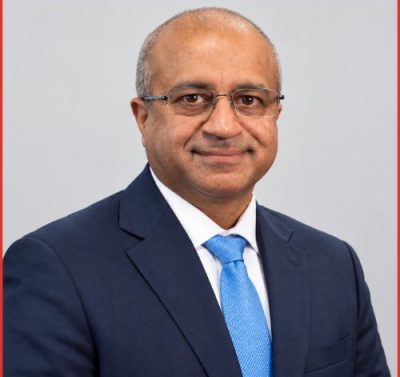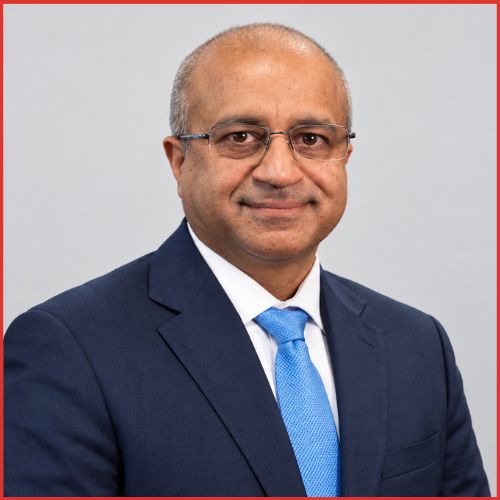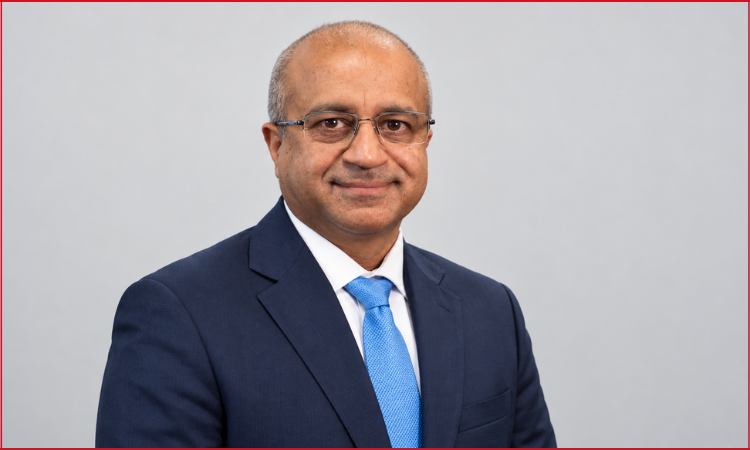
In India’s crowded IT services market, most companies grow by copying a playbook that already works. Persistent Systems chose a narrower path: engineering depth first, everything else built on top of it. The person who turned that identity into a $1.6 billion business is Sandeep Kalra, the company’s Executive Director and CEO, and his rise is central to any honest Persistent Systems success story.
Kalra’s story at Persistent is not a founding story, and understanding that distinction is the first step in any accurate account of his career. When he took charge, the company had already spent three decades building a name in software engineering. His job was to scale what existed, widen it into new categories, and make it matter to enterprises that increasingly wanted cloud, data and AI in the same conversation.
The results are hard to argue with. Persistent Systems revenue moved from just over $500 million in FY2020 to $1.409 billion in FY2025, then to $1.654 billion in FY2026. That climb is the backbone of this Sandeep Kalra success story, and it’s worth understanding how it happened, not just what it added up to. A quick look at Persistent Systems history shows why this particular chapter stands out from the ones before it.
Quick Glance
| Founder | Dr. Anand Deshpande |
| Company | Persistent Systems |
| Founded | 1990, Pune, Maharashtra |
| Sector | IT Services and Digital Engineering |
| CEO | Sandeep Kalra (Executive Director and CEO since October 2020) |
| Joined Persistent | May 2019, as President, Technology Services Unit |
| FY2020 Revenue | Just over $500 million |
| FY2026 Revenue | $1.654 billion, up 17.4% YoY (Persistent Systems, 2026) |
| Current Status | NSE and BSE listed; pursuing €1.27 billion acquisition of Germany’s Nagarro (Business Standard, 2026) |
Who Is Sandeep Kalra?
Sandeep Kalra is the Executive Director and Chief Executive Officer of Persistent Systems, and a full Sandeep Kalra biography reads less like a founder’s story and more like a professional manager’s climb through global IT services. He carries more than three decades of experience, most of it spent on growth, operational turnarounds and profitability rather than product invention.
Before Persistent, his résumé included over sixteen years at HCL Technologies and a senior stint at HARMAN International following its acquisition of Symphony Teleca. He joined Persistent in May 2019 as President of the Technology Services Unit, and only after that unit delivered consistent growth did the board hand him the CEO title in October 2020. That progression is the pivot point in any account of Sandeep Kalra’s career; proof came before promotion, not after.
He didn’t walk in and rewrite the company. He built on what Persistent already did well.
That single choice extend the engineering core instead of discarding it turned out to define his entire tenure. Under him, Persistent expanded into digital engineering, cloud, data and analytics, application modernisation, cybersecurity, AI and generative AI.
The Starting Point: A Strong Engineering Foundation
Persistent Systems was founded in 1990 by Dr. Anand Deshpande, a former Hewlett-Packard Labs engineer who started the company in Pune with roughly $21,000 in savings and family borrowing. Its original business was narrow by design: outsourced software product development for other technology companies the earliest chapter of Persistent Systems history and the base every later expansion was built on.
That foundation gave Persistent real credibility with clients who needed deep engineering, not just staffing. But the market underneath it was shifting fast.
Cloud computing had gone from niche to default. Enterprises were pouring budgets into digital transformation. Data was becoming something companies fought over internally, and artificial intelligence was moving out of research labs and into procurement conversations.
Kalra read that shift early. Persistent’s engineering reputation alone wasn’t going to carry the next decade the company needed to become a broader strategic partner, not just a specialist vendor.
Sandeep Kalra’s Leadership Strategy
Four things run through Kalra’s approach to growth: widening the service portfolio, going deeper into fewer client accounts, investing ahead of demand in emerging technology, and treating execution as a discipline rather than an afterthought.
1. Moving Beyond Traditional IT Services
One of Kalra’s clearest calls was to stop competing purely as an IT outsourcing vendor. Persistent pushed instead into higher-value work digital engineering, cloud transformation, data analytics, application modernisation and enterprise technology the kind of mandates that put it inside a client’s strategic planning rather than its cost-cutting spreadsheet. It was a deliberate repositioning of Persistent Systems as an IT business built for enterprise-scale transformation, not just staff augmentation.
That shift did two things at once. It let Persistent bid for larger, more strategic engagements, and it diversified revenue so the company wasn’t dependent on any single service line.
2. Building Around AI and Emerging Technologies
Artificial intelligence isn’t treated as a bolt-on service at Persistent; it’s stitched into the engineering and modernisation work the company already sells. The company has built proprietary platforms including SASVA, iAURA and GenAI Hub, designed to move enterprise AI projects from pilot to production rather than leaving them stuck in proof-of-concept purgatory.
That distinction matters more than it sounds. Most enterprises don’t need another AI model. They need data foundations, governance and engineering muscle to actually put AI into daily workflows, and that gap is where Persistent has tried to plant its flag.
The Numbers Behind the Transformation
The clearest evidence for Kalra’s leadership is on the balance sheet, not in any press quote. Persistent Systems revenue grew from just over $500 million in FY2020 to $1.409 billion in FY2025, an 18.8% year-on-year jump in that final year alone.
FY2026 pushed further. Revenue reached $1.654 billion, up 17.4% year-on-year, while profit after tax rose 33.2% and EBIT margin improved by 90 basis points to 15.6% (Persistent Systems, 2026). Profit, in other words, grew faster than revenue a detail that matters more than the topline number by itself.
Persistent also closed FY2026 on its 24th consecutive quarter of sequential revenue growth. For an IT services company riding through pandemic disruption, rate hikes and a slower discretionary spending cycle, that streak says as much about consistency as any single blockbuster quarter would.
From $1 Billion to $1.6 Billion
Crossing $1 billion in annualised revenue run rate in October 2022 was more than a number on a slide. Kalra had set that as a public target roughly six to eight quarters earlier, around Q3 FY22, and hitting it inside that window gave the whole organisation a shared, trackable finish line.
What followed wasn’t driven by one hot service line. Persistent spread its growth across BFSI, healthcare, and software and hi-tech clients, layering cloud, data and AI work on top of its engineering base rather than betting the company on a single trend.
That diversification is arguably why the growth held up as well as it did; no single client vertical or technology wave had to keep carrying the company by itself. It is also what separates a genuine Persistent Systems growth story from a one-off good year.
The Role of Acquisitions
Kalra hasn’t relied on organic growth alone. Persistent has used acquisitions to add capabilities, domain depth and client relationships that would have taken years to build from scratch a familiar tactic in mid-cap IT, but one that carries real financing and integration risk if it’s mistimed.
The biggest test of that approach is underway now. In June 2026, Persistent announced a proposed €1.27 billion (roughly $1.45 billion) acquisition of Germany-based Nagarro, funded through a €1.4 billion bridge financing facility. The deal would push Persistent into a different weight class in Europe, but it also ends the company’s historically asset-light, net-cash balance sheet a trade the market is still pricing in.
That tension sums up Kalra’s M&A logic well enough: scale is only worth pursuing if it eventually shows up in capability, revenue and margin not just in the size of the press release. As Persistent Systems CEO, Kalra has framed the Nagarro deal as the next stage of the same growth story rather than a departure from it.
A Culture of Consistent Growth
Twenty-four consecutive quarters of sequential growth doesn’t happen by accident, and it doesn’t happen through inspiration alone. It happens through the unglamorous parts of running a services business delivery discipline, account retention, and pricing that doesn’t erode margin every time a client renegotiates.
Kalra has been fairly direct about this in earnings commentary: technology expertise opens doors, but execution decides whether an opportunity turns into durable revenue. That’s not a particularly quotable line, but it’s the one that shows up in the numbers quarter after quarter, and it’s a big part of why this reads as an Indian IT success story rather than a one-time turnaround.
Sandeep Kalra’s Leadership Philosophy
Persistent describes Kalra as having a growth-oriented mindset with a track record of reviving underperforming units into profitable ones which lines up with what he did in the Technology Services Unit before he became CEO.
The more interesting part of his philosophy, though, is what he didn’t do. He didn’t try to reinvent Persistent from the ground up. He identified the one thing the company was genuinely good at engineering and used it as the base layer for everything that came after: cloud, data, AI, modernisation. That restraint is a recurring theme across Sandeep Kalra’s business journey, from the Technology Services Unit to the CEO’s office.
For a company under pressure to look modern, that restraint is arguably the harder call to make.
Awards and Industry Recognition
Kalra’s individual honours and Persistent’s broader industry recognition have grown alongside the company’s revenue, a useful marker of how the market views the transformation, even if awards alone don’t build a business.
| Recognition | Awarded To | Year | Source |
| Best CEO, IT Services (Emerging Companies) | Sandeep Kalra | 2024 | Fortune India |
| Best CEO, IT/ITES Industry | Sandeep Kalra | 2023 | Business Today |
| Leader, Generative AI Services (Provider Lens) | Persistent Systems | 2025 | ISG |
| Recognised Analyst Coverage | Persistent Systems | Ongoing | Gartner, Zinnov, Everest Group |
Challenges Ahead
The obvious risk sitting in front of Persistent is AI itself. The same technology that’s fuelling new client demand can also automate chunks of the traditional software development work IT services firms have historically billed for. Staying ahead of that means constantly moving up the value chain while retraining a large workforce at the same time.
There’s also the Nagarro integration to manage a €1.27 billion acquisition brings financing costs, cultural integration and execution risk that a company used to running debt-free hasn’t had to handle before.
And competitively, Persistent is still a mid-cap player chasing the same AI-transformation budgets as companies with far larger balance sheets. Holding margins steady while funding AI investment, talent upgrades and acquisition integration all at once will be the real test of the next two to three years.
Conclusion
Strip away the numbers and the Sandeep Kalra success story comes down to something fairly ordinary: recognise where a market is heading, invest ahead of that shift, and keep executing long after the novelty wears off.
When Kalra became CEO, Persistent Systems was already a credible, established technology company. His contribution was turning that foundation into a global digital engineering and enterprise modernisation business several times its previous size, from roughly $500 million in FY2020 revenue to $1.654 billion in FY2026. It is a defining stretch of Sandeep Kalra’s career and one of the clearer examples of how a Persistent Systems IT business built on engineering can scale without losing that identity.
The Nagarro acquisition now underway suggests Kalra isn’t done widening the company’s ambitions. Whether it becomes the next milestone in this Persistent Systems growth story, or the point where the balance sheet gets genuinely tested, is the question the next few quarters will answer.
Frequently Asked Questions
1. Is Sandeep Kalra the founder of Persistent Systems?
No. Persistent Systems was founded by Dr. Anand Deshpande in 1990. Kalra joined the company in 2019 and became CEO in October 2020, making him the leader behind its later growth phase rather than its founding.
2. What was Sandeep Kalra’s career before Persistent Systems?
He spent over sixteen years at HCL Technologies and later held a senior digital transformation role at HARMAN International, following HARMAN’s acquisition of Symphony Teleca, before joining Persistent in 2019.
3. What is Persistent Systems’ core business model today?
Persistent works across digital engineering, cloud, data and analytics, application modernisation, cybersecurity, and AI and generative AI for clients mainly in software, BFSI and healthcare, built on top of its original outsourced product development roots.
4. What awards has Sandeep Kalra received as CEO?
He was named Best CEO in IT Services (Emerging Companies) by Fortune India in 2024 and received Business Today’s Best CEO in the IT/ITES Industry recognition in 2023.