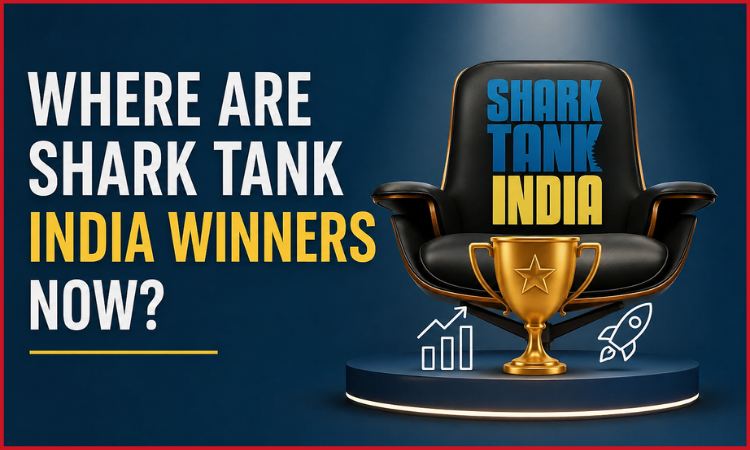
Shark Tank India is now one of India’s most successful startup platforms for entrepreneurs to raise funds, grow awareness, access mentorship, and gain national exposure. Since its inception, it has showcased hundreds of startups to millions of viewers across many categories, including fashion, food, beauty, technology, health care, mobility, and entertainment.
Its influence persists in 2026. In just five seasons, 73 startups have received deals from the Sharks. The show still plays a significant role in shaping the narrative for entrepreneurs and investors alike, helping create a vibrant and competitive startup landscape in India. But funding is just the first step. Is visibility translating into sustainable revenue growth, follow-on funding, market expansion, and category dominance?
This article covers about 15 Shark Tank India startups that have already performed very well in 2026 with high valuations, investment rounds, hitting revenue milestones, entering retail stores, acquiring other businesses, and becoming market leaders.
Top Shark Tank India Success Stories at a Glance
| Startup | Founded | Headquarters | Industry | What Makes It Different | 2026 Highlight |
| Snitch | 2020 | Bengaluru | Fashion | Men’s fast fashion brand | 2,500 crore valuation |
| The Whole Truth | 2019 | Mumbai | Nutrition | Ingredient transparency | Major funding round |
| Beyond Snack | 2020 | Kochi | FMCG | Premium banana chips brand | 100+ crore revenue |
| Skippi Ice Pops | 2021 | Hyderabad | FMCG | First startup to be financed by all five sharks | Nationwide retail expansion |
| Culture Circle | 2023 | Delhi NCR | Marketplace | Sneaker authentication and resale platform | Strong marketplace growth |
| Let’s Try | 2021 | Delhi NCR | Snacks | Affordable packaged snacks | 1,100 crore valuation |
| Bonkers Corner | 2020 | Mumbai | Fashion | Gen Z streetwear label | 125 crore revenue |
| Get A Whey | 2018 | Mumbai | Food | Healthy desserts and protein treats | Acquisition success |
| House of Chikankari | 2020 | Lucknow | Fashion | Traditional craftsmanship through D2C | National expansion |
| Hair Originals | 2019 | Bengaluru | Beauty | Hair extensions and hair solutions | Series A funding |
| Winston | 2019 | Bengaluru | Electronics | Affordable grooming electronics | Strong post-show growth |
| Stage | 2019 | Delhi NCR | OTT | Regional language entertainment | Subscriber growth |
| Zypp Electric | 2017 | Gurugram | Mobility | EV-powered logistics network | Fleet expansion |
| BluePine Foods | 2016 | Gangtok | Food | Northeast cuisine products | National distribution |
| MeMeraki | 2021 | Bengaluru | Art Tech | Artist and learner marketplace | Platform growth |
The Established Shark Tank India Success Stories
Though several startups are talked about on Shark Tank India, few have been able to scale beyond the TV show. The following firms have used the investment and exposure to achieve significant growth.
Across industries, from fashion and nutrition to FMCG and digital platforms, they have gained a strong foothold in the market through revenue, fundraising, increasing retail footprint, and category leadership.
1. Snitch: Building One of India’s Fastest Growing Men’s Fashion Brands
Snitch, established in 2020 by Siddharth Dungarwal, pitched to the investors in Shark Tank India Season 2 as a digital-first menswear startup. Snitch’s attempt to be exclusive with only men’s fashion proved to be an advantage as the startup flourished in the competitive apparel sector.
The Bengaluru-based brand leveraged its Shark Tank exposure to boost its e-commerce and offline presence. In 2026, according to reports, Snitch had hit an approximate valuation of 2,500 crores after raising 340 crores in Series B funding.
Its rapid fashion model, quick product launches, and expanding retail network have enabled the company to become one of India’s most successful D2C fashion brands.
2. The Whole Truth: Making Clean Label Nutrition Mainstream
Founded by Shashank Mehta, The Whole Truth was established with a focus on ingredient transparency and clean label nutrition. A Mumbai-based startup entered the business of nutrition with clean-label protein bars, peanut butters, and healthy snacks targeting health-aware consumers.
The brand focused on educating consumers about ingredients and product quality rather than relying heavily on marketing claims.
Thus, in 2026, several factors, including robust revenue growth, an established customer base, and significant investment activity, had put The Whole Truth firmly among the premier nutrition brands in India.
3. Beyond Snack: Turning Kerala Banana Chips Into a National FMCG Brand
Started by Manas Madhu, Beyond Snacks evolved the conventional Kerala snack into a packaged consumer food brand. The company introduced banana chips as a premium, branded snack for customers within India and globally.
Its appearance on Shark Tank increased its recognition and accelerated distribution growth.
The brand is distributed through modern grocery retail outlets, e-commerce platforms, quick commerce applications, and export channels. By 2026, the firm had reportedly crossed ₹100 crore in revenues and become one of the most successful startups to emerge from Shark Tank India in the food and beverage sector.
Its journey shows how branding and distribution could lead a regional product towards becoming a prominent FMCG brand.
4. Skippi Ice Pops: From the First All Sharks Deal to Nationwide Distribution
Skippi ice pops is the first company in Shark Tank India history where the startup received investment from all five Sharks. The startup based in Hyderabad won praise for its preservative-free ice pops and highly scalable distribution model.
The product’s appearance on the show facilitated the brand’s swift expansion across retail outlets, e-commerce sites, and quick commerce platforms. In the course of time, Skippi became a popular consumer brand rather than being an aberration.
Its continued growth highlights how successful post-funding implementation can support startups in establishing a sustainable market presence and nationwide availability.
5. Culture Circle: Building India’s Sneaker Authentication Marketplace
Among the more unique success stories to appear from Shark Tank India, Culture Circle utilized the platform to establish a marketplace dedicated to verified sneakers and higher-end streetwear instead of competing with other D2C brands in traditional categories.
With the emergence of sneaker culture among a younger demographic, demand for authentic products increased. Culture Circle created a platform where buyers could buy authentic products.
The growth can be attributed to the growing popularity of niche marketplaces and community-based commerce. In a field that is growing at an exponential rate, Culture Circle has gained a firm foothold by emphasizing authentication, trust, and high-quality goods.
6. Let’s Try: Scaling Affordable Packaged Snacks Across India
Let’s Try became one of the most remarkable valuation growth stories to have come out of Shark Tank India. Instead of positioning itself as a premium brand, the company targeted value-oriented consumers with affordable packaged snacks.
What makes it unique is that after it made its appearance on the show, the brand increased its distribution and range of products in order to secure a foothold in the very competitive market of snacks.
Reports suggest the valuation of the company is above Rs 1100 crores. This highlights how a company can thrive by meeting the needs of the mass market.
7. Bonkers Corner: Winning the Gen Z Streetwear Market
Launched by Shubham Gupta, Bonkers Corner has established its brand through streetwear, bold graphics, oversized fits, and trend-based collections catering to young shoppers.
The Mumbai-originating brand used digital platforms, social media, influencer collaborations, and digital advertising to establish itself with a loyal Gen Z customer base.
In 2026, Bonkers Corner was said to have surpassed 125 crore revenue while launching into further Indian markets. Its growth demonstrates that cultural relevance and a focus on community can be potent motivators for expansion within the fashion industry.
8. Get A Whey: A Shark Tank Startup That Achieved Acquisition Success
Get A Whey presented itself to Shark Tank India with a new concept of health desserts that let you indulge without the guilt. The Mumbai-based firm created a niche by focusing on making protein-rich ice creams and guilt-free indulgence products.
As the healthy eating movement gained momentum, the brand identified itself at the crossroads of food and desserts. This enabled it to differentiate itself from other ice cream companies.
Ultimately, growth came through acquisitions, enabling this to become one of the most notable exit stories from Shark Tank India and a shining example of the growth potential of startups.
The Next Wave of Shark Tank India Success Stories
The above startups are already category leaders in their own right. However, there is also a new group of companies transforming the following industries.
Whether it be from upholding age-old artisan traditions or celebrating regional food culture, to increasing EV logistics or regional entertainment services, these startup ventures offer a glimpse into the wide spectrum of India’s startup ecosystem and the various avenues to achieve success post Shark Tank.
9. House of Chikankari: Modernizing Traditional Indian Craftsmanship
House of Chikankari fuses centuries-old processes with modern ecommerce. The Lucknow-based company offers a wide range of chikankari embroidery products, a highly stylized and intricate style of handwork intrinsically linked to Indian fashion.
By adopting a D2C model, the company reached markets beyond local boundaries and customers across India through massive promotion of handcrafted products. Modern branding and digital commerce helped capture a younger audience.
Its growth demonstrates how companies can maintain cultural authenticity while creating scalable modern brands.
10. Hair Originals: Building a Premium Hair Extensions Brand
Established by Jitendra Sharma and Jayant Raghav, Hair Originals has been working in the lucrative segment of quality hair extensions and hair enhancement services. Recognising the increasing need for such quality services, the Bengaluru-based company identified the trend among young urban audiences.
In contrast to most beauty startups that concentrated on skincare or cosmetics, Hair Originals relied on its custom hair products and niche services to define its marketplace.
Since it appeared on Shark Tank, the company has gained further investment interest and obtained follow-on funding to help drive expansion, reinforcing its position within a niche market.
11. Winston: Growing Through Consumer Grooming Electronics
Winston brought to the market a low-priced range of electronic personal grooming appliances targeted at average consumers. The Bengaluru-based company sought to be an affordable alternative to major international brands.
Following the exposure on Shark Tank India, Winston enjoyed a boost in brand visibility and customer confidence. The brand expanded its lineup of offerings and further established its internet presence.
Its growth illustrates the potential of niche consumer electronics categories outside core D2C segments.
12. Stage: Expanding Regional Language Entertainment
Stage is a regional language OTT platform focused on serving audiences across diverse linguistic communities. The company identified a need for content that is often unavailable across many language groups. Rather than directly competing with major entertainment portals, the company has adopted regional languages and dialects to reach out to audiences.
This enabled Stage to build a very loyal user base and cater to a market that was often neglected by larger companies.
As the consumption of digital media spreads across India, Stage is gaining a foothold in the regional entertainment arena. Its endeavor underscores the importance of catering to niche markets with experiences suited to their needs.
13. Zypp Electric: Powering Last Mile EV Logistics
Unlike the majority of Shark Tank companies, Zypp Electric operates in the field of mobility and logistics rather than consumer products. The Gurugram-based company provides electric vehicle-powered last-mile delivery services, a niche that is expected to boom with increasing EV acceptance in India.
The company has grown its fleet alongside associations with top delivery apps and logistics companies. With OEMs and corporate clients moving towards more sustainable mobility options, Zypp Electric has seen growth driven by sound industry developments and high market demand.
This success story also showcases how Shark Tank-supported companies can grow outside of traditional D2C categories using infrastructure-led business models.
14. BluePine Foods: Bringing Northeast Indian Cuisine to Mainstream India
Established in Gangtok, BluePine Foods developed its brand by bringing Northeast Indian cuisine to a wider audience. It took care to ensure that the products would appeal to a wider market by designing contemporary packaging and distribution channels.
Its appearance on Shark Tank also helped boost brand awareness and helped grow distribution outside its home market. In the long run, BluePine Foods has brought hard-to-reach regional products to Indian consumers through mainstream retail channels.
The evolution of the company shows how a regional brand can preserve its authenticity while scaling into a national business.
15. MeMeraki: Building a Marketplace for Art and Creativity
MeMeraki advances the convergence of arts, education, and technology. The Bengaluru-based venture presents a creative space that bridges the gap between artists and students via workshops, courses, experiences, and alternative creative products.
The company has democratized art, making it available to more people within India’s expanding creative economy.
Ongoing platform development and interest from investors have further established the platform’s strength in the market. The platform’s success demonstrates the viability of community-centered platforms dedicated to creativity, learning, and culture.
What Separates These Startups From Other Shark Tank Winners?
While Shark Tank India has invested in hundreds of startups, a very small percentage reached large scale after appearing on the show. The ventures listed here succeeded because they did all this and more before, during, and after pitching for funds. They established brands, scaled up their distribution, raised other rounds of investment, and weathered shifts in the environment.
All of these businesses demonstrate well-defined category positioning. Snitch differentiated in men’s fashion, The Whole Truth became trusted through ingredient transparency, Stage reached regional language users, and Zypp Electric led in the EV logistics segment rather than trying to be a jack of all trades.
Execution after funding was also a major factor. Several entrepreneurs leveraged the exposure from Shark Tank to take their businesses to the next level by expanding into other markets, improving operations, launching new products, and preparing to scale even after being on TV.
Most importantly, these companies demonstrate that mere funding doesn’t necessarily ensure success. Sustainable growth is built on product market fit, customer focus, operational discipline, and continuous innovation.
Conclusion
The crucial lesson from all these inspiring stories is this: funding is only the beginning. Long-term growth depends on a startup’s ability to execute consistently, adapt to changing market conditions, and continue delivering value long after the initial spotlight fades.
What separates these businesses is not simply their appearance on Shark Tank India but their ability to transform opportunity into sustainable growth. Strategic expansion, strong brand positioning, product innovation, and disciplined execution have all played a role in helping these companies scale beyond their early stages.
As India’s startup ecosystem becomes increasingly competitive, the gap between gaining visibility and building a lasting business continues to widen. These success stories demonstrate that while exposure can create opportunities, long-term success ultimately comes from strong execution, customer focus, and the ability to evolve alongside the market.
FAQs
1. How many startups received funding in Shark Tank India Season 5?
Shark Tank India Season 5 recorded 73 funded startups, making it one of the most active seasons in the show’s history and highlighting continued investor interest across multiple sectors.
2. Which Shark Tank India startup has one of the highest valuations in 2026?
Snitch is among the most highly valued Shark Tank India startups. The Bengaluru-based menswear brand reportedly reached a valuation of around ₹2,500 crore following major fundraising activity and retail expansion.
3. Which Shark Tank India startups have crossed the ₹100 crore revenue milestone?
Several startups featured in this list have reported significant revenue growth. Beyond Snack and Bonkers Corner are among the brands that have crossed major revenue milestones after appearing on the show.
4. Does every Shark Tank India deal get completed after the show?
No. Deals announced on television are subject to due diligence and final negotiations. Some agreements are revised, while others may not close after the evaluation process is completed.
5. Which industries have produced the biggest Shark Tank India success stories?
Fashion, food and beverages, beauty, health and wellness, technology, mobility, and entertainment have produced many of the most successful startups associated with Shark Tank India.
6. What can entrepreneurs learn from these Shark Tank India success stories?
The biggest lesson is that funding alone is not enough. The most successful founders focus on product market fit, customer experience, brand building, operational execution, and continuous innovation long after securing investment.