Just ten years ago, India’s billionaire entrepreneurs were mostly alumni of business houses and old-line entrepreneur-families or first-generation founders who had put in years toiling away at their companies. Now the startup ecosystem has shown that entrepreneurs in their 20s can create billion-dollar businesses in quick commerce, fintech, hospitality tech, AI, and blockchain.
From Zepto’s ascension in quick commerce to OYO’s global reach, a new wave of founders has been transforming India’s startup scene. With ample venture capital, digital infrastructure, and increasing consumer penetration of technology, multiple entrepreneurs attained billionaire status at a young age.
In this article, we take a look at some of India’s youngest and most successful startup entrepreneurs and the companies behind their rise.
| Entrepreneur | Company | Industry | Key Success Factor |
| Kaivalya Vohra & Aadit Palicha | Zepto | Quick Commerce | Coverage and investor support that is ultra-fast |
| Shashvat Nakrani | BharatPe | Fintech | UPI adoption and merchant payments |
| Ritesh Agarwal | OYO | Hospitality Tech | Global expansion and standardisation |
| Nikhil Kamath | Zerodha | Fintech | Bootstrapped growth and discount brokerage |
| Pearl Kapur | Zyber 365 | AI/Web3 | Emerging technology focus |
| Aravind Srinivas | Perplexity AI | Artificial Intelligence | AI-powered search innovation |
1. Kaivalya Vohra & Aadit Palicha – Zepto
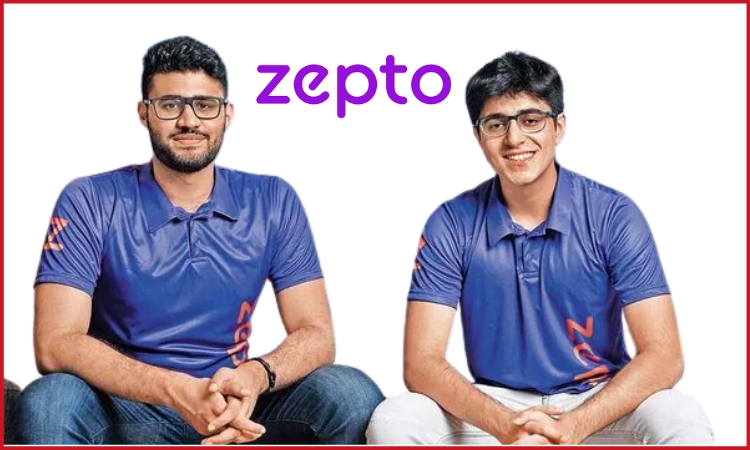
The rapid emergence of quick commerce in India gave rise to many startup wins, but very few grew as rapidly as Zepto.
Zepto, a homegrown company by two entrepreneurs, Kaivalya Vohra and Aadit Palicha, is a widely debated startup in India that implements an ultra-fast grocery delivery business. Riding on the wave of the digital commerce boom in the post-pandemic era, the company experienced rapid growth in business and captured the eyes of VCs.
Kaivalya Vohra was just 22 when he became one of the youngest self-made billionaires in India. At the same age, Aadit Palicha was already one of India’s richest young startup entrepreneurs.
Zepto was able to grow rapidly due to its rapid commerce business model, its technology-enabled logistics network, and its ability to meet rising consumer demand for ultra-fast grocery delivery in India. The company also received a lot of investor backing, which helped it expand quickly across primary cities in India.
The point that makes Zepto better is how it affected the confidence of investors and the overall fast commerce market in India.
It provided proof that in one of the most competitive startup environments in the country, young entrepreneurs can take on incumbents.
2. Shashvat Nakrani – BharatPe

Shashvat Nakrani, a student at IIT Delhi, ventured into India’s startup ecosystem.
Nakrani has been part of the founding team of BharatPe, one of India’s success stories in Fintech despite the mobile payments crunch.
BharatPe sought to help small merchants accept UPI payments over a common QR code.
The company’s business model was focused on making digital payments hassle-free for merchants and penetration into financial services. Its growth was directly in line with the need for any fintech startup in India to scale at a breakneck pace, driven by the tremendous UPI adoption rates.
The company took off as India’s digital economy was picking up steam, and by his twenties, Nakrani had made it big and became a billionaire.
This highlights the fact that fintech became one of the fastest-growing industries in contemporary Indian history.
The promoters of the startups were able to scale swiftly as widespread usage of UPI gained momentum in the country.
3. Ritesh Agarwal – OYO

Ritesh Agarwal was one of India’s highly ranked startup entrepreneurs after founding the world’s hospitality company, OYO, prior to his 30th birthday.
Starting with a budget hotel aggregator, OYO expanded to several countries and became one of India’s largest start-up success stories.
Agarwal’s journey from a small-town startup founder to a global corporate giant was an inspiration to millions of entrepreneurs in India’s startup landscape.
OYO’s high-growth period included entry into countries across Southeast Asia, Europe, and the United States.
It stood as a symbol for all Indian companies that were skilled at constructing world-scale technology businesses.
OYO’s growth consisted of offering standardised budget accommodation by capitalising on technology, providing a strong brand name, and efficient operations. This managed to be quick as the business quickly entered many overseas markets.
The best success story of Ritesh Agarwal also played an important role in creating acceptance of start-up entrepreneurship amongst young Indians who, even before, were considered to have jobs in traditional corporates more secure.
4. Nikhil Kamath – Zerodha

Nikhil Kamath transformed the Indian stock trading industry through Zerodha, a business that changed the face of retail investing through low-cost digital brokerage solutions.
Unlike many other ventures funded by new startups, Zerodha became profitable even as it competed with incumbent brokerages, long-established industry players. Its technology-first approach and discount brokerage concept allowed millions of Indians to invest more easily.
The company became India’s largest retail brokerage platform and further mobilized young investor participation in the stock market.
Kamath had already become one of India’s youngest billionaires when, thanks to the boom in retail investing in the country, his company Zerodha became a huge success.
A key, critical advantage that proved to be the unique strength of Zerodha was the ability of scaling without any external venture capital.
Capital-efficient growth was a key factor that gained massive recognition in India’s startup landscape at a point in time when several high-growth startups were not banking on profitability.
5. Pearl Kapur – Zyber 365

Life took a different path for Pearl Kapur, who started the company of Zyber 365 and received headlines of having become a unicorn on such a fast track.
The company is working across AI, blockchain, security,y and Web3 infrastructure.
Kapur gained widespread attention after Zyber 365’s valuation increased rapidly, placing him among the country’s most talked-about young entrepreneurs. The media raised issues on value disclosure, resulting in controversy.
Despite the argument around, Zyber 365 is a manifestation of a much larger movement of startups in India working with AI, decentralized systems, and grabbing more investment.
AI, blockchain, cybersecurity, and the Web3 ecosystem are gaining investor traction as emerging areas of technology with rapid scaling potential and value creation.
The rapid growth of Kapur demonstrates that relatively immature technology sectors are starting to present opportunities for wealth creation years ahead of more mature businesses.
6. Aravind Srinivas – Perplexity AI

One among the top Indian-origin founders who are leading the global AI race is Aravind Srinivas.
Srinivas co-founded Perplexity AI, a natural language answer engine to rival search engines by aggregating source-front conversational answers. His prior roles at OpenAI, DeepMind, and Google have created a baseline within the fast-growing AI vertical.
Perplexity AI became one of the most high-profile AI startups during the recent generative AI boom, raising funding and reaching large valuations. The company’s emphasis on AI-enhanced search & discovery set it apart in a rapidly populating landscape.
The fact that Srinivas was a winner exemplifies emerging trends. Entrepreneurs are moving from solely building technology companies for the Indian market to the global, competitive landscape.
Also, it is an indicator of the emerging influence of India in the global AI domain.
The New Generation of Startup Billionaires
The fact that entrepreneurs like Kaivalya Vohra are emerging is not just indicative of the success of individual start-up enterprises.
This points to the emergence of a new generation of Indians billionaires, now generated more through the IT-enabled businesses than conventional industries.
The explosive growth in quick commerce, fintech, AI, SaaS, cybersecurity, and creator economy platforms has made it possible for founders to build companies and grow at a pace that previous generations could only have dreamed of.
Some factors are CEO dollars, digital infrastructure, ubiquitous UPI adoption, AI, and a mobile-driven consumer mindset.
This is in sharp contrast to the big traditional entrepreneurs, who in the old world, in the 70s and 80s, would have taken a couple of decades to build up to the billion dollars.
Today, entrepreneurs are hitting it this quickly thanks to technology, digital distribution, and a nationwide marketplace from the onset.
Companies like Zepto, OYO, Perplexity AI, BharatPe, and Zerodha show how the combination of innovation, scalability, and optimal market timing can help grow businesses at a breakneck speed.
India’s Startup Billionaire Wave: What Does It Mean?
Significantly, the startup space in India has matured in the last decade.
Previously, foundation founders tried to prove that Indian tech firms could scale. Now, founders are selling globally from day one, embedding AI into their product, aiming to be profitable and category-creating from the start.
The rise of young billionaire entrepreneurs is also a positive signal of shifting investor sentiments and enhanced faith in the Indian startup scene.
But most significantly, they are rewriting the script of income-earning and life-path choices for the new generation.
The notion of starting your own business is no longer regarded as a risky or unorthodox career choice.
It has evolved into a concrete proposition for determined entrepreneurs who aspire to establish a business capable of competing on a worldwide level.
Conclusion
These startups tell the story of how the country’s startup ecosystem has become one of the most vibrant innovation spaces in the world.
By weaving a narrative across sectors such as quick commerce, fintech, hospitality tech, AI, and blockchain, these entrepreneurs have built ventures that can scale rapidly.
Their achievement underlines the increasing importance of technology, the digital economy, venture investment, and aspirations to be global.
As India develops its startup ecosystem, it will bring forth a new era of entrepreneurs who will think of India as one market and the world as their marketplace.
FAQ
Who holds the title of being the youngest self-made billionaire entrepreneur in India?
Kaivalya Vohra, Zepto co-founder, who is one of the youngest self-made billionaire entrepreneurs of India, has skyrocketed recently with the growth of the quick commerce startup.
Which Indian startup had two of the youngest billionaire entrepreneurs in India?
Zepto emerged as one of the few Indian startups to have 2 ultra-young billionaire founders via the success of Kaivalya Vohra and Aadit Palicha.
What is causing startup founders in India to get to the billionaire stage so much faster now?
Startups have been able to scale at much faster rates than traditional businesses in the last few decades, as a result of digital platforms, venture capital funding, AI adoption, and mobile-first consumers.
Were even previous generations of Indian entrepreneurs building at such a rapid pace?
The older entrepreneurs tended to grow their business over several decades, whereas today’s entrepreneurs who are starting a business can achieve a billion-dollar valuation in a matter of years.
What is it about AI, fintech, and quick commerce that has produced so many new billionaires?
All three industries are highly scalable, technology-based markets with consumer acceptance, and are characterized by a fast-growing startup proliferating across various industries and markets.