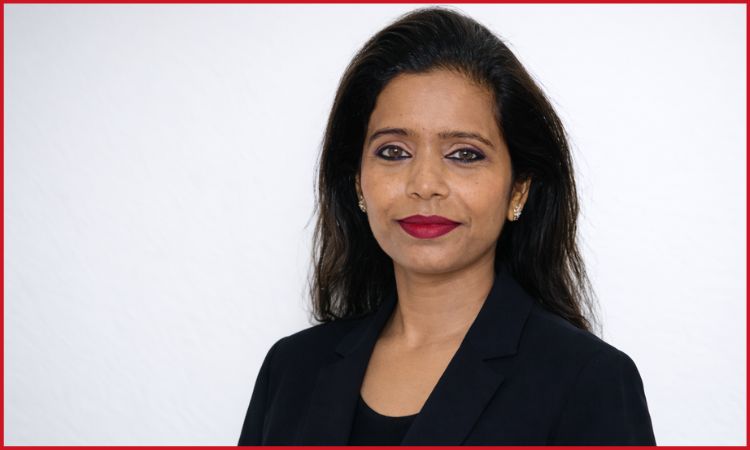
Business Outreach speaks exclusively to Deepali Dev, COO, ECOS (India) Mobility and Hospitality Limited
When India went into its first lockdown in March 2020, Deepali Dev had been COO of ECOS (India) Mobility and Hospitality Limited for exactly a few days.
The timing could not have been more brutal. Corporate ground transportation, the business she had just taken charge of, runs entirely on movement. And India had just put pause on
“March 2020 was one of the most defining periods of my professional journey. I had just stepped into the COO role when the country suddenly went into lockdown. Overnight, there was uncertainty everywhere, especially for our chauffeurs and employees whose livelihoods depended on movement and travel,” says Dev, who oversees end-to-end operations across ECOS’s presence in 128 cities and a fleet of over 12,000 vehicles.
What she did next says a great deal about the kind of leader she is.
“In those moments, operations came second. People came first. We spent a lot of time staying connected with employees, chauffeurs and even their families. Sometimes leadership is not about having all the answers. It is about making people feel supported during difficult times,” she says.
ECOS, founded in 1996 and formerly known as Eco Rent a Car, today serves over 1,200 corporate clients including 65 plus BSE 500 companies, and has managed premium transportation for events as significant as India’s G20 Presidency in 2023 across 20 plus cities. It is a business built on reliability at scale. And reliability, Dev believes, begins with culture.
“At ECO, hospitality is deeply embedded in our mobility offering. Atithi Devo Bhava is not just a thought or a line we use. It reflects in how we speak, how we serve and how we make every passenger feel respected and cared for,” she says.
From telecom towers to car seats
Dev did not come to mobility through the obvious door. She spent over two decades in telecom, holding leadership roles at Idea Cellular Limited and Sistema Shyam TeleServices Limited, before joining ECOS in 2017 as General Manager, Learning and Development. A graduate of the University of Delhi with certifications from FranklinCovey, Dale Carnegie, and two Green Belt qualifications, she built her career around people, not processes.
“After spending over two decades in telecom, I was looking for work that felt closer to people and more meaningful in everyday life. When I joined ECOS in 2017, I saw an industry with immense potential to become more service-led and culture-driven. For me, mobility was never only about vehicles or logistics. It was about trust, safety, comfort and responsibility,” says the COO.
Her rise from HR and L&D to the top operational role was not accidental. “A large part of my growth came from building teams, strengthening culture and creating alignment between people and performance,” she says.
The three things that cannot come apart
ECOS operates at an intersection that is easy to describe and hard to hold together: mobility, technology, and hospitality. Dev has a clear mental model for how they relate.
“For us, mobility is the service, technology is the enabler, and hospitality is the soul of the experience. We believe we are not only in the transport business, but in the service industry. Technology strengthens efficiency and helps us scale faster, visibility and safety, but people ultimately remember how they were treated,” says the COO, whose company runs proprietary platforms including RentNet, CabDrive Pro, and mobile applications for real-time monitoring across the mobility lifecycle.
“That is why while we continue building strong operations and technology, we equally focus on culture, behaviour and service orientation, because we are not just moving passengers, we are hosting them through every journey,” she says.
The chauffeur is the company
In a business where the last mile of experience is delivered by a driver partner, quality control is a perpetual challenge. Dev’s answer to it is both practical and philosophical.
“They are the true ambassadors of ECO. For many passengers, they are the only direct interaction they have with the company, which makes their role extremely important. We invest deeply in their development, not only in driving skills but also in professionalism, communication, safety and hospitality. Through various training programmes, we focus on behavioural skills, emergency response readiness, passenger handling and service etiquette,” says Dev.
But the investment goes beyond the classroom. “Beyond training, we focus a lot on dignity and pride. A chauffeur who feels respected carries himself differently and serves differently,” she says.
It is a line that captures something essential about how Dev thinks. And it connects directly to what she sees as the industry’s most underaddressed problem.
“One of the biggest gaps in the mobility industry today is service orientation and communication skills. India has strong driving talent, but corporate mobility today requires much more than technical driving capability. Passengers today expect professionalism, empathy, clarity in communication and a sense of reassurance during travel. In many ways, chauffeurs today represent hospitality on wheels,” says the Green Belt-certified leader who has spent years building capability programmes at scale.
What good operations look like from the inside
In corporate mobility, Dev says, the best work is invisible. Clients notice only when something goes wrong.
“Behind that last mile service delivery is a great amount of discipline, coordination and people effort. We focus strongly on structured processes, chauffeur readiness, safety standards, technology support and continuous communication across teams. Passenger safety remains a very important priority for us, especially when it comes to women safety measures, emergency readiness and operational responsiveness,” she says.
“At ECO, customer delight is not about large gestures. It is about consistency, reliability and making people feel reassured that they are in dependable hands,” says Dev.
The EV transition, done thoughtfully
ECOS has been building towards sustainable mobility, and Dev is careful about how she frames what that actually means on the ground.
“For us, sustainable mobility is not only about introducing electric vehicles. It is about building a more responsible and future-ready ecosystem overall. The EV transition requires operational readiness, new safety protocols, infrastructure alignment and extensive chauffeur training around charging practices, vehicle handling and emergency preparedness,” she says.
The human dimension of that transition is what she keeps returning to. “We continue focusing strongly on safety, wellness and community care across the ecosystem. This includes health initiatives, women safety measures, training programmes and CSR activities that reflect our larger responsibility towards people and society. At ECO, we believe the future of mobility should not only be efficient and technology driven. It should also feel humane, responsible and thoughtful in the way it serves people every day,” says the COO.
It is, in many ways, the same belief she walked in with in 2017. The industry has changed around her. The conviction has not.