From a loss-making cement unit to a $1.4 billion paint acquisition — Parth Jindal, Managing Director of JSW Cement and JSW Paints, is quietly rewriting what the JSW Group stands for.
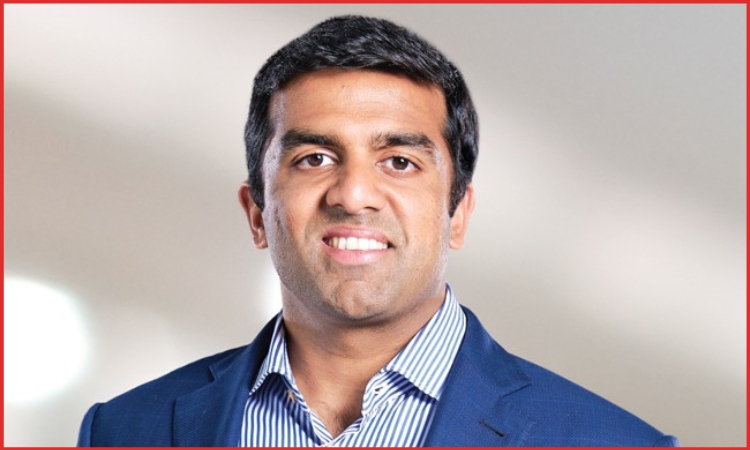
Parth Jindal did not grow up near industry. He grew up inside it. The family’s idea of a weekend retreat was a farmhouse that happened to sit within a JSW factory complex — squash courts included, built on factory premises because that was simply where things got built. Sajjan and Sangita Jindal raised their youngest son close enough to the business that it stopped feeling like a business. It just felt like home.
When he came back from Harvard Business School in 2016, MBA in hand, the sensible path was obvious to everyone around him. JSW Steel was already a dominant force in the Indian industry — his father’s life’s work, essentially, and not something that needed rescuing. JSW Energy was holding steady. A junior role in either would have been comfortable, maybe even prestigious. He turned both down. Chose instead to run a cement division that had been in the red for years — and, somewhere in the middle of sorting that out, decided JSW ought to get into paint as well. Against Asian Paints. A company that had been winning that fight since before Parth was born.
That was roughly a decade ago. JSW Cement now reports revenues of ₹5,910 crore, SEBI has cleared a ₹4,000 crore IPO, and JSW Paints — after its $1.4 billion acquisition of AkzoNobel India’s Dulux brand in 2025 — sits as the country’s fourth-largest paint company. Add to that JSW Sports, which owns franchises across four major Indian leagues, and JSW MG Motor India, which has entered the EV space with real early momentum. The JSW Group, valued at over $25 billion, is no longer just a steel story. Increasingly, it is a consumer brand story. Parth Jindal is the one writing it.
Education and Early Career of Parth Jindal
Born on 19 May 1990, Parth Jindal is the youngest of Sajjan Jindal’s three children. Cathedral and John Connon School in Mumbai came first, then Sevenoaks in England. A BA in Economics and Political Science from Brown University in 2012, followed by the Harvard MBA in 2016.
The gap between those two degrees is worth paying attention to. He spent time at Falcon Edge Capital in New York — an emerging markets hedge fund — not because he wanted to work in finance, but because he wanted to understand how institutional investors read Indian businesses. Then six months on a factory floor at JFE Steel in Japan. He was not building a resume. He was building a specific kind of knowledge.
“That one year on the emerging markets desk really helped me understand. Even now, when I’m negotiating, I know what kinds of discussions they’ve likely had.“ — Parth Jindal, Outlook Business, 2025
As he explained to Outlook Business in August 2025, the goal was simple enough — walk into a negotiation already knowing, roughly, what the other side had discussed before you arrived. A quiet advantage, but a real one, especially at twenty-six.
JSW Cement: How Parth Jindal Turned Around a Loss-Making Business
Parth Jindal took charge of JSW Cement in June 2014, months before finishing his Harvard MBA. What he inherited was genuinely difficult — a division losing money, structurally disadvantaged, operating in UltraTech and Ambuja’s long shadow. There was no obvious quick fix.
What he did first was go after the cost structure, because that was where the real damage was. JSW Cement started using slag from JSW Steel’s furnaces and fly ash from power plants as raw materials — what would later be called a waste-to-wealth model. Competitors without an integrated industrial setup behind them could not easily copy this. Costs fell. The product also turned out to be environmentally cleaner, which mattered more each year as green construction standards became harder to ignore.
Eight or nine years on, the numbers tell their own story. Revenues of approximately ₹5,910 crore. Installed capacity at 21 MTPA. SEBI-cleared IPO worth ₹4,000 crore. A long-term target of 60 MTPA, with new integrated units coming up in Rajasthan, grinding units in Madhya Pradesh, and a push into North and Central India where price volatility is lower. In 2022, Parth was appointed Chair of the Global Cement & Concrete Association India — and re-elected to the role in 2024.
He has spoken openly about what the IPO means to him personally. Taking over something broken, making it work, and then — years later — taking it public: that arc matters to him in a way that goes beyond the financial milestone.
JSW Paints vs Asian Paints: Can JSW Crack India’s Paint Market?
Asian Paints has run roughly half of India’s decorative paint market for more than eighty years. Entering that category in 2019 with ₹600 crore and zero brand equity in paints — most serious people in the industry thought it was a long shot.
Rather than try to outspend Asian Paints or Berger, Parth Jindal looked for the places they had quietly stopped caring about. End consumers got ‘Any Colour at One Price’ — which sounds simple, but cut through the shade-based pricing confusion that had frustrated buyers for years. Contractors got a square paint can, a small design change that reduced wastage on rollers and, oddly enough, became a talking point. Dealers got something more valuable: exclusive territorial rights, which meant JSW would not pit them against each other the way larger brands routinely did.
Word spread — not fast, but genuinely. Contractors remembered the can. Dealers valued the territory. Buyers appreciated a price list that made sense. In a distribution-heavy business, that kind of ground-level credibility builds slowly and sticks.
The acquisition of AkzoNobel India — home of Dulux — changed the scale of the conversation entirely. A 74.76% stake, $1.4 billion, 29,000 combined retail counters. India’s fourth-largest paint company was created in one move. Parth’s explanation for it was characteristically straightforward:
“Dulux is strong in the premium segment, while JSW is strong in the mass segment. It’s natural for the two operations to come together.”
— Parth Jindal, Business Standard, July 2025
JSW Sports and Electric Vehicles: The Brand Play
Steel and cement do not build consumer affection. You cannot run a television campaign for a product that goes into a bridge. Parth Jindal understood early that JSW, for all its industrial muscle, had a brand problem — or rather, no brand at all in any consumer sense. Sports became the answer to that.
JSW Sports now owns Delhi Capitals in the IPL, Bengaluru FC — ISL Champions in 2018–19 — Haryana Steelers in Pro Kabaddi, and Soorma Hockey Club. Beyond team ownership, Parth founded the Inspire Institute of Sport in 2018: a 42-acre high-performance training facility in Karnataka focused on boxing and wrestling, recognised by the Sports Authority of India as a Khelo India-accredited centre. These are not vanity investments. They are how a conglomerate with no consumer heritage tries to build one.
On the EV front, JSW MG Motor India — the joint venture with SAIC Motor — launched the MG Windsor in 2024 and captured close to 50% of India’s EV market share in the months that followed. At Davos in January 2026, Parth confirmed that a JSW-branded plug-in hybrid is coming before Diwali 2026, aimed at the ₹15–30 lakh segment, with 80% local content. Whether that holds to schedule is another question — but the ambition is clearly not shrinking.
“We want to be in the top three, whichever industry we enter.”
— Parth Jindal, Entrepreneur India, 2025
Key Milestones
- Turned around JSW Cement (2014–present): from loss-making to SEBI-approved IPO candidate
- Founded JSW Paints (2019); acquired AkzoNobel India (Dulux) for $1.4 billion in 2025
- Founded JSW Sports; owns Delhi Capitals (IPL), Bengaluru FC (ISL), Haryana Steelers (PKL)
- Co-directed JSW MG Motor India JV; MG Windsor captured ~50% India EV market share (2024)
- ET 40 Under Forty (2019); Forbes India Gen-Next Entrepreneur Award (2024)
Conclusion
The four things Parth Jindal bet on — cement, paints, sports, electric vehicles — had one quality in common when he went into each of them: they were not obvious wins. Cement was losing money. Paints had a near-monopoly sitting on top of it. Sports had no clear logic for a steel conglomerate. EVs are still being figured out by everyone, including JSW.
What holds across all four is not a grand strategy, exactly. More a habit of mind. He tends to ask where the existing player has gotten comfortable — where the cost is too high, the product design ignored, the channel partner taken for granted. That is usually where he finds the opening. Slag-based manufacturing, square paint cans, territorial dealer rights, a joint venture with SAIC: each of them came from that same question asked of a different industry.
Sajjan Jindal built something enormous out of steel. That is not going anywhere. But the next layer of JSW — consumer-facing, brand-aware, spread across categories his father never touched — that belongs to Parth now. Whether it becomes something comparable in scale is genuinely unknown. But it is not standing still.
FAQs: Parth Jindal and JSW Group
Q1. Who is Parth Jindal?
Parth Jindal is an Indian businessman and third-generation entrepreneur of the Jindal family. He serves as Managing Director of JSW Cement and JSW Paints, and is the Founder of JSW Sports. He is the son of Sajjan Jindal, Chairman of JSW Group.
Q2. Where did Parth Jindal complete his education?
He earned a BA in Economics and Political Science from Brown University (2012) and an MBA from Harvard Business School (2016).
Q3. Is Parth Jindal the owner of Delhi Capitals IPL?
Yes. Parth Jindal is Chairman and Co-Owner of Delhi Capitals. JSW Sports acquired a 50% stake in the franchise from GMR Group in 2018 for approximately ₹550 crore.
Q4. What is Parth Jindal’s leadership style?
Parth Jindal’s approach is defined by execution over inheritance. He has consistently chosen difficult, underperforming business units over comfortable ones, and is known for merit-based, professionalised management across JSW Group’s consumer verticals.
Q5. What is JSW Group’s B2C transformation strategy?
Under Parth Jindal’s leadership, JSW Group has moved from a purely B2B industrial model into consumer-facing businesses — JSW Cement, JSW Paints, JSW Sports, and JSW MG Motor India all serve end consumers directly, reflecting a long-term shift in the group’s brand identity.
Q6. What is Parth Jindal’s net worth?
According to multiple reports from Jagran Josh, Financial Express, and India Times, Parth Jindal’s personal net worth is estimated at around ₹600 crore.