Source: Industry Outlook
India is undergoing a significant transition as energy from renewable sources is being placed in the economic and industrial development. As solar, wind, and green hydrogen emerge as mainstream, renewable energy is redefining business as usual for companies across all sectors like never before. The awareness has shifted from clean power as an alternative means of energy to being a critical idea if a business aims to thrive in an evolving global economy.
This evolution is triggering structural changes across all sectors. From manufacturing to real estate, technology, and infrastructure, renewable energy in India helps companies decrease operating expenses, attract green investments, and achieve sustainability goals. It has also discovered strong policy support and swift innovation, which helps companies looking for new opportunities.
As renewable energy is reshaping India’s business landscape, the focus has now switched toward long-term sustainability, resilience, and growth, which will highlight the commitment of India to creating a greener and stronger economy.
Renewable Energy and India’s Changing Business Priorities
As renewable energy becomes more relevant in India, debating how best to define success for business is no longer about scale and efficiency. Sustainability is now also an important factor. Businesses are adapting to renewable energy, not only to reduce emissions but also to meet their investors’ expectations and international trade norms.
This change of priorities is now also influencing financial decisions, strategic planning, and even supply chain activities. Renewable energy investments give enterprises lower energy costs in the long run, better social perception, and better resilience overall. These changes point to the reality that renewable energy is making real change in the way businesses in India operate, tying together profit, responsibility, and sustainability.
The Role of Policy Support in Accelerating Renewable Energy in India
Through the use of renewable energy, government laws are significantly changing the business environment in India. The National Solar Mission, Production Linked Incentives (PLI), and commitment to reach 500 GW of renewable capacity by 2030 are examples of systematic measures that encourage businesses in India to consider clean energy sooner rather than later.
The policies give companies the stability and confidence to make investments in this area. With support for subsidies, tax benefits included with investments, and options for financing green initiatives, different industry sectors such as manufacturing, real estate, and many others have now adopted renewable energy into their business. These developments are making India a viable option for sustainable business practices in the global context.
Renewable energy is transforming India’s business landscape as companies align their plans to fit into India’s national energy objectives. It is developing an ecosystem where sustainability can exist alongside profitability.
Effects of Renewable Energy on Key Industries in India’s Business Landscape
Renewable Energy is changing the business landscape of India across several industries. While the process will not be evenly distributed, providing a range of challenges and opportunities in each industry, it is clear that Renewable Energy is significantly shifting the business landscape and, in some cases, helping India’s industrial base keep pace with competitive global markets. The following highlights key examples of massive shifts across the business landscape due to the increasing focus on Renewable Growth.
Manufacturing Sector
Industries within the manufacturing sector are investing in solar and wind power to reduce their electricity bills. The growth of Green Manufacturing, enabled by Renewable energies, is being used as a platform to allow the Indian industry access to global market competitiveness while simultaneously addressing carbon emissions.
Real Estate and Infrastructure
Commercial buildings and Residential buildings have begun using energy-efficiency systems and rooftop solar in their development. This represents a considerable shift in the overall business landscape of Real Estate in India, enabling these new developments to show value added to potential investors and environmentally conscious buyers.
Information Technology (IT) and Services
Data centers consume massive amounts of power, and many IT firms in India are making investments in Renewable Energy to prepare for sustainable long-term growth and to keep pace with ESG obligations in the global environment.
Automotive Sector
With the push for Electric Vehicles, Renewable Energy is creating new business models and opportunities in the automotive industry, changing the face of the shifting landscape of cleaner transportation, and altering supply chains.
Agriculture
Farmers are beginning to adopt Solar Pumps and Bioenergy solutions. Not only are they providing savings on energy costs, but additionally, boosting productivity and access to energy in rural India.
Investment Opportunities and Economic Benefits Involved with Renewable Energy
Source: Civils Daily
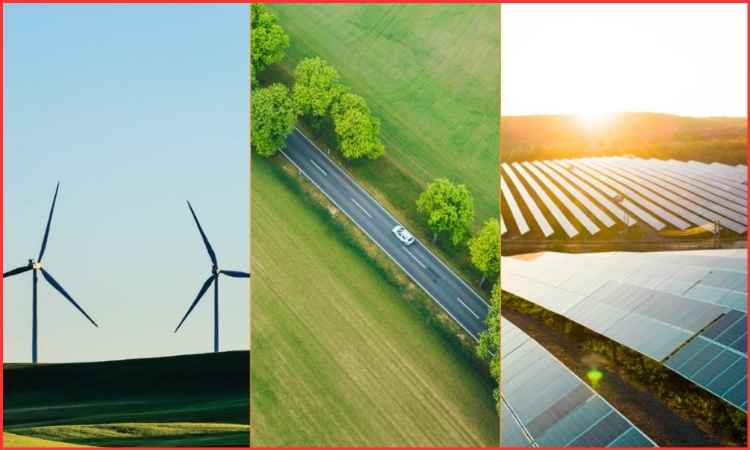
Renewable energy is changing not only the environmental landscape in India, but the economic landscape as well. The renewable energy sector has captured the minds and dollars of both domestic and international investors alike. The Ministry of New and Renewable Energy indicated that between 2014 and 2023, India attracted more than USD 78 billion in renewable energy investments, which shows worldwide confidence in this shifting transition.
The main economic benefits of renewable energy include:
- Reduced Use of Non-Renewable Resources – By using solar or wind power, businesses are able to shift away from more expensive fossil fuels, while establishing steady and predictable energy costs.
- Job Creation – Renewable energy projects are responsible for generating millions of jobs in the installation, manufacturing, and maintenance of renewable energy products.
- Green Financing – Both banks and global investors are also focusing on firms that have targets in renewable energy.
- Export Potential – India has grown its export potential for renewable energy equipment and services.
These opportunities are helping change renewable energy topics from compliance-based to economic growth-based. Climate change has significance on renewable energy conversations, but these topics highlight what is happening at an economic level in India, and how decisively renewable energy is altering India’s business landscape and future competitiveness.
Challenges in the Adoption of Renewable Energy in India
While renewable energy is changing India’s business environment, the change does come with obstacles. There are several obstacles that businesses need to overcome to realize the true potential of the sector:
High Capital Expenditure- While costs are declining, the costs to initiate renewable projects are ever-present, especially for small and medium businesses.
- Grid Infrastructure- Grid Infrastructure has limitations. The Indian grid is still integrating variable energy that has recently been developed, like solar and wind.
- Land and Space- To achieve meaningful reduction in carbon emissions through solar and wind, there needs to be space for large-scale solar and wind farms, which creates land and social conflicts.
- Storage- The costs of energy storage, and creating reliable methods of storing energy as renewable energy sources, solar and wind, are not produce energy during non-sunny or non-windy hours, are significant.
- Policy- Uncertainty Changes in policy and states not having uniform regulations are causing some investors and businesses to hesitate.
- Skill Gaps- The renewable energy sector will require trained people to use, educate, and maintain the value of the technology, but India has not trained enough people, even for installation.
While many uses for renewable energy are changing India’s business landscape, it will take continued policy, investment, and innovation to continue renewable energy improvements for the long term.
Future Outlook: The Ongoing Evolution of Renewable Energy in India’s Business Landscape
The prospects for renewable energy in India and, in particular, its relationship with India’s economy, look bright and transformative. With a target of 500 GW of renewable capacity by 2030, India will become one of the leaders in clean energy markets worldwide, and this aspirational vision will transform India’s business landscape across sectors.
Here are some key trends that will drive the future:
• Green Hydrogen Development – India has committed significant investment in hydrogen as a clean fuel source, which will open up new opportunities for large industries, such as steel, cement, and transport.
• Corporate Sustainability Goals – The effect of global supply chains is a need for low-carbon operational practices. Companies that adopt renewable sources will continue to be competitive on an international scale.
• Innovation and Technology – Experience with smart grids, AI-based energy management, storage capabilities, etc., will further enhance operational efficiency and reliability.
• Export Competitiveness – Adopting renewable energy will inspire interest from global partners and allow India to be viewed as a hub for sustainable manufacturing.
• Inclusive Growth – Renewable energy will be able to offer rural India greater opportunities via access to cheaper forms of electricity, and by incentivizing the establishment of local enterprises.
As these trends illustrate, renewable energy is not a fad but rather a foundational element of resculpting India’s business landscape for decades to come.
Conclusion
Renewable energy is reshaping India’s economy from cost reduction to new sources of capital, and it is continually redefining India’s business landscape. The road ahead has hurdles, but with sound policy, innovation, partnerships around the globe, both public and private, the transformations will continue and accelerate towards clean energy leadership.
Businesses that act initially will start to position themselves for long-term benefits that include competitiveness, sustainability, and reputation change. Businesses that wait will start to fall behind as the economy continues to change. The emerging economy sends a clear message: renewable energy is more than just influencing India’s growth – it is redefining our business landscape for the future.
FAQs
1. What percentage of India’s total energy is renewable?
As of 2023, renewable energy makes up around 42% of India’s total installed power capacity, showing strong progress toward 2030 targets.
2. Are small businesses adopting renewable energy in India?
Yes. Many small businesses, especially in cities, are using rooftop solar systems for cost savings and reliable power.
3. Which state produces the most renewable energy?
Rajasthan leads in installed renewable capacity, followed by Gujarat and Tamil Nadu.
4. How does renewable energy boost India’s exports?
Global buyers prefer goods produced with clean energy. Renewable adoption improves India’s competitiveness in international markets.
5. Can renewable energy support the rural economy?
Absolutely. Solar irrigation, bioenergy, and microgrids are providing affordable energy in rural areas, improving agriculture and local enterprises.