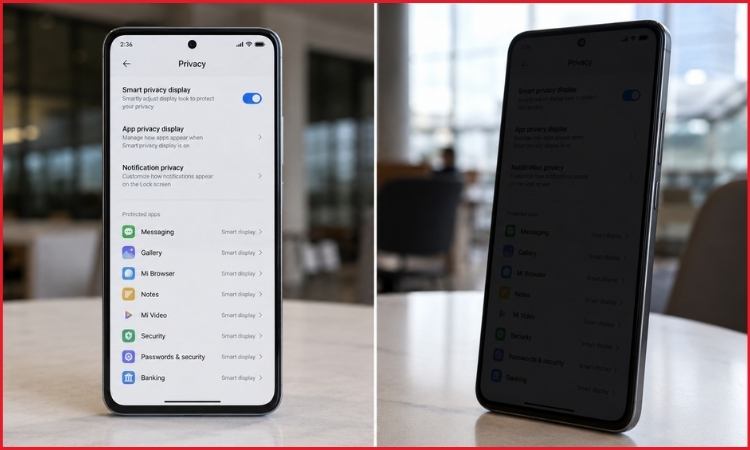
Xiaomi is testing a new display-privacy system designed to stop nearby people from reading a phone screen at an angle, according to interface material found inside an unreleased HyperOS build.
The feature is labelled Smart privacy display and appears to narrow the screen’s visible viewing area when activated. The user looking directly at the phone should retain a normal view, while someone beside them would see a darkened or less readable display.
That could make the feature useful in shared spaces where messages, passwords, payment details or personal photographs may otherwise be exposed to “shoulder surfing.”
The discovery does not amount to an official product announcement. Xiaomi has not confirmed which phones will support the system, when it will be released or whether every function shown in testing will reach the final software.
Reports have connected it with HyperOS 4 and Xiaomi’s next flagship generation. However, the operating-system version, compatible models and launch timing remain unconfirmed.
Privacy Can Be Applied to Selected Apps
Leaked menus indicate that users may be able to activate protection across the entire display or apply it only when particular applications are opened.
An App privacy display section allows individual apps to be selected. A user could therefore enable the restricted viewing angle for a banking application, password manager, messaging service or photo gallery without keeping it active throughout the day.
The interface also includes an option for notification privacy. This could shield incoming messages or other pop-up information while leaving the remaining screen visible, although the precise behaviour may change before release.
A separate Page privacy display function reportedly recognises sensitive screens automatically. Examples shown include password entry, payments, money transfers and conversations. If implemented, HyperOS could engage the privacy effect only when those pages appear and switch it off after the user leaves them.
This would be more convenient than repeatedly changing the display mode manually. It would also reduce the time the screen remains restricted when no sensitive material is being shown.
The leaked material further points to personalised application groups. Apps associated with private information could be placed together and controlled under one rule. A collection containing Gallery, Notes and Passwords, for example, could activate the protection automatically in public.
Some advanced controls were reportedly found only in a Chinese HyperOS build. The wider Smart privacy display interface was demonstrated on a global ROM, suggesting Xiaomi is testing part of the feature for markets outside China.
Testing on a global build does not guarantee an international release. Regional software versions can differ because of hardware, service and regulatory requirements.
Hardware Details Remain Unclear
One leaked settings screen describes the technology as offering “hardware-level privacy.” That wording suggests it may depend on a specially designed display panel rather than being delivered to every existing Xiaomi phone through a software update.
Xiaomi has not explained the underlying technology. It is therefore too early to say whether the company is using a panel capable of controlling how pixels emit light, another physical display layer or a software-led effect supported by selected hardware.
The distinction is important. Conventional privacy screen protectors permanently reduce side-angle visibility, but they can also lower brightness, affect colours and make the display more difficult to use outdoors.
An integrated system can be turned on only when required. Samsung uses this approach on the Galaxy S26 Ultra, where its built-in Privacy Display limits what can be seen from the side and can protect selected apps, password entry and notifications.
Xiaomi’s menus indicate a similar focus on selective protection. However, there is not enough confirmed information to determine whether its performance, viewing angles or image quality will match Samsung’s implementation.
The leaked interface also warns of possible limitations. Privacy protection may slightly increase power consumption, while battery-saving mode could temporarily disable it. Brightness compensation may pause during HDR playback, and landscape operation may not be supported in the current test version.
Third-party themes could create another restriction, particularly when protecting notifications on the lock screen. These disclosures indicate that Xiaomi is still balancing privacy with brightness, battery use and compatibility.
Possible Launch With a Future Flagship
The feature is expected to appear first on a future premium Xiaomi phone, with reports pointing towards the Xiaomi 18 series. No model association has been confirmed by the company.
If special display hardware is required, availability would probably be limited to newly manufactured devices. If most of the system is software-based, Xiaomi could potentially extend some controls to additional HyperOS phones. Neither outcome has been announced.
The development shows that display privacy is becoming a competitive smartphone feature rather than an accessory purchased separately. Manufacturers are beginning to treat protection from side-angle viewing as part of the screen itself, alongside brightness, refresh rate and colour accuracy.
For now, the evidence is limited to menus and demonstrations found in test software. Xiaomi’s privacy display appears capable of protecting the full screen, chosen apps, notifications and sensitive pages, but its release date and hardware requirements remain open questions.