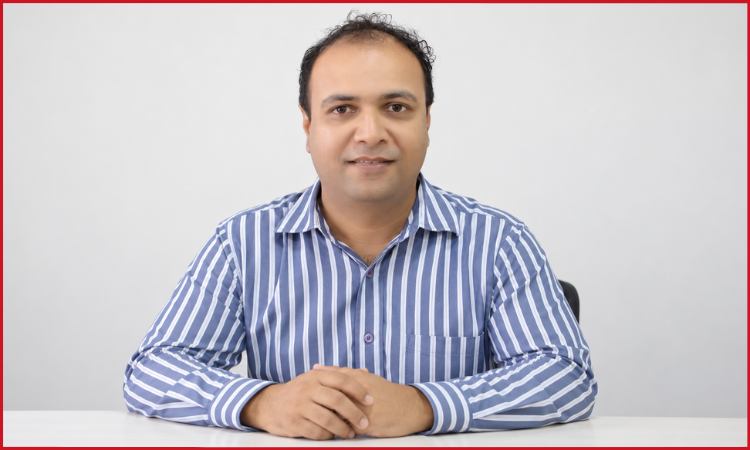
A sustainable society is no longer an optional luxury; it is a pressing global imperative. True progress hinges on whether our present actions safeguard the generations yet to come. Today, empirical data and stark environmental realities dictate the urgent measures required to forge a resilient future. In an exclusive feature, visionary entrepreneur Rupesh Sanghvi shares his pioneering blueprint for eradicating plastic cutlery through eco-conscious food innovation.
A Vision Born from Industry Experience
As the co-founder of Edybites—an India-based food innovation startup. Rupesh Sanghvi is spearheading a bold crusade against single-use plastics. Disposable plastic utensils have long acted as an environmental blight, choking ecosystems, cluttering landfills, and scarring landscapes. Sanghvi acutely highlights the crisis of “single-use consumption,” where plastic items are discarded moments after use, lingering indefinitely in nature or underfoot. Beyond a niche sectoral concern, this is a national mission that aligns seamlessly with the ethos of Swachh Bharat—a clean, modern India. Edybites stands as a compelling testament to this belief.
Sanghvi’s transition into climate-conscious entrepreneurship stems from a distinguished 17-year career in aviation and international travel. Having led sales strategy and business development for major global airlines like Malaysia Airlines, Flydubai, Malindo Air, and Kuwait Airways, he gained firsthand exposure to large-scale food service ecosystems. Navigating these hyper-competitive environments exposed him to the staggering environmental footprint of high-volume industries like aviation, hospitality, and institutional catering. Recognizing a glaring void for “practical, scalable alternatives to disposable plastic cutlery,” Sanghvi pivoted his strategic expertise toward sustainable solutions.
“With over 17 years of experience in the airline and travel industry, I bring deep expertise in sales strategy, market expansion, and large-scale operations to the world of climate-conscious entrepreneurship,” Sanghvi notes.
Market Potential and Product Innovation
The economic landscape for edible cutlery is immense. Citing data from market research, Sanghvi highlights a global market potential of $2.6 billion, with the Asia-Pacific region accounting for $900 million and India representing a rapid $200 million market segment. Capitalizing on this growth trajectory, Edybites positions its edible spoons as a superior alternative to non-biodegradable disposables and traditional stainless steel utensils.
Crafted from a wholesome blend of natural grains—including jowar, corn flour, alongside rice & wheat—Edybites cutlery offers a nutritious, 100% natural, and baked dining experience. Processed at high temperatures and thoroughly dehydrated, these single-use utensils boast a shelf life of over 6 months without any added chemicals, additives, or preservatives. Functionally robust, they remain firm without turning soggy in hot liquids or snapping under heavy food loads. Should a user choose not to consume the spoon after a meal, the product naturally biodegrades within a week.
Overcoming Barriers: Cost and Logistics
The primary barrier to adopting eco-friendly tableware has historically been price. Plastic maintains market dominance purely due to its extremely low cost. Armed with an MBA in supply chain management, Sanghvi applied his operational acumen to address this structural challenge.
“Plastic cutlery finds a higher market only due to its very low price,” Sanghvi explains. “After relentless efforts and working on different mechanisms to produce these at commercial scales, we were able to develop a customized proprietary technology that can produce edible cutlery that is cost-comparable with plastic cutlery. Our HERO product is just a spoon specifically for ice cream lovers but not conventional spoons, which we use daily.“
To ensure seamless integration into sectors where hygiene, convenience, and structural integrity are critical—such as airlines, hospitals, and institutional catering—Edybites conducted extensive pre-launch consumer surveys.
“Edybites is developing millet-based edible spoons designed to seamlessly integrate into sectors such as airlines, hospitals, and institutional catering—areas where convenience and hygiene are as critical as sustainability,” says Sanghvi.
Pioneering a novel product segment brings significant operational hurdles. Sanghvi candidly details the logistical challenges of protecting fragile, baked items. The startup utilizes specialized paper-based vacuum packaging to prevent air and moisture exposure, alongside reinforced outer cartoning to prevent transit breakages—carefully balancing product security against cost escalation.
Recognition and Ecosystem Vision
Sanghvi’s relentless drive has earned Edybites notable recognition, including the Best Innovation Award from Starex University, Gurgaon, and the Best Entrepreneur Award from OKFLIP, Jaipur. However, Sanghvi emphasizes that driving true environmental impact requires systemic alignment across all sectors.
“All stakeholders in the field of sustainability—like agri-producers, packaging, and supply chains alongside manufacturers of ice cream, pastries, and cloud kitchens—have to get aligned by reducing consumption of plastic products,” Sanghvi emphasizes.
Driven by compassion and industrial precision, Rupesh Sanghvi continues to scale Edybites into a formidable pioneer in global sustainability. Through vision and perseverance, Edybites is transforming how the world dines—one edible spoon at a time.