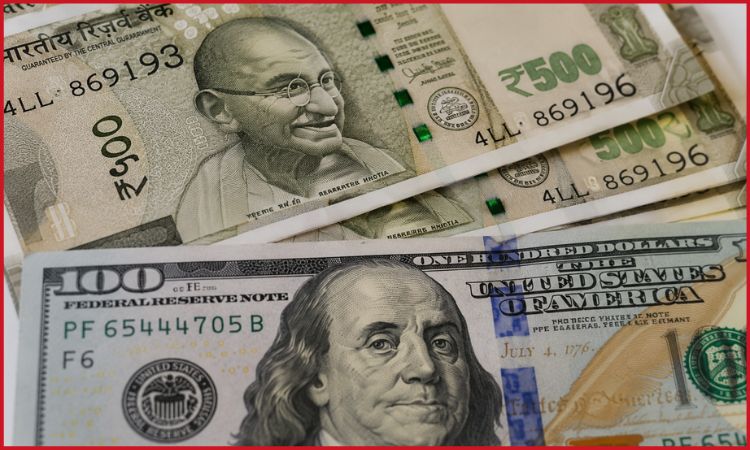
The Indian rupee touched an all-time low of 95.6250 against the dollar on Tuesday before the central bank stepped in, as a fraying US-Iran ceasefire kept crude prices elevated and foreign investors continued to exit Indian markets at a record pace.
The currency opened at 95.50, slipping past its previous record low of 95.4325 hit last week. It extended its fall to 95.6250, taking losses since the Iran war broke out to 5.2%. Year-to-date, the rupee has fallen 6.5%, the worst performance among Asian currencies.
Ceasefire under strain
The US-Iran conflict, now running for about two-and-a-half months, showed little sign of resolution despite a tenuous ceasefire in place since April 8. US President Donald Trump said on Monday the truce was “on life support”, citing disagreements over key demands made by Iran.
Brent crude rose above $105 a barrel after Trump was reported to have rejected Iran’s peace overtures as “totally unacceptable”, raising fears of continued turmoil around the Strait of Hormuz, the narrow waterway through which a large chunk of the world’s oil supply passes.
The rupee and other currencies of oil-importing countries have been among the hardest hit, following a 46% surge in Brent crude prices triggered by the Iran war. Alongside the rupee, the Philippine peso and the Indonesian rupiah have been impacted severely.
Outflows at a record
Foreign investors have pulled out more than $20 billion from Indian equities since the war began, with year-to-date outflows exceeding last year’s record. Overseas investors sold nearly $900 million on Monday, according to preliminary data.
Higher oil prices are set to widen India’s current account deficit, with the strain compounded by the prospect of continued weak capital inflows. Capital-flow challenges, coupled with a wider current account deficit, point to a weaker rupee and lower FX reserves, ANZ Bank said, adding that the energy price shock has struck India at a time of cyclical recovery in growth and inflation.
India is set for a third consecutive balance of payments deficit this fiscal year, with economists cutting growth forecasts, lifting inflation estimates and lowering rupee projections. ANZ last week lowered its rupee target for December to 97.5 from 93. BMI, a unit of Fitch Ratings, flagged the risk of the currency sliding to 100 if the Iran war worsens.
What policymakers could do
With the rupee under persistent pressure, expectations that policymakers could step in to support the currency have risen, including reviving measures used during the 2013 taper tantrum. India’s Prime Minister Narendra Modi on Sunday urged limits on fuel use, travel and imports to save foreign exchange.
Potential measures could include disincentivising non-essential imports like gold, tighter rules on outward remittances, a foreign currency deposit mobilisation scheme and a hike in domestic fuel prices, Nomura said.
The RBI is intervening in the forex market to slow the rupee’s decline, but the underlying macroeconomic factors remain unfavourable.  As one analyst put it, the central bank is controlling the velocity, not the direction.