The Indian startup ecosystem has seen the rise and fall of hundreds of delivery startups. Very few of them managed to change urban consumer habits the way Dunzo did.
Dunzo was not just another delivery app; it became a habit. One could use Dunzo anytime to fetch the keys they had forgotten, buy medicines, buy groceries, and run countless errands all over the city. The brand became so popular that people in metro cities started saying “Dunzo it” in normal conversations.
Supported initially by Google and subsequently by Reliance Retail, Dunzo appeared to be one of India’s biggest hyperlocal success stories. But after a few years, the same company went bankrupt due to increasing losses, operational failure, pressure from quick commerce, and funding issues.
Kabeer Biswas and Dunzo’s business failure has now become the single most significant cautionary tale around startup failure in India.
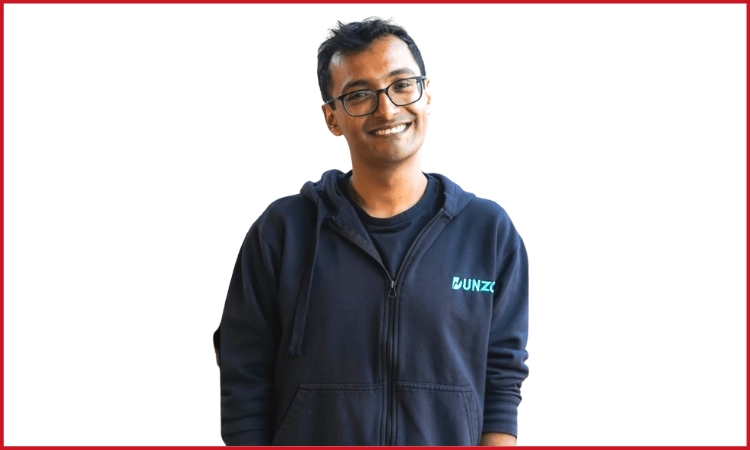
Who Is Kabeer Biswas?
Kabeer Biswas is an Indian businessman. Kabeer founded Dunzo and is its current CEO.
Before Dunzo, he co-founded a startup called Hoppr that was bought over by Hike Messenger. Those early learnings helped him grasp product design, logistics, and consumer convenience behavior.
While most startup entrepreneurs rush for scale from the beginning, Kabeer started small and solved small real-life problems of the city, which was the basis of Dunzo.
How Dunzo Started
Dunzo was established in the city of Bengaluru in 2014 by Kabeer Biswas and cofounders Ankur Agarwal, Dalvir Suri & Mukund Jha.
It is also worth noting that the firm itself has not historically been a huge technological platform. A straightforward concierge service based on a WhatsApp group was devised, enabling users to make requests for local errands and delivery.
Left your cell phone charger out?
Urgent transportation required for medicines?
Need documents to be delivered citywide?
Dunzo took care of all.
It was this feature that set the company apart from other food delivery startups, which primarily handled restaurant orders.
Why Dunzo Became a Startup Sensation
Hyperlocal Convenience Before It Became Mainstream
Long before “quick commerce” was the popular new term, Dunzo was already conditioning its users to anticipate instant assistance. The company concentrated on pain points in a city and tried to solve them, not simply offer discounts.
This is what made the service highly engaging.
Google’s First Direct Startup Bet in India
2017 marked one of the biggest milestones for Dunzo when Google invested in the company. This was reportedly the first direct investment by Google in an Indian startup.
It built Dunzo’s credibility enormously within the startup ecosystem in India. All of a sudden, investors began to view hyperlocal delivery as a huge opportunity for the long term.
Strong Brand Recall
Coming to Dunzo, its branding was informal, modern, and resonated well with urban audiences. Instead of establishing itself as a complex logistics provider, it sold the notion of being a local, everyday convenience platform.
That provided the startup with high emotional recall.
The Quick Commerce Pivot Changed Everything
By 2020 and 2021, India’s startup ecosystem was already entering the quick commerce race. Now, the expectation level for groceries was 10 to 20 minutes.
Darkstore-based infrastructure enabled the sharp scaling growth of competitors such as Blinkit, Zepto, and Swiggy. Dunzo chose to lean into this area by making moves through Dunzo Daily.
This marked a complete alteration in the company’s business model. Previously, Dunzo was mostly used to aggregate local store inventories for users.
It now had to take care of inventory, warehouses, dark stores, “Lightning Fast” fulfillment, and costly logistics operations.
IP early investor Sandipan Chattopadhyay comments that this took Dunzo away from the core identity of the business.
Reliance Investment and Massive Expectations
In 2022, Reliance Retail bought a 25.8% stake in Dunzo for almost $200 Mn. Then, it seemed like a partnership that would change the market.
Reliance required a stronger last-mile delivery platform for JioMart and its retail ecosystem. Dunzo secured funding to stay competitive in quick commerce.
The company further expanded. It claimed to have expanded to numerous cities as well. It also managed close to 120 dark stores.
But aggressive scaling had a devastating effect on operational pressure.
Where Dunzo Started Losing Control
Massive Cash Burn
Entering quick commerce is an extremely costly project.
Companies spend heavily on:
• dark stores
• rider fleets
• discounts
• customer acquisition
• fast delivery infrastructure
Claims indicated that the losses of Dunzo increased heavily, and the revenue growth could not keep pace with operational costs. The accounts state that the company’s losses equaled around 1800 crores in FY23.
Competition Became Brutal
While Dunzo faced operational delays, rivals were ahead of the competition.
Blinkit, Zepto, and Swiggy Instamart grew exponentially with stronger warehouse scale and tighter execution models. Later industry observers commented that quick commerce turned into an execution game, not a funding game.
Operational Chaos Increased
Reports indicate that internal pressure was building up, according to previous employees. Warehouses had fulfillment issues, pricing errors, delays, and customer complaints.
According to reports, Dunzo also reportedly delayed salaries and vendor payments as the pressure mounted.
Multiple Layoffs Hurt Morale
Dunzo has laid off employees multiple times since 2023. The company closed dark stores and laid off hundreds of employees to reduce costs.
Subsequent reports mentioned that a large number of employees were dismissed during the later years of Dunzo.
Did Reliance’s Control Become a Problem?
One of the biggest debates around the collapse of Dunzo is Reliance. According to some reports and startup discussions, Reliance influenced critical decisions of the company because of its ownership structure.
Others also mentioned that during the later stages, the availability of funds decreased.
Dunzo was already facing:
• unsustainable quick commerce economics
• intense market competition
• operational inefficiencies
• rapid scaling pressure
• weakening funding conditions across startups
So while Reliance’s involvement is still debated, Dunzo highlighted a much bigger issue beyond a single investor problem.
The Collapse of Dunzo
By 2024, the situation had become even worse. Senior management and the cofounders started leaving the company.
The company reportedly lost a significant number of workers. On 01/01/2025, Dunzo’s app and website went down after Kabeer Biswas left.
Subsequently, Reliance wrote off its investment in the startup.
For India, Dunzo became one of the clearest examples of how challenging sustainable quick commerce can be.
What Is Kabeer Biswas Doing Now?
Post-Dunzo, Kabeer Biswas spent a few months at Flipkart working on quick commerce efforts before exploring new AI-centric startups and commerce ventures.
Other reports from 2026 stated that he was working on his own new AI concierge startup called “M”.
His story is not that of a typical startup founder. It illustrates a common startup reality: entrepreneurs do not give up after multiple failures.
Startup Lessons From Dunzo’s Rise and Fall
Product Market Fit Alone Is Not Enough
Dunzo addressed a real problem in Indian cities today. However, even customer love alone cannot support a business that is burning a lot of cash.
Scaling Too Fast Can Destroy Unit Economics
The quick commerce race also pushed companies toward expansion at an accelerated rate. Scaling was a dangerous game without high operational efficiency.
Funding Is Temporary
Even startups backed by giants such as Google and Reliance can still fail if profitability remains weak.
Execution Matters More Than Hype
A few later entrants entered the same market and succeeded by moving faster and operating more efficiently.
That ultimately became the difference.
Conclusion
Kabeer Biswas created one of India’s leading hyper-local startups prior to the advent of quick commerce.
Dunzo revolutionized the idea of convenience and delivery for urban consumers. It took the lead in establishing practices that now remain common throughout the Indian startup ecosystem.
But in the end, the very same enterprise went under due to over-enthusiastic expansion, mounting losses, operational complexity, and brutal market competition.
Today, Dunzo’s story has become both an encouraging startup example and a cautionary one with respect to scaling high-burn businesses in hypercompetitive industries.
FAQs
Where did Dunzo fail despite enjoying success?
Dunzo was widely regarded for addressing real urban convenience pain points; however, accelerated quick commerce led to a massive increase in operational costs. The firm faced losses, high dark store costs, and strong competition from Blinkit, Zepto, and Swiggy Instamart.
What was significant about Google investing in Dunzo?
Google’s investment gave Dunzo unprecedented credibility as it was said to be the first direct investment made by Google in an Indian startup. This investment helped Dunzo attract investors and increase confidence in India’s hyperlocal delivery industry.
In what ways did Dunzo distinguish itself from other delivery applications?
Unlike many other delivery apps, Dunzo was not limited to food delivery. People used the app for local errands, including groceries, medicines, parcel pickup, document delivery, and even forgotten personal items.
Did quick commerce become a significant challenge for Dunzo?
Yes. Dunzo’s move into quick commerce with Dunzo Daily created major operational complexity, with dark store management, inventory handling, and ultra-fast delivery reportedly leading to rapid cash burn.
What is Kabeer Biswas doing after Dunzo?
After leaving Dunzo, Kabeer Biswas reportedly explored AI-enabled concierge and household service startups. Reports in 2026 connected him with a new AI startup called “M”.