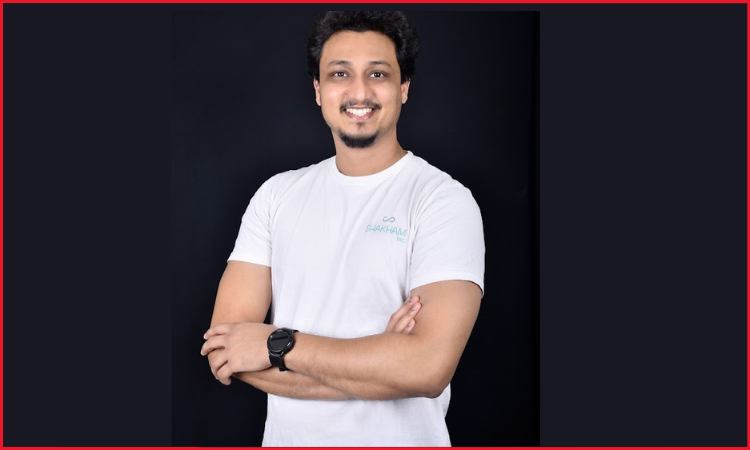
“Students should graduate with more than a degree; they should graduate with evidence of what they can build, contribute, and achieve.”
— Sharvil Khamkar
Higher education has made remarkable progress in digitizing admissions, examinations, learning management systems, and administrative processes. Yet one fundamental question remains:
How do institutions systematically measure whether their students are truly industry-ready before they graduate?
Colleges can measure attendance, grades, examinations, and course completion. However, when asked how many students have developed practical skills, completed meaningful projects, worked with mentors, contributed to research, or demonstrated workplace readiness, the answers are often scattered across departments and disconnected systems.
At the same time, employer expectations have evolved. Organizations increasingly seek graduates who can solve real-world problems, collaborate effectively, communicate clearly, adapt to technology, and demonstrate what they can actually do. A transcript alone is no longer enough. For Sharvil Khamkar, Founder of Shakham Inc. and Collavio, this challenge was rooted in personal experience.
During his MBA in Management Consultancy at Grenoble École de Management, France, Sharvil was assigned an academic mentor. While the guidance was valuable, interactions were often limited by distance and time constraints. Years later, after working across technology, digital transformation, consulting, and mentoring, he encountered similar challenges from the other side. As he explored the problem further, he realized it extended far beyond mentorship. Students needed guidance and visibility, mentors needed structured engagement, institutions needed measurable outcomes, and recruiters and industry partners needed better visibility into emerging talent. These interconnected challenges required an interconnected solution.
This realization became the foundation of Collavio, an Industry Readiness and Outcome Management Platform designed to connect students, mentors, institutions, researchers, recruiters, experts, and industry partners within a structured and measurable ecosystem.
Rather than being another mentorship platform, project-management tool, or recruitment portal, Collavio is being built as the operating system for industry readiness and outcome-based learning in higher education.
The vision extends across the entire student lifecycle. A student who begins using Collavio early in college can gradually build a verifiable portfolio of projects, skills, mentor interactions, research contributions, innovation initiatives, certifications, and industry experiences. Instead of graduating with only a degree and a resume, students can have tangible evidence of their capabilities and growth.
For institutions, the value goes beyond student profiles. Collavio aims to provide visibility across student development, project outcomes, mentor participation, innovation, research, employability, and industry engagement. This can help institutional leadership move from fragmented information and manual reporting towards structured, measurable, and data-driven decision-making, while creating stronger evidence for accreditation and industry partnerships.
At the heart of Sharvil’s vision is a belief that talent alone is never enough; potential needs the right ecosystem to flourish. Students aspiring to become entrepreneurs should receive the right mentorship and guidance to build ventures, while those pursuing professional careers should graduate as highly skilled, industry-ready individuals capable of creating value from day one.
Technology remains an enabler. The real transformation comes from connecting people, processes, and opportunities more effectively. As higher education moves towards employability, innovation, entrepreneurship, and lifelong learning, the focus will increasingly shift from measuring educational inputs to measuring educational outcomes. Collavio’s ambition is simple yet significant: to help institutions make student outcomes visible, help students demonstrate their potential, and build stronger bridges between education and industry.