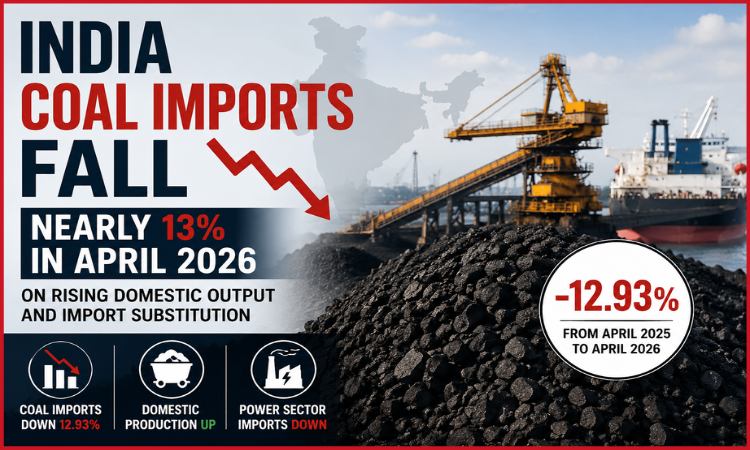
India’s coal imports declined by close to 13% in April 2026, dropping to 21.13 million tonnes (MT) from 24.27 MT in the same month last year, according to data released by the Ministry of Coal on Thursday.
The 3.14 MT reduction is being attributed to sustained domestic production growth and the government’s continuing push for import substitution, particularly in the power sector.
Power sector leads the decline
Coal imports by power plants fell 24.89%, from 4.67 MT in April 2025 to 3.51 MT in April 2026, on the back of improved domestic linkage supplies and lower dependence on imported coal for blending. Imported coal-based (ICB) plants, which are designed to run on foreign coal, recorded the steepest drop among all tracked categories at 27.45%, with volumes falling from 3.97 MT to 2.88 MT.
Domestic coal-based (DCB) plants that import coal for blending purposes saw a comparatively smaller decline of 11.26%, from 0.71 MT to 0.63 MT, which the ministry said reflects growing success in ramping up assured domestic supply and reducing reliance on the blending mandate.
Import dependence narrows, coking coal an exception
Coal imports as a share of India’s total coal consumption fell from 21.69% to 19.68%, a decline of more than 2 percentage points year-on-year. Coking coal imports were the outlier, rising marginally by 1.34% from 5.93 MT to 6.01 MT.
The ministry noted this category caters primarily to the steel sector, where domestic coking coal reserves remain limited, and is driven by resource-specific requirements rather than availability gaps, in line with continued growth in domestic steel production.
Ministry cites coordinated supply push
The ministry attributed the across-the-board decline in ICB, DCB and overall imports to its focus on ramping up domestic coal production and offtake, strengthening First Mile Connectivity, and closely monitoring thermal power plant stock positions.
It also pointed to coordinated efforts with the Ministry of Railways, Coal India Limited and its subsidiaries to ensure assured supply to power utilities, which it said have helped maintain healthy stock levels at thermal plants nationwide.
The ministry said it remains committed to further strengthening domestic production, evacuation infrastructure and quality-based grading to sustain the trend in the coming months.