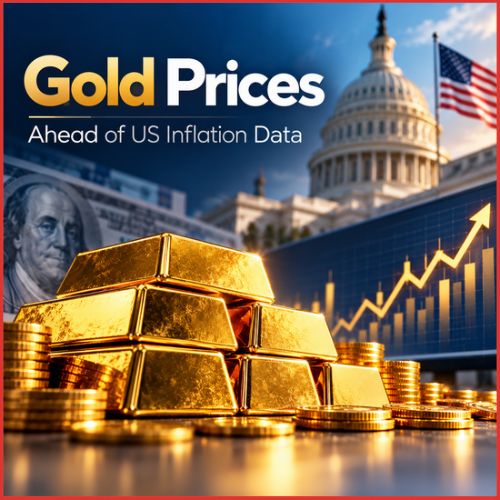
Gold barely moved on Wednesday morning, with traders reluctant to place a large bet in either direction before a US inflation report that could change expectations for the Federal Reserve’s next interest-rate move.
Spot gold was holding around $4,159.45 an ounce, while December US gold futures edged 0.1% higher to $4,182.60.
The quiet trading follows several volatile weeks for bullion. Gold has had to absorb changing rate expectations, higher bond yields, a strong dollar and sharp moves in energy prices, all while remaining above the $4,000 mark.
For now, gold prices appear to be waiting for one number: September’s US Consumer Price Index.
Why the US CPI Matters So Much for Gold
Gold does not pay interest.
That simple characteristic explains why Federal Reserve expectations have such a large influence on bullion.
When investors believe US rates will rise, Treasury bonds and other interest-bearing assets become more attractive. Holding gold carries a larger opportunity cost because the metal itself produces no yield.
When rate expectations fall, that disadvantage becomes smaller.
Wednesday’s US CPI report could therefore move several markets at once.
A softer inflation reading could make another Federal Reserve rate increase look less urgent. Treasury yields could ease, the dollar could weaken and gold price today could find support.
A hotter reading would create almost the opposite setup.
Inflation Is Expected to Remain Uncomfortable
Investors are not expecting inflation to disappear.
September’s headline US inflation rate is expected to have accelerated, partly because of higher fuel costs.
Oil prices have remained elevated, and gasoline is likely to have contributed noticeably to the monthly CPI increase.
That leaves the Federal Reserve in a difficult position.
It has already tightened policy, but officials are still debating whether another rate increase will be necessary to bring inflation under control.
The answer matters particularly to gold because even small changes in rate expectations can move the dollar and bond yields quickly.
For bullion traders, Wednesday is less about whether inflation is simply “high” or “low” and more about how the actual number compares with what markets have already priced in.
Markets Do Not Expect an October Hike, Yet
Interest-rate futures currently suggest the Federal Reserve is more likely to leave rates unchanged at its October meeting.
Markets put the probability of an increase this month at roughly 23%.
That leaves a fairly comfortable majority expecting no change.
December looks very different.
Traders are pricing in around an 88% probability that rates will be increased by then.
Those numbers are not forecasts carved in stone. They move whenever new economic information appears.
A weak CPI number could lower the December probability. A strong report could make an October hike look more plausible and reinforce expectations for another increase before the year ends.
That is why US inflation data and gold have become so tightly linked this week.
Fed Officials Are Still Talking About Another Hike
Recent comments from policymakers have not given gold bulls complete comfort.
New York Federal Reserve President John Williams has reiterated his view that the central bank may need to raise rates once more this year to push inflation lower.
That keeps the possibility of further tightening alive.
Federal Reserve Governor Christopher Waller has offered a slightly different interpretation of recent bond-market moves.
He said higher long-term US yields appear to reflect stronger economic growth rather than a significant rise in inflation expectations, which he described as remaining well anchored.
For gold, both parts of that argument matter.
Strong growth can keep interest rates elevated even when investors are not worried about runaway inflation.
And high real or nominal yields can still compete with non-yielding bullion for investment money.
Gold Is Holding Despite Higher Oil Prices
One detail has caught analysts’ attention.
Oil has climbed sharply again, yet gold has managed to remain around $4,160 rather than selling off heavily.
Normally, rising oil creates a complicated backdrop.
Higher energy costs can increase inflation, which theoretically makes gold attractive as an inflation hedge.
But if that inflation leads central banks to raise interest rates, the higher yields can become negative for gold.
That tug of war appears to be happening now.
The metal has not found enough momentum for another large rally, but it has also resisted a more serious breakdown.
That leaves spot gold prices stuck in a relatively narrow range heading into the CPI release.
The Dollar Has Eased From Its Recent High
The currency market is helping slightly.
The dollar has pulled back from an 18-month high, with the dollar index hovering around 102.16 on Wednesday.
A weaker US currency normally supports gold because bullion is priced in dollars internationally.
When the dollar falls, buyers using currencies such as the euro, yen or rupee effectively face a slightly cheaper gold price.
The relationship does not work perfectly every day, but it remains one of the important drivers of precious metals.
The dollar could move sharply again once the CPI report is released.
A stronger-than-expected inflation figure could push it higher by reviving expectations of another near-term rate increase.
More US Data Arrives on Thursday
Wednesday’s CPI report is not the only number traders have to watch.
US Producer Price Index data and retail sales figures are due on Thursday.
The PPI gives investors another look at inflation, this time from the perspective of prices received by producers rather than households.
Retail sales provide information about consumer demand. That scenario would generally be more supportive for gold bullion.
Strong inflation combined with resilient spending could keep the Fed under pressure to maintain or raise rates.
Gold Is Waiting Rather Than Choosing a Direction
At roughly $4,159 an ounce, gold is neither breaking out nor collapsing.
That lack of movement is understandable.
The CPI number due later on Wednesday could change expectations for interest rates within minutes, giving traders little reason to make an aggressive move beforehand.
A weaker report could put $4,200 and higher levels back into focus.
A hot inflation number could strengthen the dollar and Treasury yields, putting the recent support area under pressure again.
Either outcome would give gold a clearer direction than it has right now.
Until then, the market appears content to sit near $4,160 and wait.
Sometimes the most important price move is the one traders refuse to make before the data arrives.
Source: