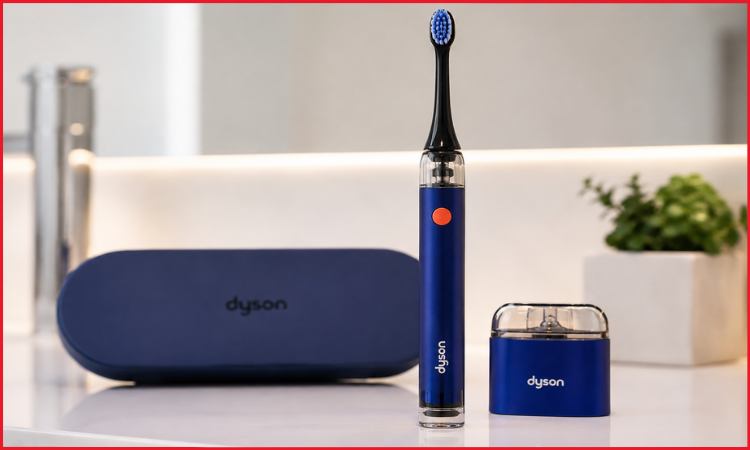
Dyson has entered the oral-care market with the CameraJet, a $499.99 electric toothbrush that combines brushing, liquid flossing and live video inside a single connected device.
The Dyson CameraJet contains a miniature camera and a machine-learning system that identifies gaps between teeth while the user brushes. When a gap is detected, the device can automatically fire a controlled jet of mouthrinse into the space.
Dyson launched the product in the United States on September 1, 2026, through its website, demonstration stores and selected retailers. It is available in Ceramic Ultra Blue and Ceramic Pink, although availability may vary as the company processes pre-orders.
The toothbrush marks a significant expansion for Dyson, whose consumer portfolio already includes vacuum cleaners, air-treatment products, headphones and premium hair-care devices. At $499.99, CameraJet is positioned at the upper end of the electric-toothbrush market.
Camera Analyses 28 Images Every Second
CameraJet’s most unusual component is a 100,000-pixel macro-lens camera built into the toothbrush head.
The camera analyses 28 images per second using Dyson’s Gap Optical Targeting system. A machine-learning algorithm detects, tracks and predicts spaces between teeth, allowing the toothbrush to trigger its liquid jet within approximately 100 milliseconds of recognising a gap.
Dyson says the machine-learning system was developed using more than 470,000 dental images. The entire product operates using approximately 16 million lines of code.
The technology is designed to locate interdental spaces rather than diagnose oral-health conditions. CameraJet does not claim to identify cavities, gum disease or other dental problems, and its output should not be treated as a substitute for a professional examination.
Users can watch a live video from inside their mouth through the MyDyson application. The toothbrush supports Bluetooth and 2.4GHz Wi-Fi connectivity, while the app provides guided cleaning, coverage information and feedback about brushing and flossing technique.
Dyson says the camera activates only when the live-viewing or automatic jetting function is being used. Images are not recorded or stored on the toothbrush or in the cloud.
That privacy safeguard is important because the product places an internet-connected camera inside one of the most personal parts of a daily routine. The live feed is intended to help users see areas they may be missing rather than create a permanent visual record.
Built-In Jet Delivers Mouthrinse Between Teeth
The AI gap detection works with a liquid-flossing system inside the handle.
CameraJet carries up to 12.5ml of mouthrinse in what Dyson calls an anti-gravity tank. A diaphragm pump and pressure chamber are designed to deliver a consistent jet when the toothbrush is upright, tilted or held horizontally to reach the back teeth.
Many conventional water flossers use a narrow stream. Dyson has developed a wider, cone-shaped spray that it says can cover more of the space between teeth while operating at a lower pressure.
The company tested the design using artificial plaque developed through a five-year collaboration with the National University of Singapore’s Faculty of Dentistry. Dyson says this allowed its engineers to study how different jet shapes removed sticky material without conducting a clinical trial after every design adjustment.
These laboratory results should be distinguished from independent evidence showing how the toothbrush performs during long-term everyday use. Its effectiveness will still depend on technique, frequency of use and whether the jet reaches every required area.
The product offers automatic and manual jet controls, allowing users to decide whether the liquid is released by the camera system or through direct input.
A docking station refills the mouthrinse tank in approximately three seconds and charges the toothbrush between uses. A travel case is also supplied.
Dyson has created a low-foaming mouthrinse and an SLS-free, non-foaming toothpaste for the system. Limiting foam helps keep the camera’s view clear. The company recommends compatible clear, low-foaming products for optimal performance, although the toothbrush is not technically restricted to Dyson-branded toothpaste.
Brush Head Tracks Its Own Usage
Brushing is handled by a contoured head containing two types of bristles. Firmer inner bristles are intended to remove surface stains, while softer outer bristles clean along the gumline.
Dyson’s Variable Sonic Oscillation system changes the angle of the brushing movement to prevent bristles from becoming stationary when pressed against a tooth. The head moves nearly 1,000 times per second.
The company claims external testing found that this system removed up to 69% more plaque in difficult-to-reach areas than selected premium electric toothbrushes. The figure is a manufacturer-supported comparison and does not mean every user will experience the same improvement.
Each brush head includes an RFID tag. CameraJet uses the tag to recognise the attached head, count completed cleaning sessions and notify the user when replacement is due. A gentler head will also be offered for people with sensitive teeth and gums.
Dyson spent six years developing CameraJet, involving 661 engineers and consultations with 30 dental professionals. The company has filed 38 patents connected with the product.
The scale of that development explains part of the premium positioning, but the price will remain its largest obstacle. CameraJet costs substantially more than many established electric toothbrushes and introduces continuing expenses for replacement heads, mouthrinse and toothpaste.
Its commercial appeal will depend on whether users see enough value in combining three routines—brushing, interdental cleaning and mouth-rinsing—inside one device.
CameraJet is technically ambitious, but its central proposition is straightforward: use a camera to find the spaces a toothbrush normally misses and clean them during the same session. The $500 price means it will begin as a luxury oral-care device, while wider adoption will depend on convenience, durability and independently demonstrated cleaning performance.