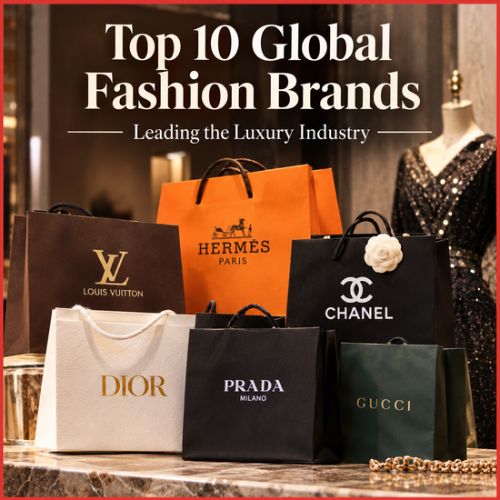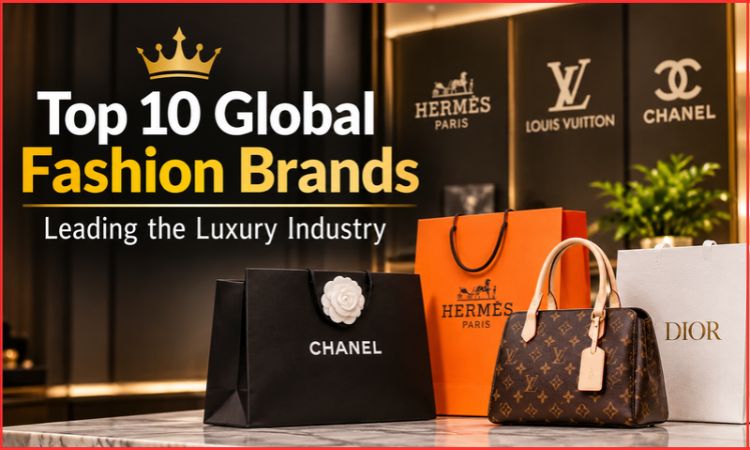
The global luxury fashion industry is shaped by brands that combine heritage, craftsmanship, exclusivity and strong customer demand. From Hermès and Louis Vuitton to Chanel and Gucci, the world’s leading fashion houses influence what people wear, how luxury products are priced and where the industry is heading.
However, not every luxury brand is experiencing the same growth. Hermès generated €16 billion in revenue in 2025 with a 41% recurring operating margin, while LVMH’s Fashion & Leather Goods division, which includes Louis Vuitton and Dior, recorded a 5% decline in organic revenue. Meanwhile, Prada Group continued to expand, supported by strong demand for Miu Miu.
These differences make 2026 an interesting year for the top 10 global fashion brands. Some luxury houses are maintaining their market positions through strong brand value and pricing power, while others are working to rebuild customer demand and profitability.
This article explores the leading luxury fashion brands in the world, their history, financial performance, brand value and competitive strengths. It also examines the latest available 2026 developments to understand which fashion houses are maintaining their influence in the global luxury market.
The financial comparisons below use the latest reported results available as of 21 November 2026. Full-year 2025 results are used where available, alongside 2026 interim or nine-month updates.
How We Ranked the Top Global Fashion Brands
This ranking is not based on revenue alone. It considers several factors, including brand value reported by Brand Finance and Kantar BrandZ, brand strength, financial performance and global market presence.
The brands represent different segments of luxury fashion, including leather goods, couture, ready-to-wear and heritage outerwear. Therefore, this is an editorial comparison rather than an official ranking based on a single valuation methodology.
Nike and Zara, despite being among the world’s biggest fashion brands, are excluded because this article focuses on luxury fashion houses. Jewellery and watch-focused brands are also outside the scope of this particular comparison.
The aim is to highlight the luxury fashion brands that have a significant influence on global consumers, the fashion market and the wider luxury industry in 2026.
Quick Glance: Top 10 Luxury Fashion Brands
| Brand | Founded | Key Financial or Brand Value Metric | Core Strength |
|---|---|---|---|
| Hermès | 1837 | €16 billion revenue in 2025; 41% operating margin | Exclusivity and craftsmanship |
| Louis Vuitton | 1854 | $87.5 billion brand value (Kantar BrandZ, 2026) | Global scale |
| Chanel | 1910 | $53.1 billion brand value (Kantar BrandZ, 2026) | Signature designs |
| Dior | 1946 | $12 billion brand value (Brand Finance, 2026) | Brand strength |
| Prada | 1913 | €5.72 billion group revenue in 2025 | Creative direction |
| Gucci | 1921 | €5.99 billion revenue in 2025 | Global recognition |
| Saint Laurent | 1961 | €2.64 billion revenue in 2025 | Modern luxury |
| Bottega Veneta | 1966 | €1.71 billion revenue in 2025 | Leather craftsmanship |
| Burberry | 1856 | £1.10 billion revenue in H1 FY2026/27 | British heritage |
| Versace | 1978 | €684 million revenue in 2025 | Bold identity |
Note: Brand values and company revenues are different measurements. Prada’s figure represents group revenue, while the other financial figures relate to individual brands. The order is editorial, not an official financial ranking.
1. Hermès
Founded in 1837, Hermès has become one of the most recognised names in the global luxury fashion industry. The French fashion house is particularly known for its leather goods, silk scarves, watches and iconic Birkin and Kelly bags.
Hermès reported revenue of €16.002 billion in 2025, representing growth of 5.5% at reported exchange rates and 8.9% at constant exchange rates. Its recurring operating income reached €6.569 billion, equivalent to a 41% operating margin.
According to Kantar BrandZ 2026, Hermès ranked first among the world’s most valuable luxury brands, with a brand value of approximately $113.1 billion.
Founder: Thierry Hermès, Paris, 1837, initially as a harness workshop.
Standout figure: €16 billion in 2025 revenue and a 41% recurring operating margin.
Why it ranks first: Strong brand value, exceptional profitability, craftsmanship and controlled distribution continue to support Hermès’ position in luxury fashion.
2. Louis Vuitton
Louis Vuitton is one of the most influential luxury fashion brands globally. Founded in Paris in 1854, the brand initially became famous for its travel trunks and luggage before expanding into handbags, clothing, footwear, accessories and other luxury products.
Louis Vuitton is the leading fashion house within LVMH’s Fashion & Leather Goods division. The division recorded €37.77 billion in revenue in 2025, with an operating margin of 35%. Its organic revenue declined by 5% during the year.
Kantar BrandZ valued Louis Vuitton at approximately $87.5 billion in 2026, placing it second among the world’s most valuable luxury brands. Brand Finance reported a separate valuation of $28.8 billion.
Founder: Louis Vuitton, Paris, 1854, initially as a trunk maker.
Brand value: $87.5 billion according to Kantar BrandZ 2026.
Why it ranks second: Its global recognition, extensive product range and strong distribution network maintain its position, although the wider LVMH fashion division experienced weaker sales in 2025.
3. Chanel
Chanel has remained one of the most recognisable names in luxury fashion for more than a century. Founded in Paris in 1910, the brand is known for its classic handbags, tweed jackets, fragrances, jewellery and timeless designs.
Chanel reported revenue of $19.3 billion in 2025, an increase of 2% compared with the previous year. Its operating profit reached $4.712 billion, up 5%.
According to Kantar BrandZ 2026, Chanel was the world’s third most valuable luxury brand, with a brand value of approximately $53.1 billion. Brand Finance separately valued it at $34.3 billion, retaining its position as the world’s most valuable apparel brand in that ranking.
Founder: Gabrielle Chanel, Paris, 1910, initially through a hat boutique.
Brand value: $53.1 billion according to Kantar BrandZ 2026.
Next milestone: Matthieu Blazy’s creative direction is an important part of Chanel’s next phase, with his first collections reaching stores in March 2026.
4. Dior
Christian Dior established the fashion house in Paris in 1946. Since then, Dior has developed into a major luxury brand with a presence in haute couture, ready-to-wear, handbags, footwear, fragrances and accessories.
According to Brand Finance’s Apparel 50 2026 report, Dior’s brand value declined by 31% to $12 billion. Despite this decline, it remained the world’s strongest apparel brand, achieving a Brand Strength Index score of 91.5 out of 100 and an AAA+ rating.
This shows that brand strength and financial valuation do not always move in the same direction. Dior continues to have strong recognition and influence in the luxury market, even as its estimated brand value has declined.
Founder: Christian Dior, Paris, 1946.
Brand value: $12 billion according to Brand Finance 2026.
Watch point: Dior’s ability to maintain customer demand and strengthen its brand value will be important in the coming years.
5. Prada
Prada is an Italian luxury fashion house recognised for its minimalist designs, innovative collections and distinctive approach to modern fashion. Founded in Milan in 1913, the brand has built a strong international presence through clothing, handbags, footwear and accessories.
Prada Group reported net revenue of €5.718 billion in 2025, an increase of 9% year over year at constant exchange rates. Miu Miu was a major growth contributor, with retail sales increasing by 35%, while Prada’s own retail sales declined by 1%.
The latest nine-month 2026 results show that Prada Group continued to grow, reporting net revenue of €4.541 billion, up 15% at constant exchange rates and 4% on an organic basis.
Founder: Mario Prada, Milan, 1913.
Standout figure: €4.541 billion in group revenue during the first nine months of 2026.
Why it ranks fifth: Strong group performance, international reach and Miu Miu’s growth support its position among leading Italian luxury fashion houses.
6. Gucci
Gucci was founded in Florence in 1921 and is known for its distinctive designs, leather products, handbags, footwear and ready-to-wear collections. Its recognisable branding has helped it become one of the most influential names in luxury fashion.
However, Gucci faced a difficult financial year in 2025. Its revenue declined by 22% to €5.992 billion, reflecting weaker demand and challenges in rebuilding brand momentum.
The situation showed signs of improvement in the first half of 2026. Gucci reported revenue of €2.757 billion, down 9% at reported exchange rates and 5% on a comparable basis. Its second-quarter performance improved sequentially, with retail trends showing signs of recovery.
Creative director Demna is also central to the brand’s repositioning strategy.
Founder: Guccio Gucci, Florence, 1921.
Standout figure: €5.992 billion in 2025 revenue.
Why it ranks sixth: Gucci’s global recognition and established market presence remain significant strengths, but its recovery and ability to rebuild customer demand will determine its future performance.
7. Saint Laurent
Saint Laurent is a French luxury fashion house founded in 1961 by Yves Saint Laurent and Pierre Bergé. It is particularly known for its modern tailoring, leather jackets, footwear, handbags and contemporary ready-to-wear collections.
The brand reported revenue of €2.643 billion in 2025, an 8% decline compared with the previous year. However, its comparable revenue decline was smaller at 6%, showing a difference between reported and underlying performance.
Saint Laurent also showed improving momentum in the first half of 2026, according to Kering’s interim results.
Founders: Yves Saint Laurent and Pierre Bergé, Paris, 1961.
Standout figure: €2.643 billion in 2025 revenue.
Why it ranks seventh: Its distinctive identity, strong positioning in modern luxury and improving performance support its place among the leading fashion houses.
8. Bottega Veneta
Bottega Veneta is an Italian luxury fashion brand established in Vicenza in 1966. It is particularly famous for its leather craftsmanship and signature Intrecciato weaving technique.
Unlike brands that rely heavily on visible logos, Bottega Veneta has built its identity around understated luxury, quality materials and detailed craftsmanship.
The brand reported revenue of €1.706 billion in 2025. Although reported revenue was broadly flat, comparable revenue increased by 3%, showing resilience in a challenging luxury market.
Founders: Michele Taddei and Renzo Zengiaro, Vicenza, 1966.
Standout figure: €1.706 billion in 2025 revenue.
Why it ranks eighth: Its distinctive craftsmanship, recognisable product identity and comparable sales growth make it an important name in the luxury fashion industry.
9. Burberry
Burberry is a British luxury fashion house founded in 1856 by Thomas Burberry. It is internationally recognised for its trench coats, scarves, outerwear and signature check pattern.
The brand has been working to strengthen its identity by focusing on its heritage and core product categories.
In FY2025/26, Burberry reported revenue of £2.42 billion and adjusted operating profit of £160 million, compared with £26 million in the previous financial year.
Its latest interim results, published in November 2026, showed further progress. Revenue increased by 6% to £1.098 billion in the first half of FY2026/27, while comparable retail sales grew by 4%. Adjusted operating profit reached £62 million, compared with £19 million in the corresponding period a year earlier.
Outerwear continued to be an important growth category, with double-digit growth during the first half.
Founder: Thomas Burberry, 1856.
Standout figure: £1.098 billion in first-half FY2026/27 revenue.
Why it ranks ninth: Burberry’s heritage, strong outerwear identity and improving financial performance support its turnaround, although the brand still has work to do to strengthen long-term profitability.
10. Versace
Versace is an Italian luxury fashion house founded in Milan in 1978 by Gianni Versace. It is recognised for its bold prints, distinctive patterns, colourful designs and strong visual identity.
In 2025, Versace reported net revenue of €684 million and an operating loss. Prada Group completed its acquisition of the brand on 2 December 2025.
The latest developments show that Versace is entering a new phase under Prada Group’s ownership. The group is working on repositioning the brand, strengthening its product identity and improving its business performance.
In the first nine months of 2026, Versace recorded €322 million in retail sales, according to Prada Group’s reported figures.
Founder: Gianni Versace, Milan, 1978.
Standout figure: €684 million in 2025 net revenue.
Why it ranks tenth: Versace retains strong global recognition and a distinctive fashion identity, but its financial performance and ongoing repositioning remain important challenges.
What These Luxury Fashion Brands Have in Common
The leading luxury fashion brands share several important characteristics that help them maintain their positions in the global market.
Strong brand identity: Hermès, Chanel, Louis Vuitton and Gucci have distinctive designs and product identities that customers can recognise across markets.
Pricing power: Luxury brands often maintain premium pricing through craftsmanship, product quality, exclusivity and brand reputation.
Controlled distribution: Many established fashion houses carefully manage their retail networks, product availability and customer experience.
Product innovation: Creative direction and new collections help brands remain relevant to changing customer preferences.
Global presence: International retail networks, digital platforms and brand recognition allow these companies to reach customers across different markets.
However, the latest financial results also show that brand reputation alone does not guarantee business growth. Gucci’s revenue decline, Dior’s lower brand valuation and Burberry’s turnaround demonstrate how quickly market conditions and customer preferences can influence performance.
Key Takeaways
- Hermès leads in profitability: Its 41% operating margin in 2025 demonstrates the strength of its luxury business model.
- Brand value and financial performance are different: Dior maintained the highest Brand Finance brand-strength score despite a significant decline in brand value.
- Gucci is showing signs of improvement: Its first-half 2026 results indicate sequential progress after a difficult 2025.
- Prada Group continues to expand: Its nine-month 2026 revenue increased by 15% at constant exchange rates.
- Burberry’s turnaround is progressing: Five consecutive quarters of comparable retail sales growth demonstrate improving business momentum.
- Versace is entering a new phase: Its integration into Prada Group creates opportunities for repositioning and long-term development.
Conclusion
The global luxury fashion industry continues to evolve, with established brands competing through craftsmanship, exclusivity, creative direction and customer experience.
Hermès, Louis Vuitton and Chanel remain among the most valuable luxury fashion brands in 2026, while Prada, Gucci, Saint Laurent and Bottega Veneta continue to influence international fashion trends. Burberry is making progress with its turnaround, and Versace is beginning a new chapter under Prada Group.
According to Kantar BrandZ 2026, the combined brand value of the ten most valuable luxury brands declined by 8% to approximately $321.2 billion. This reflects the changing conditions within the luxury market and the importance of maintaining customer demand.
Ultimately, the success of these fashion houses will depend not only on their heritage and brand recognition but also on their ability to adapt to changing consumer expectations, maintain product quality and deliver sustainable business growth.
Frequently Asked Questions
1. What are the top 10 global fashion brands in 2026?
The ten luxury fashion brands covered in this ranking are Hermès, Louis Vuitton, Chanel, Dior, Prada, Gucci, Saint Laurent, Bottega Veneta, Burberry and Versace. They are selected for their brand value, market presence, financial performance and influence in the luxury fashion industry.
2. How are the top luxury fashion brands ranked?
The comparison considers brand value reported by Brand Finance and Kantar BrandZ, brand strength, financial performance and international market presence. It is an editorial ranking rather than an official ranking from either valuation organisation.
3. Which are the most valuable fashion brands in 2026?
According to Kantar BrandZ 2026, Hermès is the world’s most valuable luxury brand, with a brand value of approximately $113.1 billion. Louis Vuitton follows at $87.5 billion, while Chanel ranks third at approximately $53.1 billion.
Brand Finance uses a different valuation methodology. Its Apparel 50 2026 report values Chanel at $34.3 billion, making it the world’s most valuable apparel brand in that ranking.
4. Why are Nike and Zara not included in this list?
Nike and Zara are major global fashion brands, but they operate in different segments of the fashion industry. Nike is primarily associated with sportswear, while Zara focuses on fast fashion. This article specifically covers luxury fashion houses.
5. Are luxury fashion brands growing in 2026?
Performance varies across the industry. Prada Group reported 15% revenue growth at constant exchange rates in the first nine months of 2026, while Burberry reported 6% revenue growth in the first half of FY2026/27. At the same time, Brand Finance reported a 4% decline in the combined value of the world’s top 50 apparel brands in 2026.
6. Which luxury fashion brands are showing signs of recovery?
Burberry and Gucci are among the brands showing signs of improvement. Burberry has recorded five consecutive quarters of comparable retail sales growth, while Gucci’s first-half 2026 results showed sequential improvement. Both brands still need to demonstrate that this progress can translate into sustained long-term growth.