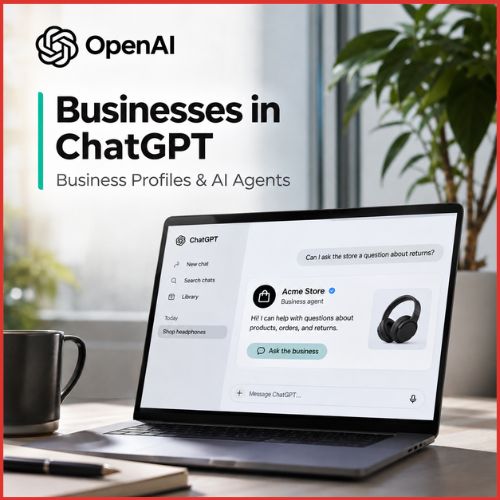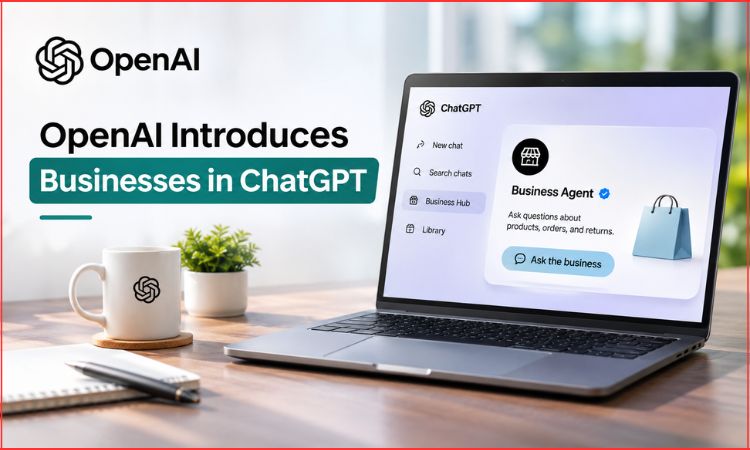
OpenAI has introduced a beta service that lets businesses manage their information in ChatGPT and, for eligible US companies, offer a dedicated agent that answers customer questions.
Announced on November 10, Businesses in ChatGPT brings together company profiles, product information and engagement insights through Business Hub. Business Agents add a separate conversational service for eligible ecommerce and online service businesses in the United States.
The ChatGPT business profiles rollout and the agent rollout have different eligibility rules. A business may be able to manage its information without qualifying to publish an agent.
That distinction is important for companies outside the US. The announcement does not make Business Agents universally available, even where ChatGPT itself is offered.
For customers, the proposal creates another step between discovering a company and visiting its website. Someone comparing products could open a business profile and choose to ask that company’s agent follow-up questions.
What Can Businesses Actually Control?
Business Hub gives authorised representatives a way to contribute current information about their companies.
That can include a description, website, logo, product or service category, and policies covering delivery and returns. Retailers can also supply product details, prices and availability through a feed.
The practical value lies in reducing discrepancies.
A retailer may have changed a return policy or introduced a product variant. A service business may have revised what its packages include. Providing those details gives ChatGPT another source of information when answering relevant questions.
It does not give the company control over every answer mentioning its name.
ChatGPT may draw on other sources, and submitted updates can take time to appear. A profile is therefore a contribution to the information available about a business, rather than a replacement for all existing coverage.
The OpenAI Business Hub also requires verification. Businesses must establish that they own the organisation or are authorised to represent it before managing the profile.
Who Can Publish A Business Agent?
The initial Business Agent offering is limited to eligible US ecommerce and online service businesses with websites. Location alone does not establish eligibility; business type and industry requirements also apply.
Claiming a profile, publishing an agent and buying advertising are separate activities.
A company does not need an advertising account or a ChatGPT Enterprise agreement simply to claim an eligible business. Equally, completing a profile does not automatically put an agent into use.
OpenAI’s setup guidance describes a review and testing stage before publication. Businesses can examine the information their agent uses, try customer questions and correct the underlying details or instructions.
That is where the quality of the service will begin to show.
An agent given an incomplete return policy may struggle with a customer asking about sale items. A product catalogue without clear specifications may leave a comparison unresolved.
For ChatGPT Business Agents, the business information supplied is part of the product. Better conversation cannot compensate indefinitely for missing or contradictory details.
How Is A Company’s Agent Different From ChatGPT’s Answer?
OpenAI says the business-agent conversation will be clearly labelled and kept separate from the customer’s original ChatGPT conversation.
The distinction identifies who is speaking.
ChatGPT might independently compare several companies. A company’s own agent would then answer using that business’s information and guidelines after the customer chooses to engage with it.
Those are different roles, even when both appear within the same platform.
Claiming a business does not guarantee higher placement, recommendations or sales. ChatGPT can also show information about companies that have not published agents.
For businesses, that limits what should be expected from verification. It establishes a route to manage information and, where eligible, provide a conversational service. It does not purchase an endorsement.
OpenAI also allows businesses to sponsor their agents as destinations for ChatGPT advertisements. Those placements are labelled and separate from ordinary responses.
Keeping these distinctions understandable will matter as customers move between independent comparisons, business-provided answers and advertising.
What Will Companies Learn About Customer Interest?
Business Hub offers aggregated insights, including mentions, website clicks and discovery topics.
The topics describe recurring themes in answers where a business appears. They could help a company identify information that deserves a clearer explanation on its website or profile.
For example, repeated interest in product compatibility might suggest that specifications are difficult to find. Questions involving delivery or returns could point to policies that need more precise wording.
Those are possible uses of the data, rather than a promise that every business will receive detailed reporting immediately.
OpenAI says the insights are subject to activity thresholds. Businesses do not receive individual customer prompts or conversations, including chats with their agents.
The ChatGPT business insights should therefore be read as an aggregate view of activity. They are not transcripts of prospective customers discussing a purchase.
A blank metric also need not mean there was no activity. It may reflect a threshold, incomplete collection or reporting availability.
Why Does Verification Matter?
A profile that can influence purchase decisions needs a clear connection to the company it represents.
OpenAI’s rules restrict profile management to owners and authorised representatives. They also require accurate information and prohibit misleading claims, fabricated endorsements and deceptive links.
The setup process can involve proving the business connection through methods such as its domain, business email, phone or Shopify account. Identity verification through Persona is required before publishing changes, accessing insights or creating an eligible agent.
These checks do not mean OpenAI independently verifies every product description or resolves every factual disagreement. Businesses remain responsible for what they submit.
That responsibility continues after setup.
Prices change, products become unavailable and policies are revised. An agent answering yesterday’s questions with last year’s information would create another customer-service problem rather than solve one.
What Does The Rollout Mean For Businesses?
The immediate opportunity is fairly specific: contribute more accurate information and answer interested customers’ follow-up questions closer to the point of discovery.
It is too early to treat the beta as a proven source of sales.
Its usefulness will depend on eligibility, information quality and whether customers choose to continue the conversation. Businesses will also need to judge the results against the work involved in maintaining profiles and agents.
OpenAI plans to expand to more markets and business categories. For now, the US restriction on agents remains central to the announcement.
The businesses best placed to use the service will need more than a claimed profile. They will need clear, current answers to the questions customers already ask.