Flip a switch in Delhi, Nagpur or Chennai and the odds are decent that coal sits somewhere behind the power. Solar and wind grab most of the attention, but thermal plants still carry the bulk of the load, and one company stands right at the start of that chain. This Coal India Explained guide covers what the company actually does, how it earns, and why India can’t simply switch it off.
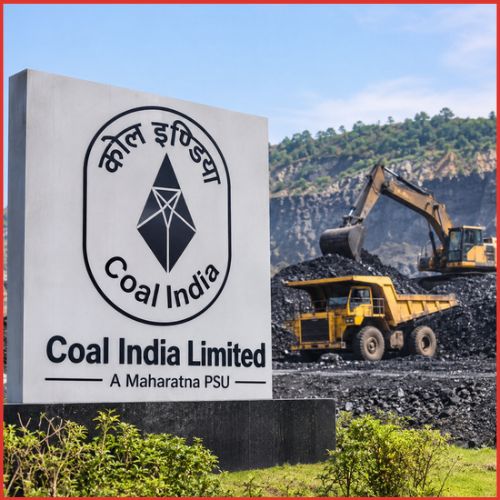
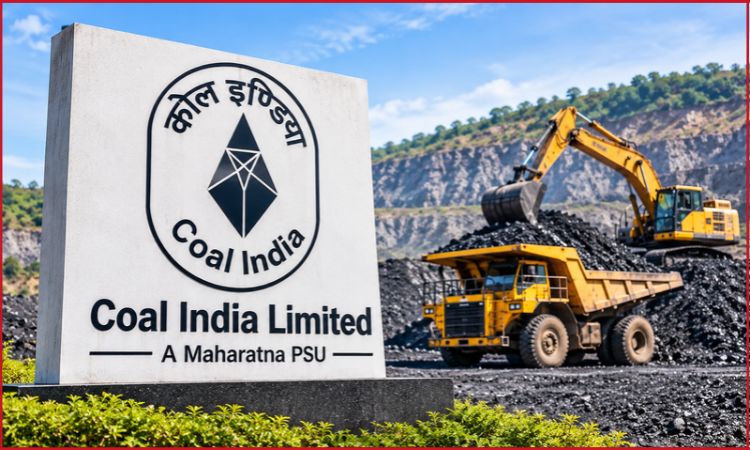
Coal India Limited (CIL) is the world’s largest coal-producing company, and as a Coal India PSU it reports to the Ministry of Coal. It mines the fuel. It doesn’t run power stations. That one distinction explains most of what follows.
A quick word on the 70% figure you keep seeing. Treat it as a ballpark, not a fixed number. Coal’s share of India’s generation has stayed close to that mark in recent years, but it shifts with hydro output, monsoon demand and how much solar is feeding the grid. Below, we stick to figures we could source and say so when a number moves. We also look at Coal India electricity generation, which is less direct than the phrase suggests.
Quick Glance
| Factor | Details |
| Company | Coal India Limited (CIL) |
| Ownership | Government of India (majority shareholder) |
| Formed | 1975, after the nationalisation of coal mines in the early 1970s |
| Headquarters | Kolkata, West Bengal |
| Parent ministry | Ministry of Coal |
| Status | Maharatna PSU, listed on BSE and NSE |
| Core business | Coal exploration, mining and sale |
| Coal India production (FY26) | 768.19 million tonnes (CIL investor presentation, April 2026) |
| Main customers | Power utilities, steel, cement, fertiliser and other industries |
Coal India History: From Nationalised Mines to a Listed Maharatna
To understand the company today, start with Coal India history. Before the 1970s, the country’s coal mines were run by a mix of private owners and a few state-run operations. The government stepped in, taking over coking coal mines in 1971-72 and non-coking mines in 1973. Coal India Limited followed in November 1975, set up as the holding company that brought those mines under one roof.
The structure it chose has lasted. CIL works as a parent with producing subsidiaries, each tied to a coal-bearing region. It went public in 2010, with the government keeping a controlling stake, and later earned Maharatna status, the top tier in the PSU rating system, which gives it more freedom on large investment decisions.
So the Coal India PSU of today is the result of a decision taken about fifty years ago: put a vital fuel under public control and organise it at scale. Much of the India coal industry still runs on that decision, which is why Coal India history matters for any forecast.
Coal India Production: What the Latest Numbers Show
Coal India production is the number everything else hangs on, so it deserves a proper look. CIL mined 768.19 million tonnes in FY26, according to its investor presentation filed with the exchanges in April 2026. That is about 2% below the roughly 781 million tonnes of FY25, and well short of the 875 million tonne target the Ministry of Coal had set for the year.
Scale still matters. India’s total coal output came to about 1.04 billion tonnes in FY26, crossing the one billion mark for a second straight year, based on Ministry of Coal data reported by Mysteel. Divide one figure by the other and CIL accounts for roughly three-quarters of national output. Older write-ups often quote 80%. The share has slipped because other miners are growing faster.
Inside the group, Mahanadi Coalfields is the biggest producer at around 218 million tonnes. South Eastern Coalfields added about 176 million tonnes and Northern Coalfields about 140 million, going by CIL’s provisional FY26 numbers reported by Equity Bulls.
Most of this coal comes out of open-cast mines, where overburden is blasted away to expose thick seams. Underground mining adds a smaller share, though it still matters in older fields across West Bengal and Jharkhand. Any honest reading of Coal India production has to include one more detail: output has run ahead of deliveries. Pithead stocks at CIL mines rose from 106.78 million tonnes on 1 April 2025 to 121.39 million tonnes on 9 March 2026, according to government data reported by IANS.
Coal India Business Model: How the Company Earns
The Coal India business model is simpler than most people expect. CIL digs coal, grades it and sells it. The interesting part is who buys it and on what terms.
Long-Term Supply to Power Producers
Thermal power utilities are the anchor customers, and they link the company to Coal India electricity generation. A large part of their coal moves under long-term fuel supply agreements, with prices notified by the company. Plant operators get predictable fuel, and the Coal India PSU gets predictable volumes.
E-Auctions and Industrial Buyers
Steel, cement, fertiliser and other manufacturers buy too. Some of that coal is sold through e-auctions, where buyers bid for lots, and bids can land above the notified price when demand is tight. This is the more commercial edge of the Coal India business model.
The Logistics Side of the Business
Mining is half the job. The other half is getting coal to a plant that may sit hundreds of kilometres away. CIL’s offtake, meaning coal actually delivered to customers, was 744.8 million tonnes in FY26, based on the company’s provisional figures reported by Equity Bulls. Most of it travels by rail, which is why first-mile connectivity projects, loading systems and railway sidings get so much attention inside the company.
Why a Late Rake Becomes a Power Problem
A delayed coal rake sounds minor. Multiply it across dozens of plants and the stock at a power station drops quickly. That is how a logistics hiccup turns into a supply scare, and why the Coal India business model depends as much on railways as on mining.
Coal India Electricity Generation: A Supplier, Not a Power Producer
Here is the point that trips people up. Coal India electricity generation, strictly speaking, is nil. CIL owns mines, not power stations. Its coal goes to plants run by NTPC, state generation companies and private producers, which burn it to heat water, make steam and spin turbines. The electricity then enters the grid.
Coal mine → Rail transport → Thermal power plant → Power grid → Consumers
So the company’s role in Coal India electricity generation is indirect, though hardly small. If coal stops arriving, the plants stop running, and the grid feels it within days.
Why Coal Still Holds Up the Grid
Demand keeps climbing: Air-conditioning, data centres, metro networks, factories and rural electrification keep adding load. Peak summer demand is where thermal plants earn their keep.
Solar and wind vary: Solar produces in daylight, wind depends on the weather, and evening demand waits for neither. Battery storage is still being built out and isn’t yet at the scale needed to cover long evening peaks across the whole grid. Coal fills that gap.
Domestic fuel limits import risk: India has large coal reserves, and burning domestic coal reduces exposure to global price swings. Analysts cited by Mysteel linked the steadiness of India’s supply in FY26 to uncertainty in global energy markets caused by Middle East conflicts.
Where Coal India Fits in the India Coal Industry
The wider India coal industry is changing around CIL. Captive and commercial mines, run by private companies and other public entities, produced 210.46 million tonnes in FY26, up 10.22% on the year, the Ministry of Coal said in April 2026. Set that against the dip in Coal India production and you can see why the PSU’s share is drifting down even while the national total stays above a billion tonnes.
The government has been opening the door wider. More than 200 coal blocks had been allocated by mid-2025, and twelve captive and commercial blocks received mine opening permission in FY26, adding over 86 million tonnes of annual capacity, according to the Ministry of Coal.
The first quarter of FY27 made the same point. National coal output for April to June 2026 was 232.49 million tonnes, 5.9% lower than a year earlier, and Mysteel noted that CIL’s output stayed weak. For the India coal industry, competition is no longer a footnote. For the Coal India PSU, it is part of the planning.
Major Subsidiaries of Coal India
CIL operates through seven producing subsidiaries and one planning institute:
- Eastern Coalfields Limited (ECL): West Bengal and Jharkhand
- Bharat Coking Coal Limited (BCCL): Jharkhand’s coking coal belt
- Central Coalfields Limited (CCL): Jharkhand
- Northern Coalfields Limited (NCL): the Singrauli region across Madhya Pradesh and Uttar Pradesh
- Western Coalfields Limited (WCL): Maharashtra and Madhya Pradesh
- South Eastern Coalfields Limited (SECL): Chhattisgarh and Madhya Pradesh
- Mahanadi Coalfields Limited (MCL): Odisha
- Central Mine Planning & Design Institute (CMPDI): exploration, planning and consultancy, not mining
Spreading output across these regions keeps Coal India production diversified, so trouble in one coalfield doesn’t take down the whole group.
Coal India PSU and the Energy Transition
The biggest question facing the Coal India PSU isn’t next quarter’s output. It is what happens as India’s power mix tilts further toward renewables.
Demand Won’t Fall Off a Cliff: Even if coal’s percentage share shrinks, total consumption can stay high while overall electricity use grows. A smaller slice of a much bigger pie can still be a lot of coal. The shift is more likely to take years than months, and Coal India history suggests the company has seen big changes before.
Environmental Pressure: Open-cast mining affects land, forests and water, and burning coal releases carbon dioxide and other pollutants. CIL runs reclamation and afforestation programmes at mine sites, and environmental clearances keep shaping how fast new projects open.
Diversification Plans: The company has talked about moving into solar, coal gasification and other areas, in line with what other legacy energy firms are doing. Whether those bets reach meaningful scale is still open. For now, the Coal India business model runs on coal.
Is Coal India Still Relevant in 2026?
Yes, with a caveat. In the near and medium term, coal keeps a large place in the grid, and CIL keeps a large place in the supply chain. But the FY26 numbers (lower Coal India production, faster captive growth, rising pithead stock) describe a company whose growth is no longer guaranteed. Four things will decide the next chapter: electricity demand, rail capacity, the pace of renewables and storage, and environmental rules.
Final Thoughts
India wants growth, affordable power and lower emissions all at once, and those goals pull in different directions. Coal India history shows how often policy has reshaped this business. Coal India sits in the middle of that tension. It isn’t a power company, yet the fuel it digs out of Jharkhand, Odisha and Chhattisgarh still keeps most of the grid running.
This Coal India Explained walkthrough comes down to one line: the Coal India PSU matters because it supplies the fuel at the centre of India’s power system, not because it makes electricity itself. The balance will shift as solar, wind and storage grow. For now, coal is still a big part of the story.
FAQs
1. Is Coal India a government company?
Yes. Coal India Limited is a Maharatna public sector undertaking under the Ministry of Coal, and the Government of India is its majority shareholder. It is listed on the BSE and NSE.
2. Does Coal India generate electricity?
No. Coal India electricity generation happens only indirectly. The company mines and sells coal, and power producers such as NTPC, state utilities and private firms burn it to make electricity.
3. How much coal did Coal India produce in FY26?
CIL reported 768.19 million tonnes for FY26, according to its April 2026 investor presentation. Coal India production was about 2% lower than the roughly 781 million tonnes in FY25.
4. When was Coal India formed?
Coal India Limited was formed in November 1975, after the government nationalised coking coal mines in 1971-72 and non-coking mines in 1973. That is the starting point of Coal India history.
5. Why is Coal India important to the India coal industry?
It supplies roughly three-quarters of the country’s coal and most of the fuel for thermal plants, so the Coal India PSU sits at the centre of the India coal industry even as private and captive miners expand.
6. Will renewables hurt the Coal India business model?
Over the long run, yes, pressure will build, and Coal India electricity generation volumes through its customers will tilt toward clean sources. In the medium term, rising electricity demand keeps coal needed, so the Coal India business model is more likely to face slower growth than a sudden collapse.