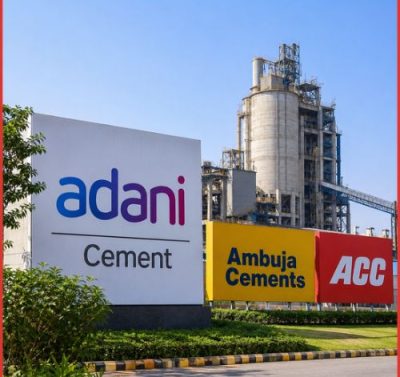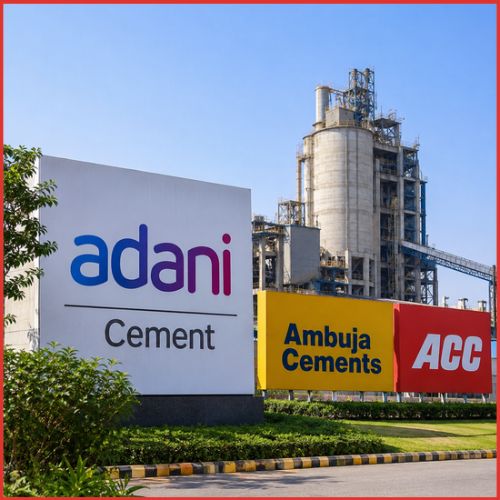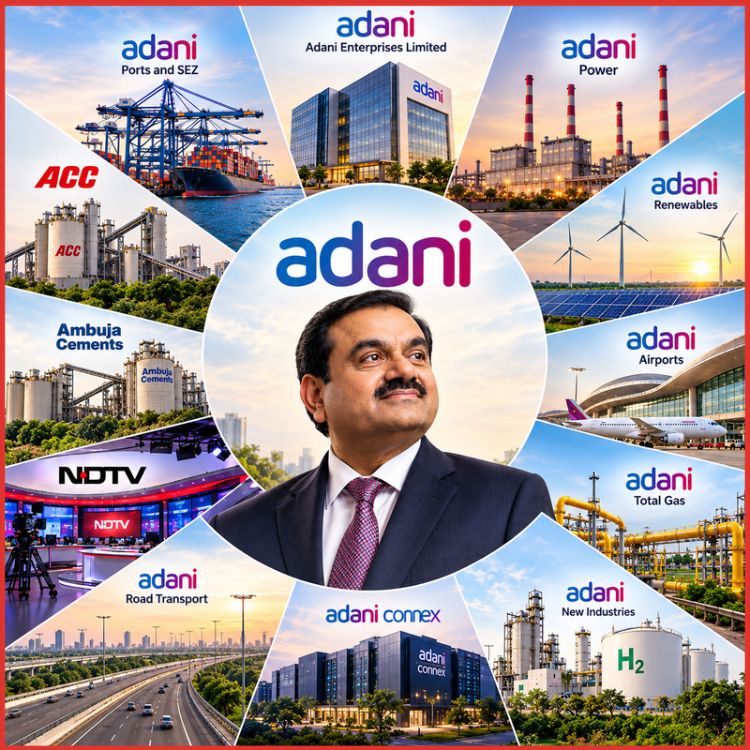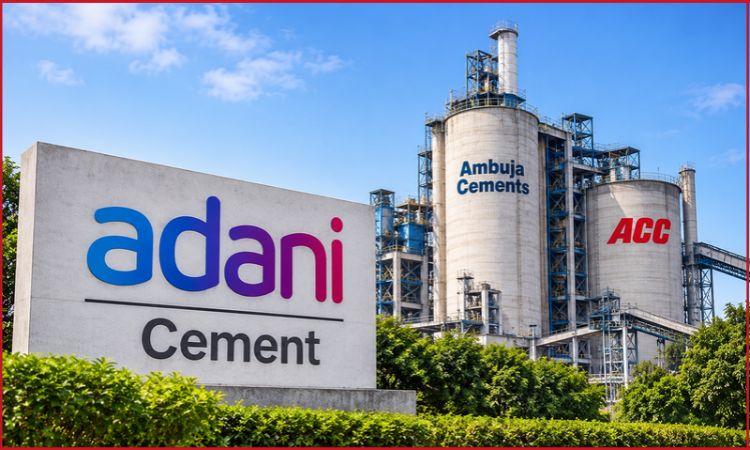
Cement rarely gets attention outside construction circles. That changed in 2022, when the Adani Group bought into Ambuja and ACC and set out to build something much larger than two old brands. The Adani Cement Business of today runs at 109 MTPA of capacity and is aiming for about 119 MTPA by FY 2026-27.
This article traces how the Adani Group cement business took shape, what Ambuja Cements and ACC cement each bring to it, how Adani cement expansion has worked through acquisitions, and where the Ambuja ACC business model goes from here.
Adani Cement Business: Quick Glance
| Particulars | Details |
|---|---|
| Parent Group | Adani Group |
| Key Cement Companies | Ambuja Cements, ACC and Orient Cement |
| Entry into Cement Industry | 2022 |
| Original Acquisition | Ambuja Cements and ACC from Holcim |
| Major Acquisitions | Sanghi Industries, Penna Cement, Orient Cement and other assets |
| Current Cement Capacity | 109 MTPA (FY 2025-26) |
| Expansion Target | Approximately 119 MTPA by FY 2026-27 |
| Expansion Strategy | Acquisitions, new grinding units and clinker capacity |
| Proposed Structure | One Cement Platform under Ambuja Cements |
| Key Focus Areas | Capacity utilisation, logistics, efficiency and green energy |
How the Adani Group Cement Business Began
Under Gautam Adani’s leadership, the group entered the cement industry through a major deal with Holcim in 2022, acquiring controlling stakes in Ambuja Cements and ACC.
Cement rewards size. Limestone access, freight routes, regional distribution and plant efficiency all decide the margin, and a newcomer can spend years lining those up. Buying two established players skipped most of that wait. Everything the Adani Group cement business has done since, from new grinding units to mergers, sits on top of that 2022 purchase.
Ambuja Cements: The Anchor of Adani Cement
Of the two, Ambuja Cements has become the centre of gravity. It is the parent of ACC and the company through which acquisitions are being routed.
Ambuja’s Integrated Report 2025-26 puts consolidated capacity at 109 MTPA. According to an Adani Group media release on the annual results, grinding capacity went up at Marwar, Farakka, Sankrail, Sindri and Krishnapatnam, while clinker capacity grew at Jodhpur and Bhatapara. The same release records cement sales of 73.7 million tonnes in FY 2025-26, and the Integrated Report shows revenue from operations of around ₹40,656 crore.
Management’s stated focus has moved, though. Ambuja Cements now talks less about adding tonnes and more about using the tonnes it already has. A plant running at half its rated output earns little on that capacity, so utilisation matters as much as size.
ACC Cement: The Second Pillar
ACC cement brings decades of manufacturing experience across several Indian markets, plus a ready-mix concrete arm that takes the business beyond bagged cement.
ACC’s Q4 FY26 results release reported its highest-ever annual sales volume of 43.9 million tonnes, with EBITDA of ₹2,950 crore. Capacity utilisation improved to around 80% in the fourth quarter. Growth continues too. ACC’s Q1 FY27 release names the Salai Banwa grinding unit in Uttar Pradesh and the Kalamboli expansion in Maharashtra, which together add 3.4 MTPA.
What is changing is ACC’s role. It used to stand on its own. Now it is one piece of a larger Adani Cement network.
The Ambuja ACC Business Model, Explained
Strip away the corporate detail and the Ambuja ACC business model rests on four ideas.
- Scale through deals and new plants. Buy assets where they fit, build grinding and clinker units where demand sits.
- Logistics as an edge. Road, rail and sea movement, along with bulk terminals, to keep transport cost under control.
- A wider product mix. Bagged cement from both brands, ready-mix concrete through ACC, and a push towards premium products.
- One structure, shared savings. A single cement platform and group synergies to cut cost per tonne.
Each idea feeds the others. More plants mean a bigger network to optimise, and a bigger network gives the Adani Group cement business more room to save on freight and power.
Adani Cement Expansion Through Acquisitions
Acquisitions have done most of the heavy lifting. Buying working plants is quicker than building greenfield ones, and it brings regional presence along with the tonnage. Here is how the main deals fit into Adani cement expansion.
Sanghi Industries
Ambuja bought Sanghi Industries to strengthen its western India position. The deal added capacity and access to limestone, and deepened Ambuja’s presence in Gujarat and nearby markets. Integration has since reached the legal stage: Ambuja’s investor disclosures state that the Sanghi merger became effective on March 12, 2026.
Penna Cement
Ambuja announced the Penna Cement acquisition in 2024. It widened Adani Cement’s reach in southern and eastern India and brought both capacity and logistics assets. Penna’s bulk cement terminals matter here, since transport eats into margins in this trade. The deal shows how Adani cement expansion pairs plant capacity with movement of material.
Orient Cement
Orient Cement extended the group’s presence in central and southern markets and helped the Adani Group cement business move towards its 100-plus MTPA goal. It is also part of the proposed One Cement Platform, covered below.
Other Cement Assets
Asian Fine Cements and Asian Concretes & Cements also feature in the list. Added to new projects, these assets have let the group grow faster than greenfield plants alone would allow.
Adani Cement Capacity: 89 to 109 to 119 MTPA
| Period | Cement Capacity |
| FY 2024-25 | 89 MTPA |
| FY 2025-26 | 109 MTPA |
| FY 2026-27 (target) | About 119 MTPA |
Per the Ambuja Integrated Report 2025-26, capacity rose from 89 MTPA to 109 MTPA during FY 2025-26. That is 20 MTPA added in a single year. The next 10 MTPA is meant to come from grinding projects at Dahej, Bathinda, Salai Banwa, Kalamboli, Jodhpur and Warisaliganj, along with more clinker capacity.
The CEO message in the same report signals a slower pace after this. Additions will be phased, with more attention on stabilising new units and lifting utilisation across the existing Adani Cement network.
The One Cement Platform
The biggest structural move in the Adani Cement Business is the plan for a single cement company. In December 2025, the Ambuja Cements board approved the amalgamation of ACC and Orient Cement into Ambuja. The Ambuja media release lists the aims as a simpler corporate structure, better use of manufacturing and logistics networks, sharper capital allocation and operating synergies.
As of July 2026, ACC had received a SEBI no-objection certificate and filed an application with the National Company Law Tribunal, according to ACC’s Q1 FY27 release. Approvals are still pending, and completion is expected during FY 2026-27. If it goes through, the Ambuja ACC business model becomes easier to run, because plants and freight routes can be planned together instead of company by company.
Logistics, Technology and Cost Control
Cement is heavy, so moving it costs real money. The Adani Group already runs ports, logistics, airports, power and infrastructure businesses, and those give Adani Cement possible operating links. Ambuja’s Integrated Report names multimodal logistics and route optimisation as part of its distribution approach. Coastal shipping can also carry cement between plants and demand centres, which is one reason a well-placed plant or terminal can be worth more than its headline capacity.
Technology sits alongside. The group’s Cement Intelligent Network Operations Centre, or CiNOC, uses data and digital tools to watch operations and speed up decisions. With more plants and dispatch points, central monitoring can help spot waste early.
Cost is the third piece. ACC’s Q1 FY27 release says Adani Cement is targeting savings of roughly ₹250 per tonne in FY 2026-27 through operational steps and group synergies.
Green Power in the Adani Cement Business
Making cement burns a lot of energy and leaves a large carbon footprint, so green power has become part of the plan. The Ambuja Integrated Report puts the company’s green-power share at 31% in FY 2025-26, with a target of 60% by FY 2027-28. ACC cement reported 30% green-power use for the same year. Waste-heat recovery, alternative fuels and blended cement round out the effort. At more than 100 MTPA, even small efficiency gains add up.
- Capacity Utilisation – Adani has added a lot of capacity in a short time. New and acquired plants now have to run well, or the extra tonnes will not turn into profit.
- Price Competition – India’s cement market is crowded. When several producers add capacity in the same region, prices and margins can come under pressure.
- Energy and Input Costs – Coal, petcoke, power and freight all move the operating margin. A rise in any of them hits Adani Cement quickly.
- Integrating Acquired Businesses – Companies bought at different times come with their own systems, people, supply chains and sales structures. Lining these up is slow work. The One Cement Platform is partly meant to solve exactly this.
Challenges Facing Adani Cement
- Capacity Utilisation – Adani has added a lot of capacity in a short time. New and acquired plants now have to run well, or the extra tonnes will not turn into profit.
- Price Competition – India’s cement market is crowded. When several producers add capacity in the same region, prices and margins can come under pressure.
- Energy and Input Costs – Coal, petcoke, power and freight all move the operating margin. A rise in any of them hits Adani Cement quickly.
- Integrating Acquired Businesses – Companies bought at different times come with their own systems, people, supply chains and sales structures. Lining these up is slow work. The One Cement Platform is partly meant to solve exactly this.
Conclusion
The Adani Cement Business began as one large purchase and has grown into a building-materials platform of real size. Ambuja Cements and ACC provided the base, acquisitions widened the footprint, and new projects took capacity to 109 MTPA, per the Ambuja Integrated Report 2025-26.
The next chapter is about fit rather than volume. If the One Cement Platform clears its approvals and the plants run closer to full output, Adani Cement will be a simpler and stronger company than the one that started in 2022. If not, the extra capacity will weigh on returns. That is the test to watch.
Frequently Asked Questions
1. What is the Adani Cement Business?
It is the cement and building-materials platform of the Adani Group, led by Ambuja Cements and ACC, and grown through acquisitions and new cement and clinker capacity.
2. Which cement companies does the Adani Group own?
The main names are Ambuja Cements and ACC. Orient Cement has also been acquired and is part of the proposed merger into Ambuja.
3. When did the Adani Group enter cement?
In 2022, when it acquired controlling stakes in Ambuja Cements and ACC.
4. What is Adani Cement’s current capacity?
Consolidated capacity reached 109 MTPA in FY 2025-26, with about 119 MTPA targeted for FY 2026-27, according to the Ambuja Integrated Report 2025-26.
5. How are Ambuja Cements and ACC related?
Ambuja is the parent company of ACC. A proposed amalgamation would bring ACC fully into Ambuja, subject to regulatory approvals.
6. What is the One Cement Platform?
It is the plan to merge ACC and Orient Cement into Ambuja Cements, to simplify the structure and gain manufacturing, logistics and operating synergies.