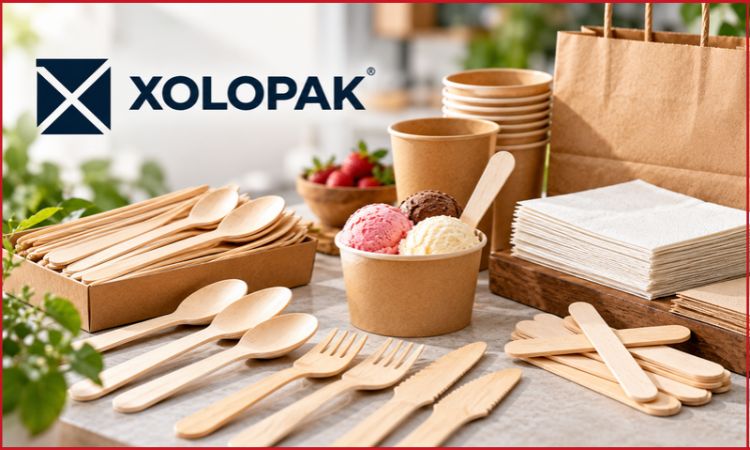
Plastic spoons are disappearing from Indian ice cream counters, and flat birchwood ones are taking their place. A good share of that switch traces back to Xolopak, a Pune-based company that began by importing napkins in 2014. Today its wooden cutlery and other biodegradable disposable products reach dairy brands, hotels and cloud kitchens across the country.
This article covers Xolopak products, the Xolopak business model, the company’s sustainability claims and its growth numbers. Each figure is tied to a named source, and anything we could not confirm is marked as such.
Xolopak at a Quick Glance
| Detail | Information |
| Company | Xolopak India Limited |
| Founded | 2014 (as Hermes Globetrade) |
| Headquarters | Pune, Maharashtra |
| Promoters | Shashank Mishra, Banani Chatterjee |
| Core Products | Wooden cutlery, ice cream sticks and spoons, paper napkins, cups and bags |
| Revenue (FY25) | ₹70.6 crore (Inc42 Datalabs) |
| Recognition | Ranked 2nd, TIME and Statista India’s Fastest-Growing Companies 2026 |
| IPO Status | DRHP filed with NSE Emerge, August 2024 |
What Is Xolopak India Limited?
Xolopak India Limited is a public limited company registered in Pune and a sustainable packaging company by its own description. The story starts in 2014 with a partnership firm, M/s Hermes Globetrade, which imported premium airlaid and tissue napkins. In September 2017 the firm became Vrag Fils Airlaid Private Limited. It turned into Xolopak India Private Limited in May 2022, and a conversion to a public company in September 2023 gave it today’s name, according to the Draft Red Herring Prospectus (DRHP) filed with NSE Emerge.
The company says it serves hotels, restaurants, cafes, cloud kitchens and caterers. Its website groups the range under HORECA, frozen desserts and speciality paper.
Promoters and Leadership
Shashank Mishra, Managing Director and CEO, spent 13 years in Indian financial services before starting his own ventures, per the Xolopak About Us page. Banani Chatterjee, Executive Director, comes from a data and analytics background. According to the DRHP, the two promoters handle sales, purchasing, plant operations, finance and administration between them. Independent directors include former diplomat Ajay Bisaria and finance professional Koel Ghosh.
How the Xolopak Business Grew
The Xolopak business did not start as a factory. It started as a trading desk. The DRHP describes a slow move into manufacturing as demand for its imports climbed.
From Napkin Imports to Wooden Cutlery
A manufacturing facility in Nagpur came first, followed by napkin converting and paper plate production in 2017. That same year the company began importing wooden cutlery made from white birch. In 2018 it moved into disposable organic cutlery, and ice cream sticks and spoons followed in 2019. Paper plates later took a back seat as wooden cutlery became the main earner, per the DRHP.
Customers
Amul became the first big ice cream customer in 2020, and Mother Dairy joined afterwards, according to the DRHP. A Business Outreach report on India’s fastest-growing companies also named Amul as the largest client. Landing dairy giants gave the Xolopak business volume and credibility, though depending heavily on a few buyers is a risk worth remembering.
Xolopak Products: What the Company Sells
The range of Xolopak products is built around food service, desserts and hospitality, and every item counts as a biodegradable disposable product in the company’s own framing. Here are the main groups.
Wooden Cutlery
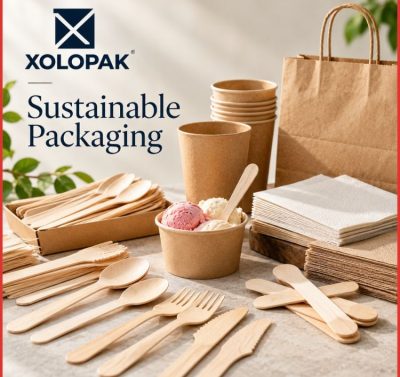
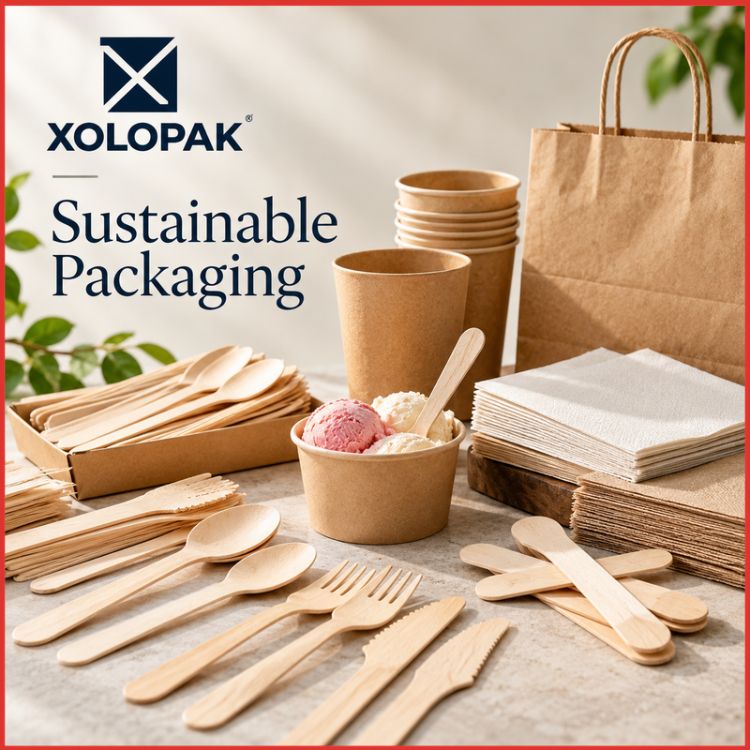
Wooden cutlery is the centre of the catalogue. The range includes spoons, forks, knives, sporks, coffee stirrers, chopsticks and skewers. Restaurants, cafes, caterers and delivery kitchens buy them as a replacement for plastic. The Crunchbase profile notes that sets can be customised, and Business Standard reported that the company calls itself India’s first maker of organic disposable cutlery. Treat that last point as the firm’s own claim, not an audited fact.
Ice Cream Sticks and Spoons
Frozen desserts are the second pillar. Xolopak makes ice cream sticks, spoons and kulfi sticks from birchwood. The paddle stick on its site measures 94 mm, comes with hot stamping for logos, and ships at 10,000 to a box. Numbers like that show the buyer is a manufacturer, not a household. This segment helped establish Xolopak as a supplier of eco-friendly packaging for dessert brands.
Paper Products and HORECA Range
Paper napkins, bags, cake bases, butter paper and thermal rolls fill out the list, and the sustainability page adds toothpicks and bamboo skewers. Together these Xolopak products let one supplier cover a kitchen’s disposable needs.
Xolopak Business Model
The Xolopak business is mostly B2B. Instead of building a retail network, the company sells in bulk to food manufacturers, ice cream brands, hotels, cafes, bakeries, distributors and retail firms. Food service burns through cutlery, sticks and napkins every day, so orders tend to repeat.
Branding is part of the pitch. The website mentions custom branding and bulk supply, which lets a dessert brand put its own logo on a stick. For a sustainable packaging company that wants long contracts, that small feature matters, and it sets Xolopak products apart from plain commodity cutlery.
Manufacturing and Expansion
Factory output tells the growth story well. The DRHP reports that wooden cutlery capacity use rose from 36.62% in 2022 to 97.75% in 2024, while ice cream spoon capacity reached full use in 2024. A plant running that hot needs more room.
In March 2024, Madhya Pradesh Chief Minister Mohan Yadav joined a virtual bhoomipujan for a 75,000 sq ft plant at Pilukhedi near Bhopal, as Daily Pioneer reported. A company LinkedIn post put the investment near ₹40 crore. The founder also spoke of a 62-acre complex in Sehore district with over ₹100 crore of spending over time. Xolopak India Limited says the plant is meant to make wooden cutlery, ice cream sticks, kulfi sticks, coffee stirrers, airlaid napkins, paper cups and containers.
Xolopak Financial Growth
Revenue from operations rose from ₹11.87 crore in FY23 to ₹31.47 crore in FY24, and net profit went from ₹3.48 crore to ₹6.36 crore, according to Business Standard (August 2024). Inc42 Datalabs lists FY25 revenue at ₹70.6 crore, up 123.6%. Because databases can lag, check the audited filings before quoting a final figure.
In February 2026, TIME and Statista placed Xolopak India Limited second on India’s Fastest-Growing Companies list, behind Spinny. The ranking measured revenue change from FY22 to FY25, and Mechhelp reported the company’s growth at 1,678.95% over that span.
IPO Plans
The company filed its DRHP with NSE Emerge in August 2024 for a fresh issue of 52.86 lakh shares of ₹10 face value. Per Upstox, ₹20 crore is earmarked for a stake in Atharva Poly-Plast, ₹20.17 crore for a new plant and machinery, and the rest for general corporate purposes. The listing pages we found showed no price band or dates, so confirm the current position on NSE.
Sustainable Packaging: Xolopak’s Positioning
India’s ban on identified single-use plastic items began on 1 July 2022, per the Ministry of Environment, Forest and Climate Change, and it covered plastic cutlery and ice cream sticks. Brands suddenly needed replacements, and a sustainable packaging company already selling birchwood sticks was well placed. Demand for biodegradable disposable products jumped.
The company’s sustainability page stresses sustainable sourcing, biodegradable materials and responsible production. It also says Xolopak scored 4 out of 5 stars in a Sustainability Grading Report by ESG Risk Assessments and Insights in March 2024. That is a company statement, and we could not open the report itself.
A word of caution applies to any eco-friendly packaging claim. Wood is renewable, but coatings, energy use in the factory, transport and disposal conditions all shape the real footprint. Buyers of any biodegradable disposable products should ask for test reports, not just a brochure.
What Sets the Company Apart
Three things stand out about Xolopak India Limited. The firm makes its own goods after starting as a trader. Its catalogue spans several food-service segments. And it offers branding, which suits corporate buyers. Watch raw material sourcing, price pressure from plastic, and a small workforce: Tracxn listed 24 employees in June 2025.
Conclusion
Xolopak went from importing napkins to supplying wooden cutlery and ice cream sticks to some of India’s best-known dairy brands, and its Xolopak products now anchor a wider sustainable packaging company. The Xolopak business now leans on plant expansion, steady wood supply and a pending IPO. For anyone tracking eco-friendly packaging in India, Xolopak India Limited is a company to follow.
Frequently Asked Questions
1. What does Xolopak do?
It manufactures wooden cutlery, ice cream sticks, spoons and paper products for food-service and retail businesses.
2. When was Xolopak founded?
The business dates to 2014, when it operated as Hermes Globetrade.
3. Who founded Xolopak?
Shashank Mishra and Banani Chatterjee are the promoters.
4. Is Xolopak a sustainable packaging company?
Xolopak calls itself a sustainable packaging company, with a range built on wood, paper and bamboo. Independent certification should be requested from the supplier.
5. Who buys Xolopak products?
Mostly businesses: dairy and ice cream brands, hotels, cafes, caterers and cloud kitchens.
6. Has Xolopak listed on the stock market?
It filed a DRHP with NSE Emerge in August 2024. Check NSE for the latest status.