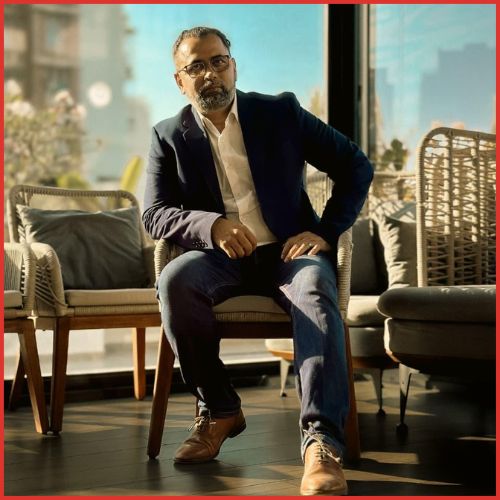
A young man from a small town in Palakkad once landed in Muscat carrying, by his own account, no more than seven dollars and a willingness to work with his hands. Four decades on, that same man had built one of the Gulf’s most recognised construction names and turned into one of India’s wealthiest self-made entrepreneurs. The P.N.C. Menon success story is often reduced to that single dramatic detail about the seven dollars, but the fuller account of the P.N.C. Menon career and the P.N.C. Menon business journey that followed is slower, less cinematic, and considerably more useful to anyone trying to build something lasting from very little.
This piece traces the full P.N.C. Menon biography in order from a modest household in Kerala to an interior decoration workshop in Oman, and from a single real estate project in Bangalore to the listed Indian company and private Gulf empire that make up the P.N.C. Menon Sobha Group today, now run by the next generation. As a Sobha Group founder, Menon’s own account of the journey is unusually well documented, which makes it possible to lay out the P.N.C. Menon success story with real dates and real numbers rather than vague legend.
P.N.C. Menon Biography at a Glance
| Full Name | Puthan Naduvakkatt Chenthamaraksha Menon |
| Known As | P.N.C. Menon, Sobha Group founder |
| Born | 17 November 1948, Vadakkencherry, Palakkad district, Kerala |
| Nationality | Born Indian; became an Omani citizen after settling in Oman |
| Education | Sree Kerala Varma College, Thrissur (did not complete his degree) |
| Founded | An interior decoration firm in Oman (1976); Sobha Developers/Sobha Limited in Bangalore (1995) the two ventures at the core of the P.N.C. Menon Sobha Group |
| Current Role | Founder and Chairman Emeritus, Sobha Limited (India); Founder and Chairman, Sobha Realty (Middle East) |
| Successor | Son Ravi Menon, an engineer from Purdue University, became Chairman of the P.N.C. Menon Sobha Group in 2024 |
| Estimated Net Worth | Around US$3.9 billion as of March 2026, per Forbes Middle East |
| Known For | The backward-integration model, Sobha Hartland, and Sobha Siniya Island landmarks of the P.N.C. Menon business journey |
P.N.C. Menon Biography: Early Life and Education in Kerala
Menon was born on 17 November 1948 in Vadakkencherry, a village in Kerala’s Palakkad district, the fourth of five children. His father died when Menon was only ten, which left the family stretched for money at an age when most children are still shielded from that kind of pressure. He grew up largely in Thrissur, where his father had run a small business, and enrolled at Sree Kerala Varma College.
He never finished that degree. Instead, he chose to work in furniture-making and interior decoration, learning the trade on the floor rather than in a classroom. That decision craftsmanship over credentials turned out to be the thread that ran through the rest of the P.N.C. Menon career. Short retellings of the P.N.C. Menon biography tend to skip this stretch, but it explains much of the discipline that shows up later in the P.N.C. Menon business journey.
The Move to Oman: Where the P.N.C. Menon Career Really Began
In 1976, at the age of 26, Menon left Kerala for the Sultanate of Oman with a business partner. By his own retelling in interviews over the years, he arrived with only a handful of dollars in his pocket. Oman in the mid-1970s was in the early stages of a construction boom under Sultan Qaboos, and skilled interior work was in short supply. This is the point most historians of the P.N.C. Menon career treat as the true starting line, long before Sobha existed as a name.
Menon set up a small interior decoration and furniture business. Word of mouth carried it further than any marketing budget could have: the firm won contracts for palaces and mosques in Oman, and later extended its work into the UAE, Bahrain, and Qatar. He has also spoken publicly about a serious financial setback partway through those years, a period he has described as one of the hardest stretches of his career, before the business found its footing again. It was also the opening chapter of the wider P.N.C. Menon business journey that would eventually span two continents.
Building an Interior Decoration Empire
What set the Oman-era business apart was not scale but finish reliability on deadlines and a level of detailing that larger, cheaper contractors often skipped. Long before anyone called him a Sobha Group founder, Menon was simply a contractor who refused to let quality slip. That reputation for quality over price became the foundation of everything he built afterward, including a business philosophy he would later carry into real estate on a much bigger scale.
P.N.C. Menon Career Timeline: From Oman to the P.N.C. Menon Sobha Group
A quick, chronological view of the P.N.C. Menon career makes the scale of the P.N.C. Menon business journey easier to follow:
- 1976: Moves to Oman and founds an interior decoration firm, the first entry in the P.N.C. Menon career timeline.
- 1994: Establishes the Sri Kurumba Educational & Charitable Trust, a year ahead of entering real estate.
- 1995: Founds Sobha Developers in Bangalore, becoming a Sobha Group founder in India.
- 2003: Expands into Dubai, planting the seed of what would become Sobha Realty.
- 2006: Sobha Limited lists on Indian stock exchanges.
- 2009: Receives the Pravasi Bharatiya Samman from the Government of India.
- 2023: Sobha Realty completes a debut $300 million Sukuk issuance.
- 2024: Launches Sobha Siniya Island and hands the chairmanship of the P.N.C. Menon Sobha Group to son Ravi Menon.
- 2026: Forbes Middle East estimates his net worth near $3.9 billion, three decades into the P.N.C. Menon business journey.
Founding the P.N.C. Menon Sobha Group: A Homecoming to Bangalore
In 1995, roughly two decades after leaving India, the man who would become India’s best-known Sobha Group founder returned to set up Sobha Developers in Bangalore, naming the company after his wife, Sobha. His reasoning, as he has explained it, was straightforward: Indian real estate at the time was short on the kind of quality construction he had spent years delivering in the Gulf. This single decision is often treated as the real beginning of the P.N.C. Menon Sobha Group story that followed.
The company later renamed Sobha Limited and listed on Indian stock exchanges in 2006 expanded beyond Bangalore into Thrissur, Coimbatore, Mysore, Pune, Chennai, Kochi, and the National Capital Region. Alongside residential and commercial development, Sobha built a parallel contracting business for corporate interiors, working with names such as Wipro, HCL, Bosch, Dell, Infosys, Taj Group of Hotels, and ITC Hotels. The company also picked up ISO 9001, ISO 14001, and OHSAS 18001 certifications, unusual credentials for an Indian developer at the time.
Backward Integration and the Sobha Way
Menon’s signature strategy is what the company calls backward integration: rather than outsourcing carpentry, glazing, furniture, and finishing work to third-party vendors, Sobha manufactures much of it in-house. The logic is simple: controlling more of the supply chain makes it easier to guarantee consistent quality across dozens of projects at once, even if it is slower and more capital-intensive to set up. This hands-on approach, still evident throughout the P.N.C. Menon’s business journey today has stayed central to how the company runs.
Colleagues who have worked alongside him describe a founder who still notices small details on site, a scuff mark, a misaligned fitting decades after the company grew past the size where a single person could realistically inspect everything. That instinct for detail, formed in his Oman workshop years, has stayed a defining trait of his leadership style and of the broader P.N.C. Menon success story.
From India to Dubai: The Rise of the P.N.C. Menon Sobha Group in the Gulf
Sobha entered Dubai in 2003, and that Middle East arm eventually grew into a separate, privately held entity called Sobha Realty, with operations spanning the UAE, Oman, Bahrain, Qatar, and Brunei. Its Dubai portfolio includes large master-planned communities such as Sobha Hartland and Sobha Hartland II, along with projects like Sobha Elwood, Sobha Orbis, and Sobha Solis. The company also opened The Gallery by Sobha Furniture, a showroom built to display its own manufacturing capability to prospective buyers. This Gulf expansion forms one of the most closely watched chapters of the P.N.C. Menon Sobha Group’s growth in the 2020s.
In the third quarter of 2024, Sobha Realty launched its first island project, Sobha Siniya Island, targeted for completion in 2028; the project reportedly sold over 2,140 units within its first five months, accounting for roughly a fifth of the company’s sales that year. In July 2023, Sobha Realty also completed a debut Sukuk issuance worth $300 million, a step that gave the group a presence in Islamic capital markets.
Performance since then has accelerated further. According to Forbes Middle East’s 2026 rankings, Sobha Realty’s sales rose by about 33% in 2025 to reach $8.2 billion, while revenue climbed roughly 59% to $3.8 billion a sharp jump even by the standards of Dubai’s fast-moving property market, and one of the strongest single years yet in the P.N.C. Menon business journey.
P.N.C. Menon Net Worth 2026: Disclosed Facts vs Estimated Wealth
Because Sobha Realty is privately held, Menon’s finances are not disclosed the way a listed company would report an executive’s salary or shareholding. What exists instead are wealth estimates published periodically by outlets such as Forbes Middle East, based largely on the value of Sobha’s project pipeline, land holdings, and sales performance rather than any audited personal statement.
Those estimates have moved up steadily in recent years: around $2.1 billion in March 2024, roughly $2.8 billion later that year, about $3.6 billion by October 2025, and close to $3.9 billion as of March 2026. It is worth being precise here these are third-party estimates of net worth, not disclosed income or compensation, and they can shift meaningfully from one ranking cycle to the next as property valuations change. Even so, most trackers of the P.N.C. Menon success story treat this figure as directional rather than exact. On the basis of these estimates, Menon is generally listed as the richest resident of Oman and among the wealthiest Indian-origin business figures living in the UAE.
Awards, Recognition and Philanthropy
| Pravasi Bharatiya Samman (2009) | India’s highest honour for overseas Indians, awarded by the Government of India. |
| Charitable Pledge (reported 2013) | Publicly committed to giving away roughly half of his personal fortune to charitable causes. |
| Sri Kurumba Educational & Charitable Trust (founded 1994) | Set up a year before Sobha Developers; supports close to 2,500 low-income families across two panchayats in his home district of Palakkad. |
What Makes the P.N.C. Menon Business Journey Unique
Plenty of entrepreneurs have rags-to-riches stories. Fewer have built two distinct, large businesses on two continents from the same core craft, and fewer still have kept personally involved in quality control decades after scaling into billions of dollars of annual sales. A few things stand out in this particular Sobha Group success story:
- As a Sobha Group founder, he built the Gulf interior-decoration business and the Indian real estate business as genuinely separate ventures, connected only by shared standards and shared ownership not a single company stretched across borders.
- Backward integration is unusual in real estate, where most developers prefer to outsource manufacturing; the P.N.C. Menon Sobha Group’s in-house model is closer to how a precision manufacturer runs its supply chain.
- He planned succession early and deliberately, sending his son through an engineering education at Purdue University well before formally handing over the chairmanship a rare discipline this late in a founder’s career.
- He has paired ultra-luxury Gulf development with sustained rural philanthropy in the district he grew up in, rather than treating the two as separate compartments of the P.N.C. Menon business journey.
Conclusion
Strip away the seven-dollar anecdote and what remains is a fairly disciplined pattern: learn a craft properly, protect its quality even as the business scales, and hand over control only once the next generation is genuinely ready. That pattern carried Menon from a furniture workshop in Muscat to the chairmanship of the multi-billion-dollar P.N.C. Menon Sobha Group spanning two continents. The P.N.C. Menon success story and the wider P.N.C. Menon business journey behind it offers a fairly unglamorous but repeatable lesson: reputation, built one project at a time, compounds every bit as reliably as revenue does.
FAQs
1. Who is P.N.C. Menon?
P.N.C. Menon is an Indian-born, Oman-based entrepreneur and Sobha Group founder. He built an interior decoration business in Oman in 1976 and later founded Sobha Developers (now Sobha Limited) in Bangalore in 1995, the two ventures at the heart of the P.N.C. Menon biography.
2. Why did P.N.C. Menon move to Oman?
He moved to Oman in 1976 at age 26 to find work during the country’s construction boom, starting an interior decoration and furniture business there with a business partner a decision that set the entire P.N.C. Menon business journey in motion.
3. When was the P.N.C. Menon Sobha Group founded?
The Oman interior-decoration business dates to 1976. The Indian real estate arm, Sobha Developers, was founded in Bangalore in 1995 and later renamed Sobha Limited; together they make up what is now referred to as the P.N.C. Menon Sobha Group.
4. What is P.N.C. Menon’s net worth in 2026?
Forbes Middle East estimated his net worth at approximately $3.9 billion as of March 2026. This is a third-party wealth estimate based on Sobha Realty’s business performance, not a disclosed personal figure, though it is widely cited in any current P.N.C. Menon success story.
5. Who runs the P.N.C. Menon Sobha Group now?
His son, Ravi Menon, an engineer educated at Purdue University, became Chairman of the P.N.C. Menon Sobha Group in 2024. P.N.C. Menon continues as Founder and Chairman Emeritus of Sobha Limited and Chairman of Sobha Realty.
6. What is Sobha Realty’s biggest current project?
Sobha Siniya Island, the group’s first island development, launched in the third quarter of 2024 and is targeted for completion in 2028 currently the most closely watched chapter of the P.N.C. Menon business journey.