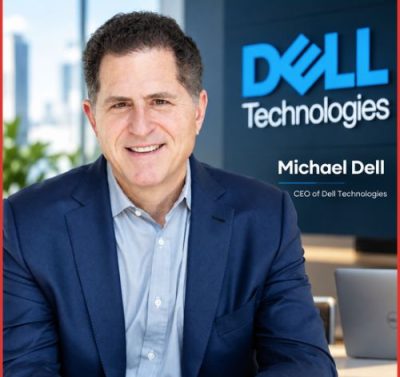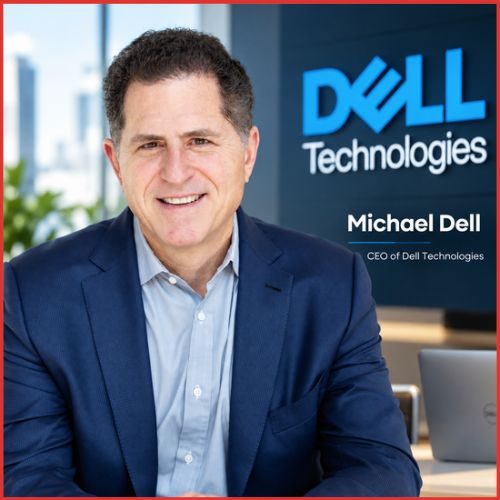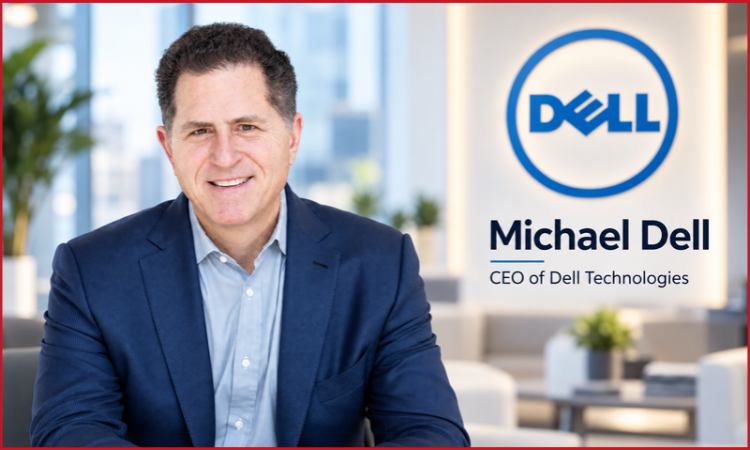
How a 19-year-old dorm-room reseller of PC upgrade kits built one of technology’s most durable fortunes and why 2026 has been the most volatile year yet for Michael Dell’s net worth.
In November 1983, a University of Texas freshman was supposed to be studying for a pre-med exam. Instead, he was upstairs in room 2713 of the Dobie Center dorm, surrounded by disassembled IBM-compatible computers, upgrading disk drives for classmates who rode the elevator up with their machines and rode back down with faster ones. His parents, on a surprise visit that same month to check on his grades, found a business instead of a student. That business became Dell Computer Corporation, then Dell Technologies, and eventually one of the largest fortunes in the world. Michael Dell’s net worth in 2026 has swung by well over $100 billion in a single year on the back of an artificial-intelligence server boom that few analysts saw coming a reminder that even a fortune built on decades of disciplined operations can still move at the speed of a stock ticker.
This article traces Michael Dell’s biography, walks through the full arc of Michael Dell’s career from dorm-room entrepreneur to chairman and CEO of a global technology company, and unpacks the compensation, ownership and market-value components that make up his estimated Michael Dell wealth in 2026 set against the wider Dell Technologies success story that created it.
Michael Dell Biography at a Glance
| Category | Details |
| Full name | Michael Saul Dell |
| Born | February 23, 1965, Houston, Texas, United States |
| Education | Enrolled at the University of Texas at Austin (1983) as a pre-med student; left in 1984 without completing a degree |
| Founded | PC’s Limited, January 1984 (incorporated as Dell Computer Corporation in May 1984) |
| Current role | Chairman and Chief Executive Officer, Dell Technologies |
| Company HQ | Round Rock, Texas, United States |
| Ownership stake | Approximately 40.9% of Dell Technologies’ outstanding common stock (2026 proxy statement) |
| Key milestones | Dell IPO (1988); world’s largest PC maker (1999); EMC acquisition (2016); VMware spin-off (2021) |
| Estimated net worth (2026) | Roughly $135 billion to $258 billion during 2026, depending on the date and index used (see Net Worth section) |
| Philanthropy | Co-founded the Michael & Susan Dell Foundation; pledged $6.25 billion toward children’s savings accounts in December 2025 |
Early Life and Education of Michael Dell
Michael Dell was born on February 23, 1965, in Houston, Texas, to Alexander Dell, an orthodontist, and Lorraine Charlotte Dell, a stockbroker. Any thorough Michael Dell biography starts here: multiple accounts describe him as a curious, business-minded teenager who ran small ventures from a mail-order stamp-trading operation to a newspaper subscription service well before he ever touched a personal computer.
His parents hoped he would become a physician, and in the fall of 1983 he enrolled at the University of Texas at Austin as a pre-medical student. College, however, competed with a side hustle that was growing faster than his class schedule. Dell obtained a vendor license that let him bid directly on state of Texas computer contracts, undercutting retail computer stores that carried far higher overheads. By his own account, he was generating tens of thousands of dollars a month from his dorm room within his first year on campus.
After his parents’ surprise visit failed to redirect him toward medicine, Dell doubled down. He registered PC’s Limited with the state of Texas in January 1984 and, within months, decided formal education could wait. At 19, he dropped out of college to run the business full time a decision often cited in Michael Dell biography retrospectives as the definitive turning point of his career.
Michael Dell Career: A Chronological Journey
Michael Dell’s career is best understood in distinct eras, each marked by a deliberate strategic pivot rather than incremental drift and each adding a new chapter to the broader Dell founder story.
1984 – 1988: From Dorm Room to Public Company
With $1,000 in start-up capital, Dell built PC’s Limited around a simple idea: sell computers directly to buyers, cut out the retail middleman, and let customers configure the exact machine they needed. The company was renamed Dell Computer Corporation in May 1984 and grew quickly on word-of-mouth and low prices. By 1988, Dell Computer Corporation had gone public, giving the company access to capital markets for the first time and validating a direct-sales model that traditional PC makers had largely dismissed.
1988 – 1999: Direct-to-Consumer Dominance
Through the 1990s, Dell refined build-to-order manufacturing and just-in-time inventory, which let the company avoid the heavy component write-downs that hurt competitors during price-sensitive PC cycles. This operational discipline, paired with an early and aggressive push into internet-based ordering, helped Dell become the world’s largest personal computer manufacturer by 1999 a title that anchored the Dell founder story for the next decade.
2004 – 2007: Stepping Back and Stepping In Again
Dell handed the CEO role to Kevin Rollins in 2004 while remaining chairman. The company subsequently lost ground on quality, customer service and product innovation, and in 2006 Dell was overtaken by Hewlett-Packard as the world’s top PC seller by shipments. Michael Dell returned as chief executive in 2007 to lead a turnaround, later describing the moment as feeling like starting over.
2013: Going Private
Facing a maturing PC market and pressure to reinvent Dell as an enterprise technology company, Dell partnered with private equity firm Silver Lake Partners to take Dell Computer Corporation private in a leveraged buyout completed in October 2013. Going private removed the short-term earnings scrutiny of public markets and gave Dell room to restructure around servers, storage and enterprise software.
2016: The EMC Megadeal
Dell’s most consequential corporate move came in September 2016, when it completed the acquisition of EMC Corporation then valued at roughly $67 billion at announcement bringing EMC’s enterprise storage business and its majority stake in VMware under one roof. The combined entity was renamed Dell Technologies, and EMC shareholders received cash plus a new tracking stock, DVMT, linked to a portion of VMware’s economics. At the time, it was described as the largest technology merger in history.
2018 – 2021: Returning to Public Markets and Unwinding VMware
In December 2018, Dell Technologies converted the DVMT tracking stock into common Class C shares, effectively returning the company to public markets under the ticker DELL without a traditional IPO. Three years later, in November 2021, Dell Technologies completed a full spin-off of VMware, simplifying its capital structure and using the proceeds to pay down debt taken on for the EMC acquisition.
2023 – 2026: The AI Infrastructure Boom
When Broadcom acquired VMware in 2023, Michael Dell’s remaining VMware-linked holdings converted into Broadcom shares and cash, adding a second major equity position alongside his Dell Technologies stake. Then came the AI server cycle: Dell Technologies has reported record quarterly AI-optimized server revenue exceeding $9 billion in a single quarter, up more than 340% year-over-year, as enterprises rushed to build AI data centers. Dell Technologies shares more than doubled over the course of 2026, and Michael Dell’s fortune concentrated in Dell Technologies and Broadcom stock rose and fell with it, at one point adding roughly $100 billion in paper wealth within the year.
The Dell Technologies Business Model and Michael Dell’s Role in Its Growth
Dell Technologies’ business model still traces back to the direct-sales logic Michael Dell worked out in his dorm room: reduce inventory risk, sell configured-to-order systems, and stay close enough to customers to spot demand shifts early. That same instinct now drives Dell’s enterprise strategy: the company builds servers and storage systems configured specifically for AI workloads, working directly with large cloud providers, governments and enterprises rather than through layers of distribution. It is this repeated ability to re-anchor the business model around the next infrastructure cycle that underpins the wider Dell Technologies success story.
As chairman and CEO, Michael Dell has repeatedly repositioned the company around where infrastructure spending was heading next: from PCs, to servers and storage after the EMC deal, to AI-optimized infrastructure today. Dell Technologies’ recent CEO commentary has framed enterprise customers as increasingly viewing data centers as a source of business value rather than a cost line a framing that mirrors Dell’s long-running argument that owning infrastructure strategy is a competitive advantage, not overhead.
Leadership Strategy and Decision-Making Style
Colleagues and biographers consistently describe Michael Dell’s leadership style as data-driven, operationally obsessed and willing to make structurally bold bets rather than incremental ones. Three patterns stand out across four decades:
- Long time horizons over quarterly optics: taking Dell private in 2013 sacrificed short-term stock-market approval in exchange for room to rebuild around enterprise technology.
- Concentration over diversification: rather than spreading capital across many small bets, Dell has repeatedly made a small number of very large, thesis-driven moves the EMC acquisition and the pivot to AI infrastructure being the clearest examples.
- Return-and-rebuild instinct: his decision to come back as CEO in 2007, after stepping away in 2004, reflects a willingness to re-engage operationally rather than manage purely as chairman.
Measurable, Verifiable Achievements
- Founded PC’s Limited in January 1984 with $1,000 in starting capital; incorporated as Dell Computer Corporation the same year.
- Took the company public in 1988, and built it into the world’s largest personal computer manufacturer by 1999.
- Led the 2013 leveraged buyout that took Dell private in partnership with Silver Lake Partners.
- Completed the 2016 acquisition of EMC Corporation, at the time the largest technology merger on record, forming Dell Technologies.
- Returned Dell Technologies to public markets in 2018 and completed the VMware spin-off in 2021.
- Holds a beneficial ownership stake of about 40.9% of Dell Technologies’ outstanding common stock, per the company’s 2026 proxy statement.
- Co-founded the Michael & Susan Dell Foundation and, with his wife, pledged $6.25 billion toward children’s savings accounts in December 2025.
Michael Dell’s Salary and Compensation at Dell Technologies
Michael Dell’s disclosed pay as Dell Technologies’ CEO is modest relative to his overall wealth, because almost all of that wealth sits in stock he already owns rather than in new annual compensation. According to public reporting on Dell Technologies’ executive compensation disclosures, his total pay for fiscal year 2025 came to approximately $3.1 million, made up of roughly:
- Base salary: approximately $950,000
- Cash bonus: approximately $2 million
- Other compensation and benefits: the remaining balance of the reported total
Dell Technologies has not granted Michael Dell large annual equity awards in recent years comparable to those of many public-company CEOs, since his controlling ownership stake already ties his financial outcome directly to the share price.
Michael Dell Net Worth 2026: Compensation, Ownership and Market Value, Explained
Michael Dell’s 2026 net worth estimates vary widely between trackers because almost his entire fortune is denominated in shares of two publicly traded companies, Dell Technologies and Broadcom whose prices moved dramatically during the year. Estimates should be read as snapshots on a given date, not fixed figures, and different indexes (Forbes, Bloomberg and financial-data platforms) can disagree by tens of billions of dollars depending on their valuation methodology and update cadence. In other words, any single headline number for Michael Dell wealth in 2026 is really a moving target rather than a fixed fact.
| Reporting date (2026) | Estimated net worth | Source / index |
| February 17 | ≈ $135 billion | Forbes / Bloomberg, cited by TheStreet |
| April 14 | ≈ $165 billion | Bloomberg Billionaires Index, cited by Benzinga |
| Mid-2026 (post AI rally) | ≈ $212.8 billion | Bloomberg Billionaires Index / Forbes |
| September 3 | ≈ $250.7 billion | Bloomberg-linked estimate, cited by Bajaj Finserv |
| September 4 | ≈ $258.4 billion | WealthRank platform, SEC-filing based |
| September 5 | At least $13.6 billion in disclosed Dell Technologies shares alone | GuruFocus, based on SEC Form 4 filings |
Note: These figures are third-party estimates, not officially disclosed net-worth figures. Michael Dell has not published a personal net-worth statement. The lower GuruFocus figure reflects only his directly reported Dell Technologies shareholding via SEC filings and does not include his Broadcom holdings or private investments, which explains the gap versus broader index-based estimates.
Three components typically make up index-based estimates of Michael Dell’s wealth:
- Dell Technologies ownership: roughly 40.9% of outstanding common stock, per the company’s 2026 proxy statement by far the largest single component.
- Broadcom shares: received as part of the 2023 Broadcom–VMware transaction, tied to Dell’s earlier VMware economic interest.
- Private investments: held through DFO Management, Michael Dell’s private investment firm; specific holdings and valuations are not publicly disclosed.
Because Dell Technologies stock alone more than doubled at points during 2026 on surging AI server demand, small daily share-price moves have translated into billion-dollar swings in Michael Dell’s estimated net worth a dynamic that explains why headline figures for “Michael Dell net worth 2026” differ so sharply depending on the exact date referenced.
What Makes Michael Dell’s Leadership Journey Unique?
Few technology founders have taken their own company private and then guided it back to public markets while completely reshaping its business mix in between. What makes the Michael Dell business empire unusual is not any single deal, but the combination of traits below:
- Founder-operator continuity: unlike many billionaire tech founders who step back into a chairman-only role, Dell has remained hands-on as CEO for most of the company’s 40-plus-year history.
- Willingness to reverse course publicly: stepping down in 2004 and returning in 2007 required Dell to publicly acknowledge that the company had lost direction under different leadership an unusual level of course correction for a founder.
- Comfort with financial complexity: the EMC acquisition’s tracking-stock structure and the later VMware spin-off and Broadcom transaction involved some of the most complex capital-structure engineering in recent technology M&A history.
- Riding successive infrastructure cycles: from PCs, to enterprise storage, to AI servers, Dell Technologies under Michael Dell has repeatedly repositioned around the next major wave of enterprise technology spending rather than defending a single product category.
Conclusion
Looking back across four decades, Michael Dell’s career rarely fits neatly into the standard founder narrative. He did not exit his company after its early success, nor did he stay comfortably in one business model for four decades. He took his own company private when public markets no longer suited his strategy, re-entered public markets on his own terms, unwound a complex conglomerate structure, and repositioned Dell Technologies around AI infrastructure just as that market began to accelerate. The Michael Dell business empire offers a rare, decades-long case study in operational discipline, willingness to restructure, and the outsized rewards and risks of holding concentrated ownership in a single company through multiple technology cycles. Whatever figure headlines attach to Michael Dell’s net worth on a given day in 2026, the more durable lesson lies in how consistently he has rebuilt Dell Technologies around wherever enterprise technology spending was heading next.
Frequently Asked Questions
1. What is Michael Dell’s net worth in 2026?
Estimates for Michael Dell’s net worth in 2026 have ranged from roughly $135 billion in February to more than $250 billion in September, according to Forbes, Bloomberg and other wealth-tracking platforms. The wide range reflects the volatility of Dell Technologies and Broadcom shares, which make up the bulk of his fortune.
2. How did Michael Dell become rich?
Michael Dell built his wealth primarily through his founding ownership stake in Dell Computer Corporation, later Dell Technologies, which he started in 1984 with $1,000 in capital. His fortune grew further through the 2016 EMC acquisition, the 2021 VMware spin-off, and the 2023 Broadcom-VMware transaction, all of which shaped the equity he holds today.
3. What is Michael Dell’s salary as CEO of Dell Technologies?
Public reporting on Dell Technologies’ executive compensation disclosures puts Michael Dell’s total fiscal 2025 compensation at approximately $3.1 million, consisting of roughly $950,000 in base salary and about $2 million in cash bonus, plus other benefits.
4. Did Michael Dell graduate from college?
No. Michael Dell enrolled at the University of Texas at Austin in 1983 as a pre-medical student but left in 1984, at age 19, without completing his degree, in order to run his computer business full time.
5. What percentage of Dell Technologies does Michael Dell own?
According to Dell Technologies’ 2026 proxy statement, Michael Dell beneficially owns approximately 40.9% of the company’s outstanding common stock, making him by far its largest individual shareholder.
6. Why has Michael Dell’s net worth grown so much in 2026?
Dell Technologies’ stock rose sharply in 2026 as enterprise demand for AI-optimized servers surged; the company has reported quarterly AI server revenue above $9 billion, up more than 340% year-over-year. Because Michael Dell’s wealth is concentrated in Dell Technologies and Broadcom shares, that rally translated directly into a higher estimated net worth.