MediaTek has introduced its latest flagship smartphone processors, putting the Taiwanese chip designer deeper into the race for premium Android devices and on-device artificial intelligence.
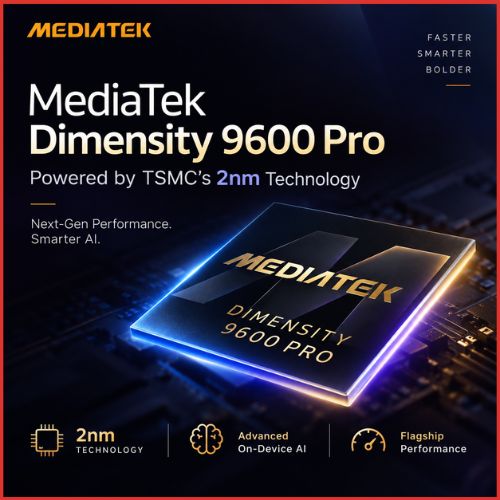
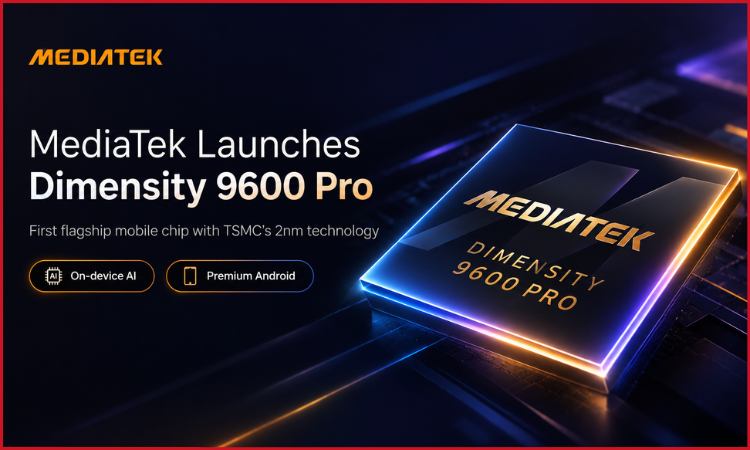
The new MediaTek Dimensity 9600 Pro is the company’s first mobile processor manufactured using TSMC’s advanced 2-nanometre process. A second chip, the Dimensity 9600M, uses 3nm technology and is aimed at a broader section of the flagship smartphone market.
The launch gives MediaTek fresh hardware for its push against Qualcomm at the expensive end of the handset market, where smartphone makers are increasingly using AI capabilities and advanced processors to differentiate their devices.
Dimensity 9600 Pro Moves to 2nm
The biggest change is the manufacturing process.
The MediaTek Dimensity 9600 Pro is built using TSMC’s 2nm technology, making it MediaTek’s first smartphone processor based on the semiconductor manufacturer’s latest production process.
Moving to a smaller manufacturing node can allow chip designers to fit more transistors into a limited area while improving performance and power efficiency.
Those improvements matter particularly in smartphones, where manufacturers need more computing power without dramatically increasing battery consumption or heat.
MediaTek has also launched the Dimensity 9600M using TSMC’s 3nm process. Rather than targeting exactly the same devices, the second processor gives handset makers another option for flagship products.
The first smartphones powered by both chips are expected to arrive soon.
MediaTek has previously supplied processors to major Android brands including Xiaomi, Oppo and Vivo, making those manufacturers important names to watch as the new chips begin appearing in commercial devices.
On-Device AI Gets a Major Upgrade
Artificial intelligence is a central part of the new processors.
The Dimensity 9600 Pro includes a dedicated neural processing unit designed to handle increasingly complex on-device AI tasks.
MediaTek says the new NPU delivers a 51% improvement over the previous generation when processing a user’s prompt before an AI model begins generating its response.
That improvement comes as smartphone makers try to move more AI processing directly onto devices.
Many generative AI features currently rely heavily on cloud servers. A request is sent from the phone to a remote data centre, processed there and then returned to the user.
Running more tasks locally changes that model.
On-device processing can reduce dependence on an internet connection and potentially improve response times. It can also allow certain information to remain on the handset rather than being continuously sent to external servers.
As AI assistants become more integrated into operating systems, cameras and productivity tools, dedicated AI hardware is becoming a bigger part of smartphone processor design.
MediaTek Takes Aim at Premium Smartphones
MediaTek has built a large presence across Android smartphones, but the premium market remains particularly valuable.
High-end devices give chipmakers greater room to introduce advanced hardware and charge more for their processors.
The company now sees an opportunity to increase its position in this segment as smartphone prices rise and manufacturers add more expensive components.
MediaTek’s market value has already surpassed Qualcomm’s this year, adding another dimension to the competition between the two chip designers.
Qualcomm remains a major supplier of processors for premium Android phones through its Snapdragon platform.
The new MediaTek 2nm chip gives smartphone manufacturers another high-end option as the next generation of flagship devices is developed.
The competition is increasingly about more than raw CPU performance. AI processing, graphics, power efficiency and the ability to perform demanding tasks without overheating have become important selling points.
Rising Component Costs Remain a Challenge
More advanced smartphone technology is also becoming more expensive.
The AI boom has increased demand for sophisticated semiconductor manufacturing and other hardware across the technology industry. That has created pressure throughout parts of the supply chain.
MediaTek is working with handset manufacturers to reduce the effect of higher component costs on consumers.
However, the company also believes rising smartphone prices could create room for it to gain more share in premium devices.
Consumers have already become accustomed to flagship smartphones carrying much higher prices than mainstream models.
Manufacturers now need to convince buyers that improvements in cameras, AI features, displays and performance justify those increases.
A more capable processor can become an important part of that argument.
MediaTek Is Expanding Beyond Smartphone Chips
Smartphones remain central to MediaTek, but the company is building a much larger artificial intelligence business.
It has begun expanding into data-centre processors and custom silicon as technology companies spend heavily on AI infrastructure.
Its first dedicated AI accelerator for a major US cloud provider is expected to enter mass production during the fourth quarter of 2026.
That move puts MediaTek into a very different market from smartphone processors.
Data-centre AI accelerators are designed to handle enormous computing workloads inside cloud infrastructure. Demand for such hardware has risen sharply as companies build and operate larger generative AI models.
MediaTek is also developing custom chips for customers that want processors designed around specific computing requirements.
The expansion could reduce the company’s dependence on consumer electronics while giving it exposure to the much larger wave of AI chip demand.
Nvidia and Alphabet Back MediaTek Funding
MediaTek raised $3.9 billion through a convertible bond offering last month as it increases investment across its semiconductor businesses.
Nvidia invested $3.5 billion in the offering, while Alphabet also participated.
Alphabet already has a long-term relationship with MediaTek in AI infrastructure.
The participation of two major technology companies highlights how MediaTek’s position is changing.
It is no longer simply competing for processor slots inside Android smartphones. The company is becoming more involved in the infrastructure required to build and operate artificial intelligence systems.
That creates a broader growth opportunity but also places MediaTek in markets where competition and development costs are extremely high.
Smartphone AI Race Moves Into the Hardware
The Dimensity 9600 Pro arrives as artificial intelligence becomes a more important part of the smartphone itself.
Early generative AI applications largely depended on cloud computing. Newer phones are increasingly being designed to perform at least part of that work locally.
That means processors need dedicated hardware capable of handling AI models efficiently without draining the battery.
The MediaTek Dimensity 9600 Pro is designed around that shift.
Its 2nm manufacturing process, upgraded neural processor and premium positioning give MediaTek a fresh platform for competing in the next wave of flagship Android devices.
The bigger story, however, extends beyond smartphones.
With MediaTek simultaneously developing data-centre accelerators and custom AI chips, the company is positioning itself to benefit from AI chip demand at both ends of the computing market, from the device in a consumer’s pocket to the servers running large AI models in the cloud.