The wallet prompt is the crime scene
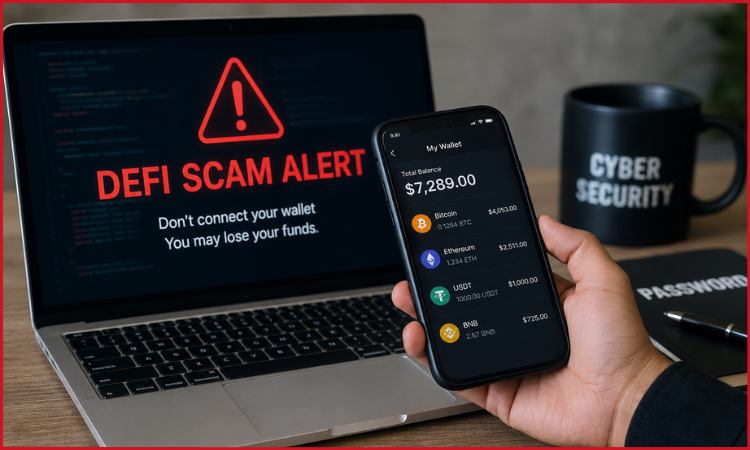
A token appears in a wallet after an airdrop. Its site shows a rising price and a countdown to claim rewards. The investor connects, approves a transaction, and watches unrelated assets leave the wallet. No password was stolen. The victim signed permission that a malicious contract used exactly as coded.
DeFi scams exploit the gap between what an interface says and what a transaction does. Retail investors see buttons marked Claim, Verify, or Stake. The wallet may display a contract address, method, and spending allowance that few people can interpret. Attackers build trust in the interface, then use the signature as authorization.
Honeypot crypto: easy to buy, impossible to sell
A honeypot crypto token allows purchases but blocks or heavily taxes sales for ordinary holders. The chart climbs because buyers enter and cannot exit. Promoters point to the price as proof of demand, while privileged wallets sell through exemptions hidden in the contract.
Before buying, check verified source code, owner privileges, transfer restrictions, tax settings, liquidity locks, holder concentration, and whether independent wallets have sold successfully. Simulation tools help, but attackers can change behavior based on address, block, or router. A small test sale is useful only if the contract cannot later be upgraded.
Rug pulls and fake yield
In a liquidity rug pull, insiders remove the assets that let users trade the token. Another version mints a large supply, changes fees, pauses withdrawals, or uses an upgrade key to replace safe logic. A professional website and public team do not remove smart-contract control.
Yield scams advertise returns funded by new deposits or by issuing a token with no durable demand. Ask where the yield comes from in economic terms. Trading fees, secured borrowing, and protocol incentives carry different risks. If the answer is only ‘community growth’ or ‘AI strategy,’ assume the return depends on another buyer.
Phishing has moved into trusted channels
Attackers compromise project social accounts, ad placements, Discord moderators, and search results. They copy the real site and change one character in the domain. A message about an urgent migration or security update pushes holders to connect before checking. The fake page may even read the wallet and tailor the request to valuable assets.
The FTC’s 2026 investment-scam advice warns that fraud often starts through social media, messaging, or ads and uses fake proof of returns. Bookmark official sites, verify announcements through a second channel, and never treat a sponsored search result as authentication.
Impersonation, recovery, and support fraud
After a loss, fake investigators promise recovery for an upfront fee. They may know the transaction hash and amount because the blockchain is public. Realistic detail does not prove access or authority. Anyone asking for a seed phrase, private key, remote-control session, or payment to ‘unlock’ recovered funds is trying to take more.
A defi scam can also impersonate a regulator, exchange, lawyer, or project founder. Verify firms through official registers and contact them using independently found details. Recovery is hard, and certainty is a red flag. Preserve evidence and report quickly to the relevant exchange, wallet provider, local police, and cybercrime channel.
How to avoid crypto scams without becoming a contract auditor
Separate wallets by purpose. Keep long-term assets in a wallet that never connects to new applications, use a smaller wallet for DeFi, and create a disposable wallet for unknown claims. Limit token allowances, review them, and revoke old approvals. Hardware wallets protect keys but cannot save a user who approves a malicious transaction on the device.
Slow the decision. Confirm the domain, contract address, chain, and announcement. Read the transaction simulation and question unlimited approvals. Check whether admin keys are controlled by a multisignature, whether upgrades have a time lock, and whether liquidity and ownership claims are verifiable on-chain. Skip any opportunity that punishes ten minutes of verification.
Retail risk is also a platform design problem
Wallets and DeFi interfaces can reduce harm by translating contract calls into plain outcomes: which assets can move, who can move them, how much, and for how long. Default to exact allowances instead of unlimited ones. Warn when a transaction grants operator rights, changes ownership, or interacts with a newly deployed contract.
Crypto fraud will keep changing names in 2026, but the control points are stable. Verify identity and domain, understand the permission, limit the amount exposed, and preserve an exit. The smartest move is often refusing a transaction whose effect cannot be explained in one clear sentence.
A five-minute transaction review
Pause and read the wallet screen from top to bottom. Confirm the account sending the request, the chain, contract, assets affected, recipient, allowance, and expiry. Search the contract address through an independent block explorer and compare it with the project’s verified channels. If the wallet cannot explain the effect, reject the request and investigate from a separate browser.
Look for crypto scams outside the contract too. Check domain registration age, social-account history, copied documentation, paid promotion, team identity, admin control, and liquidity concentration. The US Investor.gov crypto fraud page provides another plain-language resource for recognizing common tactics. No single green flag cancels several red ones.
If approval is necessary, grant the smallest amount for the shortest useful period and revoke it after the task. Keep the signing wallet separate from browsing and messaging. Never import a seed phrase into a site or ‘validation’ tool. Support staff do not need it, and a legitimate protocol cannot reverse a transaction with it.
Learning how to avoid crypto scams is less about predicting every new story and more about controlling permission. DeFi makes users their own transaction approvers. That power is unforgiving. A verified link, limited wallet, readable simulation, and willingness to walk away will prevent more loss than chasing the highest advertised return.
One last operational check
After any DeFi interaction, record the contract address, transaction hash, assets, approval amount, and reason. Review token and NFT approvals on a schedule and remove those no longer needed. Watch for new transactions or ownership changes in protocols with upgradeable contracts. If an application announces a migration, verify it independently and test with a low-value wallet before moving a larger position. Security continues after the first signature because permissions and contract control can outlive the original trade. Set wallet alerts for unexpected transfers, approvals, governance changes, and new contract interactions, then investigate quickly.