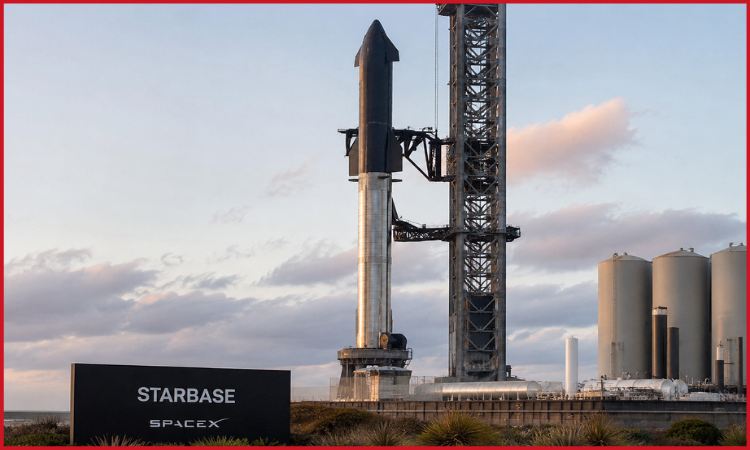
SpaceX has pushed back the twelfth test flight of its Starship rocket to Thursday, May 21, it wrote on X. This is after the vehicle missed its May 20 launch window at Starbase, Texas. The Flight 12 mission marks the first Starship test flight of 2026, and the first in seven months, making the delay all the more watched by the global space community.
What is Starship Flight 12, and why does it matter?
Flight 12 is the twelfth flight of Starship and Super Heavy and the first flight of version 3 of Starship. It also marks the first launch from Starbase Pad 2. The primary goal of the flight test is to demonstrate each of the new design elements in a flight environment for the first time, with each element of the Starship architecture featuring significant redesigns to enable full and rapid reuse, incorporating learnings from years of development and testing.
NASA has picked Starship to land its Artemis 4 astronauts on the moon in 2028, but SpaceX has yet to send a Starship into a full orbit around Earth since test flights began in 2023, let alone fly a vehicle capable of supporting an astronaut crew, in-orbit refueling, docking with an Orion capsule in orbit, or landing on the lunar surface. Starship V3 is supposed to be the baseline for that vehicle.
Where is the launch, and what will happen during the flight?
The SpaceX Starship rocket will launch from Orbital Launch Pad 2 at SpaceX Starbase in Texas, located near Brownsville. The booster’s primary test objective will be executing a successful launch, ascent, stage separation, boostback burn, and landing burn at an offshore landing point in the Gulf. As this is the first flight test of a significantly redesigned vehicle, the booster will not attempt a return to the launch site for a catch.
The Starship upper stage will target multiple in-space and reentry objectives, including the deployment of 22 Starlink simulators, similar in size to next-generation Starlink satellites. The last two satellites deployed will scan Starship’s heat shield and transmit imagery down to operators, to test methods of analysing the heat shield’s readiness for return to the launch site on future missions.
A relight of a single Raptor engine while in space is also planned. For Starship’s reentry, a single heat shield tile has been intentionally removed to measure the aerodynamic load differences on adjacent tiles when one is missing. The ship will also perform a maneuver to intentionally stress the structural limits of the vehicle’s rear flaps and a dynamic banking maneuver to mimic the trajectory that future missions returning to Starbase will fly.
How does Starship V3 differ from earlier versions?
Both the Starship spacecraft and Super Heavy booster have received significant modifications for this flight. These upgrades include a new generation of Raptor engines, structural and tank refinements, and modifications to the heat shield system. The redesigned Launch Pad 2 at Starbase is also entering service for the first time, adding further complexity to the preflight campaign.
Several tiles on Starship have been painted white to simulate missing tiles and serve as imaging targets in the test. The mission also introduces docking ports on the ship, a step toward the in-space refuelling capability that future crewed lunar missions will depend on.
After the successful flights 10 and 11, Booster 18 was destroyed during ground testing, making the new booster’s debut on Flight 12 all the more significant. The launch window on May 21 opens at 10:30 PM UTC, with road and beach closures around Starbase remaining in effect through the day.