The usage of AI solutions is rapidly growing within businesses. Industry statistics reveal that more than 65% of companies are currently implementing AI in some part of their operations, and the discussion now revolves around which model works with which workflow, not whether AI should be used. The days of comparing features are long gone; the team wants to know which model integrates with their system, withstands production requirements, and complies with their data guidelines.
This blog will highlight ChatGPT vs Gemini vs Claude in their latest versions, quality of outputs, specific task performance, integration capabilities, pricing, limitations, and which application suits each solution. Let’s check out the best AI tools in 2026.
Overview of ChatGPT vs Gemini vs Claude
1. ChatGPT: General-Purpose AI With the Broadest Deployment
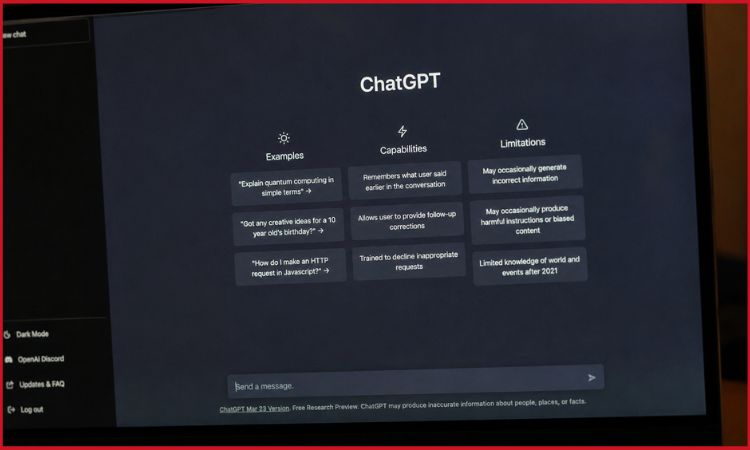
As the front-runner of OpenAI, ChatGPT is one of the leading AI platforms in use by businesses since 2022. Version 5.4 of the platform, which launched on March 5, 2026, is the first version of the platform to combine the capabilities of coding, reasoning, and computer usage into a single platform. Moreover, this frontier version surpasses any human expertise level in autonomous desktop activities.
- Model family: GPT-5.4 (flagship), GPT-5.4 Mini (speed and cost-effectiveness), GPT-5.4 Nano (lightweight), GPT-5.4 Pro (maximizes reasoning ability)
- Context window: 1M tokens; prices doubled for anything beyond 272K tokens
- The Computer Use API has native desktop interaction capability built into the system: users can view screens and then perform actions, including navigating applications, clicking on objects, and typing text. The Computer Use API has a variety of compliance certifications, including SOC 2 Type 2, GDPR, and CCPA on the Business Tier, as well as the Enterprise Tier. With its extensive ecosystem built over four years, OpenAI’s ChatGPT API has the highest adoption rate in any industry and will continue to have an insurmountable lead over competing providers as one of the best AI models for developers and third-party integrations (developer resources).
2. Gemini: Google’s Reasoning and Cost Efficiency Leader
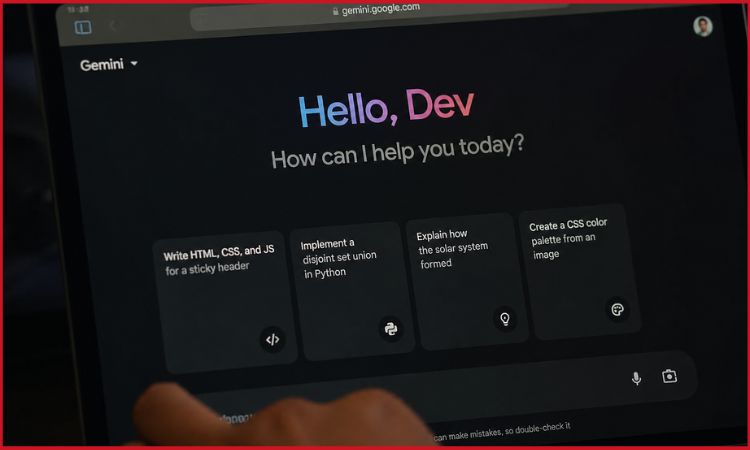
February 19, 2026, marks the introduction of Gemini 3.1 Pro, which is the strongest offering in abstract reasoning among the models considered. Its largest production context window (2M tokens) and multimodal capabilities with support for text, images, audio, and video in one architectural structure set it apart from other models.
- Model family: Gemini 3.1 Pro (top-end), Gemini Flash (faster/cheaper), and Gemini Flash-Lite (the cheapest)
- Production context window: 2M tokens, double that of both GPT-5.4 and Claude
- Multimodal: Native video and audio input: unsupported in both GPT-5.4 and Claude
- Real-time searches: Integration with Google Search allows the retrieval of current web content related to each request
- Pricing: $2-$12 per million tokens, the cheapest of the three
- The Gemini AI model was specifically developed for those who run their operations through Google Workspace. The AI already exists within applications used by employees every day, with no need for additional integration.
3. Claude: Anthropic’s Coding and Long-Context Specialist

Claude Opus 4.6, released February 5, 2026, is the best-performing model in this set in terms of coding quality. It is equipped with a 1M token context window in its beta version and has the capacity to generate up to 128K tokens. This model emphasizes reasoning ability and agency over features.
- Model Family: Claude Opus 4.6 (flagship), Claude Sonnet 4.6 (best combination of performance and cost), Claude Haiku 4.5 (lightweight)
- Coding Performance: Highest SWE-bench Verified rating of the three
- Multi-Cloud Support: Supported on AWS Bedrock, Google Vertex AI, and Microsoft Foundry
- Compliance: HIPAA, SOC 2, data residency
- When it comes to multi-step workflows requiring heavy coding or enterprise documentation, Claude is invariably the preferred model.
ChatGPT vs Gemini vs Claude Comparison
The comparison of ChatGPT vs Gemini vs Claude is becoming popular as more people use AI for work, study, and daily tasks. All three AI tools have different features, making it important to choose the one that matches your needs best.
| CHATGPT | CLAUDE | GEMINI |
| Best for general use with a strong ecosystem and reliable performance. | Strongest for coding long context tasks & deep reasoning. | Ideal for cost-efficient use and real-time research within Google Workspace. |
Key Differences Between ChatGPT vs Gemini vs Claude
GPT-5.4 was developed by OpenAI with a broad scope, including as many task types and integrations as possible, as well as optimization for professional knowledge work. Google’s Gemini 3.1 Pro has been designed to focus more on reasoning and lower costs due to Google’s awareness that the key strength of its product lies in the existing ecosystem within Google Workspace. Let’s have an overlook of the top AI tools comparison table.
| Dimension | ChatGPT (GPT-5.4) | Gemini (3.1 Pro) | Claude (Opus 4.6) |
| Context window | 1M tokens | 2M tokens | 1M tokens (beta) |
| SWE-bench Verified | 80% | 80.60% | 80.80% |
| GPQA Diamond | 92.80% | 94.30% | 91.30% |
| Computer use | 75% OS World, exceeds human | Competitive | 72.70% |
| Multimodal | Text, image, audio | Text, image, audio, video | Text, image |
| API per 1M tokens | $2.50 / $15 | $2 / $12 | $5 / $25 |
| Strongest at | Computer use, knowledge work | Reasoning, cost, live research | Production coding, long-context |
How Each Model Handles Different Business Tasks
Let’s understand the working model of each AI tool through an AI chatbot comparison.
1. Writing and Content Creation
If the nature of the project is one in which the focus should be on quality over quantity, including voice-driven thought-leadership pieces, lengthy editorial, and detailed brand content, Claude Opus 4.6 is the best AI for writing. GPT-5.4 will suit projects involving larger volumes of structured output in which it is crucial to adhere closely to the brief rather than create unique, distinctive language. If you do your daily work inside Google Workspace, Gemini 3.1 Pro is the most straightforward option.
2. Coding and Engineering
Opus Claude 4.6 is the best AI for coding and is leading in terms of coding quality for production. The SWE-bench score advantage of Opus Claude 4.6 over GPT-5.4 becomes most noticeable when working with complex multi-file codebases with legacy code and poorly described bugs, i.e., projects that usually fill most engineering pipelines. The code generated by it is consistently clear and commented, which is what reviewers care about more than benchmark results.
The GPT-5.4 advantage lies in its ability to work efficiently on DevOps tasks related to infrastructure and CI/CD and terminal tasks, as well as having the Computer Use API, which allows it to interface directly with the development environment.
3. Research and Data Analysis
The key advantage of Gemini 3.1 Pro regarding research is architectural. As the native Google search engine, it always uses live information from all searches without needing any premium add-ons. Gemini 3.1 Pro’s 2M context window is capable of processing an entire research paper database at once. Claude Opus 4.6 is a better option when it comes to the analysis of legal documents, large datasets, and other documents in its context window.
4. Customer Support and Conversational AI
ChatGPT remains the most extensively used model in terms of customer interaction, as it boasts an extensive library of pre-configured support integration systems and proven enterprise deployment examples of using the model for conversational purposes. Its output tone is predictable and calculated, which is vital when the model serves as the initial channel of communication between the company and its clients. Gemini is recommended as the best AI model for business to those who manage support services using Google Workspace and Meet, as it can easily deal with the voice and video components in the context.
Pricing and Cost Comparison
When the usage hits high volumes, running Gemini against Claude Opus 4.6 would cost up to five to seven times less.
| Tier | ChatGPT | Gemini | Claude |
| Free | Limited GPT-5.4 | Flash only | Sonnet 4.6 only |
| Consumer | $20/month (Plus) | $20/month (Advanced) | $20/month (Pro) |
| Power tier | $200/month (Pro) | Enterprise custom | $100-$200/month (Max) |
| Team | $25/user/month | Workspace add-on | $25/user/month |
| API per 1M tokens | $2.50 / $15 | $2 / $12 | $5 / $25 |
Conclusion
These three, GPT-5.4, Gemini 3.1 Pro, and Claude Opus 4.6, are the closest matches in capability that the AI industry has seen so far. ChatGPT beats in terms of ecosystem and computer usage. Gemini beats in terms of reasoning, price, and availability of real-time data. Claude beats in terms of development, coding, and long-context processing ability. It ultimately depends upon the ecosystem that a company is already operating in, as well as the type of task that it usually performs with AI technology. The introduction of Gemini 3.2, Claude Sonnet 5, and GPT-5.5 is imminent, and all will have a say in changing this equation.
FAQ
1. Which one is the best overall AI in 2026 – ChatGPT, Gemini, or Claude?
It’s impossible to define one that is ‘best’ for all situations; ChatGPT is the best general user, and Claude is ideal for writing and deep thinking, and Gemini is one of the best generative AI platforms, primarily a wrapper for Google apps.
2. What are the best AI tools in 2026 for creating blog posts?
Claude still surpasses as one of the best AI tools in 2026 for the purposes of creative writing, due to its easy, natural, and casual tone and its ability to produce original, naturalistic prose.
3. What is the best Coding AI in 2026?
In the field of coding and software development tools, the strongest solution is Claude, being a superior tool for reasoning at the repository level and having a better grasp of long-form (continuous) context than any other tool.