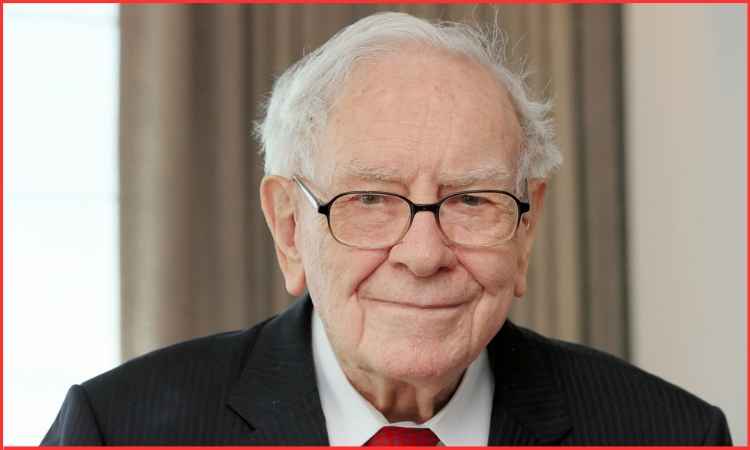
“The most important investment you can make is in yourself.”- Warren Buffett.
Do you think investing is all about following trends and making quick moves? One of the most successful investors, Warren Buffett, did the exact opposite and built his billion-dollar legacy. His journey from selling stocks at his father’s firm to leading one of the world’s most powerful holding companies teaches valuable lessons that every young investor should adopt. These lessons are proven and rooted in decades of discipline. Read this article to explore them along with Warren Buffett’s inspiring success journey.
Warren Buffett biography
| Name | Warren Edward Buffett |
| Born | 30 August 1930 in Omaha, U.S. |
| Education | Master’s in Economics from Columbia University |
| Known as | Chairman of Berkshire Hathaway |
| Net Worth | $154 billion [2025] |
Early Life & Education
Born in 1930, Warren is the son of U.S. congressman and businessman Howard Buffett and Leila. He spent his early years of schooling at Rose Hill Elementary School. In 1942, his father was elected to the United States Congress. Hence, the whole family moved to Washington, D.C., where Warren completed his elementary schooling at Alice Deal Junior High School.
He completed his higher studies at Woodrow Wilson High School in 1947. He found success in entrepreneurial and investment ventures and was willing to skip college and continue in the business. However, his father wanted him to complete his studies before shifting his focus to business. So, Warren went to the Wharton School of the University of Pennsylvania for two years and joined the Alpha Sigma Phi fraternity. Then, he was transferred to the University of Nebraska and graduated with a Bachelor of Science in business administration in 1951.
He later enrolled at Columbia Business School for a Master of Science in Economics after learning that Benjamin Graham taught there. Warren also attended the New York Institute of Finance.
Foundations of Warren Buffett’s Success
Warren began his career by selling stocks at his father’s firm. He then worked under Benjamin Graham, known as the father of value investing. In 1951, he got to know that Graham served on the board of GEICO. So he took a train to Washington and ended up spending hours with Lorimer Davidson, the vice president of the firm, discussing the insurance business. Warren even offered to work for Graham for free, but got turned down. So he returned to Omaha and started exploring on his own.
Warren Buffett’s Early Ventures
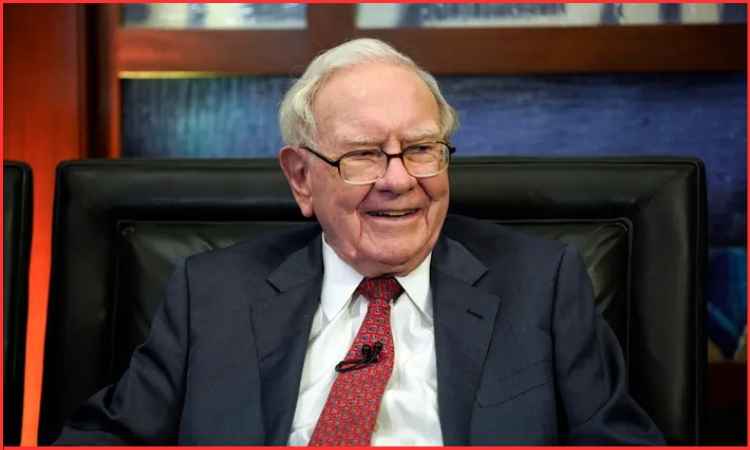
Source: Forbes
After returning to Omaha, he took a public speaking course. And after building confidence, he started taking night classes on ‘Investment Principles’ at the University of Nebraska-Omaha. In 1954, Warren accepted a job at Benjamin Graham’s partnership with a starting salary of $12,000 a year. There, he worked with Walter Schloss, the notable investor of Graham’s investing firm. In 1956, Graham retired and ended his partnership.
Warren, with his savings of $174,000, returned to Omaha and started a series of investment partnerships in 1956. In 1959, he was already managing six partnerships. His strategy was simple: to look for undervalued companies and stay away from hype. For example, the Sanborn Map, a company that had more cash in its investment portfolio than its entire stock price. So Warren, as an activist investor, bought the shares, got a seat on the board, and even turned the share value into real returns. Around 50% ROI was earned in just two years. During that time, Warren met Charlie Munger, a lawyer who had a sharp investing mind, who eventually became his trusted partner in the future.
Warren Buffett acquires Berkshire.
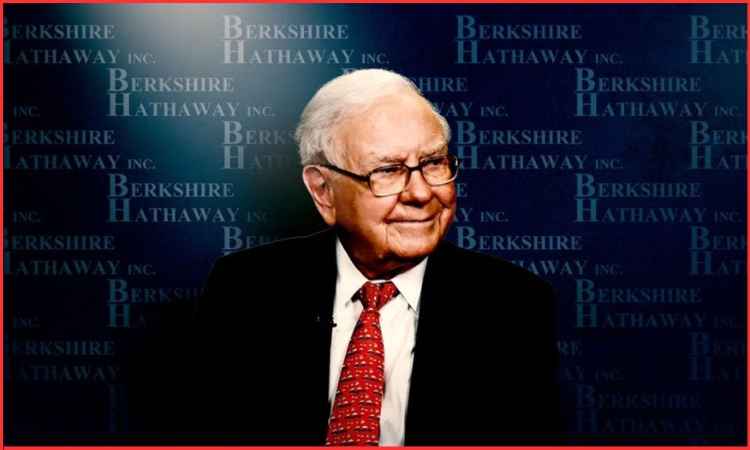
Source: TechStory
With the success of partnerships of 11 entities, Warren became a millionaire in 1962 with an amount of $1,025,000. In the beginning, he merged the various partnerships into a single entity, the Buffett Partnership Ltd. Then, he started buying shares of Berkshire Hathaway, a textile company. His original plan was to make a quick profit, but the company’s leadership frustrated him, so he took control of the company. However, later, it proved to be a bad decision, but Warren did not lose hope and found a way. In 1966, Warren stopped accepting additional investments from new or existing partners because he did not see many good investment opportunities that met his standards. He moved its capital to insurance to achieve flexibility to grow.
Expanding and Building Legacy
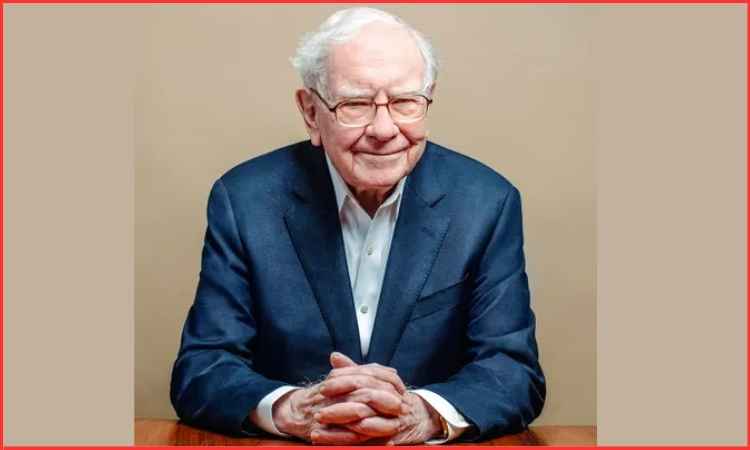
Source: Forbes
Over the past few decades, Warren has used Berkshire to make investments in media, consumer brands, and insurance firms. He bought Coca-Cola, American Express, and the Washington Post when others were hesitating to invest in these companies. However, he accepted that Berkshire was not the right decision for buying. So he used Berkshire’s cash flow to build a diverse empire.
In 2008, Warren became the richest person in the world with a net worth of $62 billion, according to Forbes. During the financial crisis in 2008, when others were panicking, Warren invested and helped companies like Goldman Sachs and General Electric with his cash and confidence.
Warren Buffett becomes a Billionaire.
In 2009, Warren invested $2.6 billion as part of Swiss Re’s campaign to raise equity capital. He also acquired the Burlington Northern Santa Fe Corp. for $34 billion. Warren has also made a promise to donate over 99% of his wealth, and around $62 billion has been given so far. In 2009, measured by market capitalisation in the Financial Times Global 500, Berkshire Hathaway was recognised as the eighteenth largest corporation in the world. Hence, he spent his later years giving away most of his wealth and building Berkshire’s future.
In May 2025, Berkshire Hathaway announced the appointment of Greg Abel as the CEO and President, while Warren continues in the position of Chairman. Today, he is recognised as the ‘Oracle of Omaha’ and also one of the most successful investors of all time. Under his leadership, today Berkshire owns many companies, including Geico, Duracell, and Dairy Queen.
Key must learn lessons for Young Investors from Warren Buffett
1. Know what you are buying
Warren Buffett did not invest in anything he did not understand. He skipped the companies whose business model was too complex or unclear. As a young investor, you must stick to what you know. Do not chase hype. Learn how that business makes money before putting your money in it.
2. Be Patient
Buffett once said that his favourite holding period is forever. He is not in the game to make a quick profit, but to invest in companies that he believes will grow steadily over time. Thus, the lesson here is not to persuade the stock market like a casino. You must buy stocks to hold them, not to earn a profit.
3. Ignore Hype
Markets rise and fall. Headlines will always scream urgency. But Warren stayed calm and focused, even during crashes. During the 2008 crisis, while others were panicking, he was buying. So you must develop yourself to think long-term and not get distracted by short-term volatility.
4. Price and value are not the same
Buffett looks for undervalued companies, those that are trading for less than what they are worth. The stock price tells you what people are willing to pay. While value tells you what it is worth. Hence, understand the gap, and you will already be doing smart investing.
5. Learn from mistakes, then move on
Warren Buffett has also made bad decisions. He then also admitted them openly. His purchase of Berkshire’s textile business was one of them. But he did not stick there; he adapted. Hence, the lesson here is that mistakes are part of investing. Learn fast, stay humble, and move forward.
6. Invest in yourself first
Did you know what Warren calls his best investment: taking a public speaking course to overcome his fear. Before putting money in stocks, build your skills, confidence, and discipline. That will give you better returns than any stock in the long run.
7. Choose Simplicity
Warren avoids complicated strategies. He does not invest in things just because they are trendy or new. Especially in today’s time, where every young investor is easily influenced by fast-moving trends and ends up in confusion while choosing a stock. Thus, choose simplicity always.
8. Prioritise long-term returns
Warren started investing as a teenager and stayed calm, observing his investments compounding over time. If you are or are not a teenager, you must start investing as early as possible after you have understood the market. Be consistent and disciplined to earn returns when you are retired or not investing anymore.
Final Thoughts
Warren Buffett’s story is a great example of patience, smart investing, and lifelong learning. From a young boy delivering newspapers to one of the richest people in the world, his journey shows that success doesn’t happen overnight.
For young investors, there’s a lot to learn from Buffett’s life. He teaches us to invest in what we understand, stay calm during market ups and downs, and keep learning every day. You don’t need to be rich to start investing; you just need to be smart, consistent, and focused on the long term.
By following these lessons, you can build a strong financial future and grow step by step just like Warren Buffett.
FAQs
Q-1. What is the golden rule of Warren Buffett?
Warren Buffett’s golden rule is to ‘Never lose money.
Q-2. Who is Warren Buffett?
Warren Buffett is one of the most successful businessmen, investors and philanthropists. He is the Chairman of Berkshire Hathaway.
Q-3. What advice does Warren Buffett give to young investors?
Warren Buffett advises young investors to start early, invest in what they understand, avoid debt, and stay focused on long-term goals. He also says, “Never invest in a business you cannot understand.”
Q-4. What is Warren Buffett net worth in 2025?
Warren Buffett net worth in 2025 is estimated to be over $154 billion. He built his wealth through smart investing and managing Berkshire Hathaway.
Q-5. What can we learn from Warren Buffett’s biography?
This Warren Buffett biography teaches us that smart, consistent investing and living simply can lead to both wealth and happiness.
Q-6. What are the most famous Warren Buffett quotes on investing?
Some of the most famous Warren Buffett quotes on investing include:
- “Rule No. 1: Never lose money. Rule No. 2: Never forget Rule No. 1.”
- “Be fearful when others are greedy and greedy when others are fearful.”
- “Price is what you pay. Value is what you get.”