Bhavish Aggarwal is a visionary entrepreneur who has transformed urban mobility in India through Ola, India’s largest ride-hailing platform, and now through Ola Electric – a front-runner in the electric vehicle revolution in India. Bhavish’s story from IIT Bombay graduate to tech disruptor provides us with an insight into how innovation and determination can develop solutions for real-world problems.
Bhavish’s success story tells us about the major milestones he hit and the times he turned challenges into opportunities while building Ola and Ola Electric into market-leading assets, and providing entrepreneurs with models and lessons worth following. This article will review Bhavish Aggarwal’s biography, including his early life, the birth of Ola and Ola Electric, some key highlights in his career, and the transformation of the two companies into market-leading assets in his career path.
Bhavish Aggarwal’s Early Life and Education
Bhavish Aggarwal was born on 28th August 1985 in Ludhiana, Punjab. He grew up in a family that valued education, which instilled curiosity in him pertaining to education and technology, and he developed an interest in applying technology as a means to solve problems. This foundation made the start of his entrepreneurial journey easy.
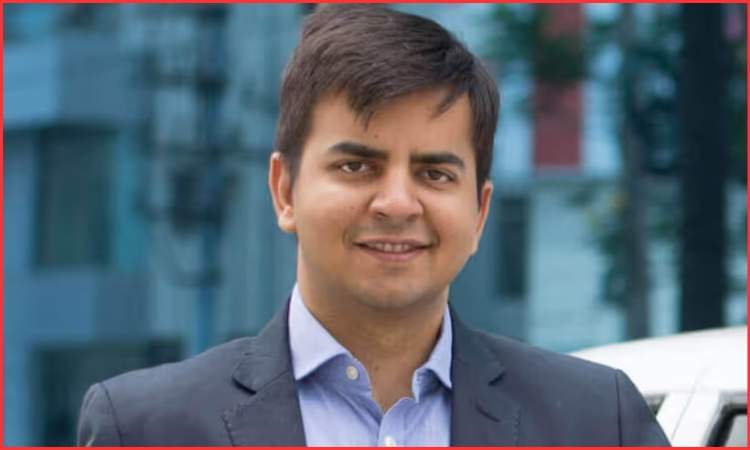
Source: Business Today
Bhavish went on to study a Bachelor of Technology in Computer Science and Engineering from the Indian Institute of Technology (IIT) Bombay and graduated in 2008. His education at IIT helped him develop analytical skills and an appreciation and inclination towards innovation and prepared him to face the rigors of the technology world in the future.
After he graduated, Bhavish joined Microsoft Research India and worked there for two years. He gained exposure to the technology development and development environment. During this time, he was able to file two patents and also co-author some research papers which sharpened his vision and expertise.
The Birth of Ola: Tackling India’s City Mobility Problem
Ola Cabs, today one of the largest mobility brands in India, was founded from a personal experience that many urban Indians can relate to. In 2010, Bhavish Aggarwal was running an online travel blog and short holiday tour business when he had a negative and uncomfortable experience with a cab driver. After booking the cab, the driver canceled midway and demanded a larger fee. The moment of enlightening frustration upon realizing that the taxi industry in India had no organization or accountability inspired him to build a holistic solution to this problem.

Source: Wikipedia
Both Bhavish and his cofounder, Ankit Bhati (an IIT Bombay graduate), realized a catalyst to create a business to solve a gap in the market. The duo launched Ola Cabs in December 2010, out of a small rented office in Mumbai. Ola Cabs aims to provide convenient, affordable, and reliable transportation for urban city dwellers using technology.
In January 2011, they launched the website, which allowed users to book cabs online. In 2012, they launched the Ola mobile app, which marked the start of a transition in service where the mass proliferation of mobile connectivity was enabled by the smartphone boom. Rather than simply aggregating cabs, Ola Cabs was going to organize and digitize the entire taxi and transport sector.
Scaling Ola: Disrupting an Industry, Racing to the Top
Ola grew exponentially in its Mumbai home market, adding over 100 cities by 2015, making it one of India’s largest ride-hailing services. Its tech-first approach focuses on enhancing customer experience and efficiencies.
Key Growth Strategies and Innovations
- Launched live ride tracking, a dynamic pricing model, and in-app payments
- Launched additional ride types: Ola Share, Ola Mini, Ola Auto, Ola Outstation
- Acquired TaxiForSure in 2015 for ₹1,237 crores, enabling Ola to consolidate its market-leading position in the emerging ride-hailing market
- Integrated other tech initiatives, Ridlr, and Geotagg, to provide cohesive back-end support
- Pursued localization and enabled multi-lingual support to differentiate itself from global tusslers such as Uber.
Ola Electric: Energizing India’s Clean Mobility Revolution
After Dhruv and Bhavish disrupted urban transport in India with Ola Cabs, Bhavish quickly began to pursue a much larger opportunity: fundamentally altering the way India moves its citizens with clean energy. In 2017, Bhavish founded Ola Electric as a wholly-owned subsidiary of ANI Technologies with the vision to lead India’s transition to sustainable electric mobility. Bhavish stated, “Our vision is to want to build a sustainable India using clean energy and indigenous technology.”
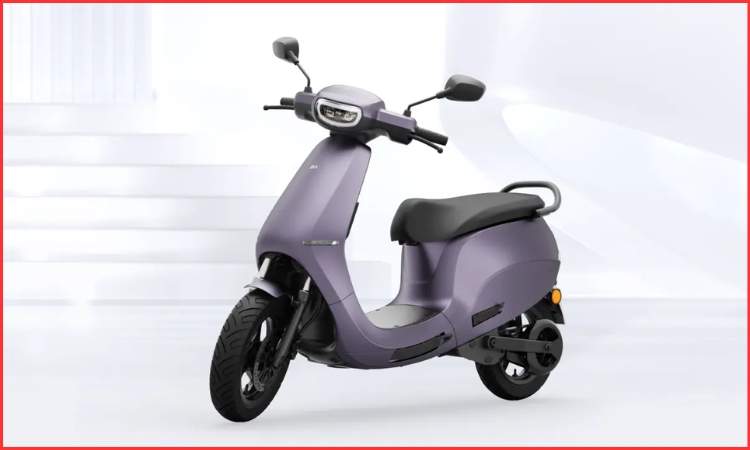
Source: Ola Electric
What started as a pilot project with electric rickshaws in Nagpur quickly expanded into one of the largest and most audacious electric vehicle (EV) initiatives in India. In 2019, Ola Electric was demerged from ANI Technologies into a standalone company, with Bhavish retaining a 92.5% stake. The company was able to use the mantle of Ola Electric to bring in power investors like SoftBank, Tiger Global, and Ratan Tata and achieved unicorn status in record time.
In 2021, Ola launched its flagship electric scooter – the Ola S1, manufactured at the world’s largest two-wheeler plant – the Ola Futurefactory, a 100% automated, carbon-neutral facility in Tamil Nadu. The electric scooters created a lot of interest not just for their futuristic design, price, and performance. But Bhavish was not thinking only of vehicles; it was much bigger, an integrated EV ecosystem – battery technology, hypercharging networks, lithium-ion cells all made in India and all developed in-house. It was not just a business for Ola Electric. It has also become a national mission to make India a global hub for EV innovation.
Navigating Challenges: Resilient Lessons from Setbacks
Disorganized Taxi Industry (2010–2012)
It was very difficult to convince traditional taxi drivers to use a tech platform to run their taxis. At this point, the market was offline and extremely fragmented, and then, to get drivers on board and establish trust. Creating local operations to digitally document and bring a sense of order to the chaos surrounding the Indian taxi system was labor-intensive.
Global Competition from Uber (2013–2017)
The entry of Uber in India set off a crazed price and service war between the two competitors. To stay in market leadership position in the ride-hailing ecosystem in India, Ola had to quickly adjust, formulate new rides, and optimize the experience.
COVID-19 Layoffs and Shutdowns (2020)
Ride bookings plummeted over 90% during COVID-19, and this drastically hindered operational efficiencies from Ola and led to layoffs of over 5,000 employees. The operational efficiencies were so impacted that they had large amounts of financial stress to list, and it required a strong amount of reductions in operating costs – including headcount – to preserve jobs.
EV Battery Recalls and Safety Issues (2022)
Due to battery fires, Ola Electric recalled over 1,400 scooters. Bhavish would need to change public perception, rebuild trust, and recommit to safety to get people to return to using electric scooters and not be scared off by safety issues across the entire motorbike industry.
Rapid Factory Scale-Up Challenges (2021-2022)
Building the Futurefactory in a record amount of time means you are going to have technical execution challenges and also have a number of logistics hurdles as well. So now, while you would have a high degree of autonomy, there would also be risks around hiring skilled workers, managing automation where you could, and the whole supply chain for components would be a whole other execution challenge.
Post-IPO Loss of Market Share (2024-2025)
Ola Electric had a market share of above 50% but then some of the established legacy players in the two-wheeler category entered the space. Pricing pressures along with competitive models quickly began to challenge Ola’s positioning and strategy.
Negative Brand Perception (Ongoing)
Ola Electric’s negative perception brand can be linked to unfulfilled orders, software bugs, and customer service issues. The ease with which negative narratives are tracked by social media pressure led Bhavish to refocus efforts on customer service, regular updates, and ensuring quality.
Key Milestones Of Ola
| Year | Event |
| 2010 | Ola Cabs was founded in Mumbai |
| 2012 | Ola App Launch |
| 2015 | Acquired TaxiForSure at ₹1,237 crore |
| 2017 | Ola Electric Incorporated |
| 2021 | Ola’s e-scooter S1 and S1 Pro launched |
| 2021 | Ola Futurefactory opened |
| 2024 | Ola Electric IPO launched |
| 2025 | Ola Krutrim (AI) announced |
Awards, Recognition, and Net Worth of Bhavish Aggarwal
Bhavish Aggarwal has transitioned to an entrepreneur and has had great success with both Ola and Ola Electric, and has won many awards in his career. He has won awards in many cases independently of our industry. The major awards recognizing his industry contributions:
- Ola has impacted the lives of millions of people, and Bhavish was influential in Time Magazine’s 100 Most Influential People in 2018
- Bhavish also won the Economic Times “Best and Brightest” Award in 2017 for his exceptional entrepreneurship
- Forbes India included Bhavish in their 30 Under 30 because of the recognition of his skill and potential at the beginning of his entrepreneurial journey.
Bhavish created financial wealth through his many entrepreneurial efforts with Ola and Ola Electric. In 2024, Bhavish was forecasted to be about ₹21,000 crores (around USD 2.3 billion) at that time, the value of the IPO of Ola Electric had created valued personal wealth athen and Ola Consumer’s (in various markets) expansion also expanded with significant cash flow.
Bhavish has evolved from an IIT graduate to a billionaire entrepreneur because of his commitment to innovation, combined with his entrepreneurial loyalty to deliver value for millions with a sense of responsibility for solutions.
The Ongoing Legacy of Bhavish Aggarwal
Bhavish Aggarwal’s exceptional story demonstrates how visionary leadership, technological capabilities, and genuine comprehension of local problems can be pooled together to great effect. From co-founding Ola Cabs to now providing sustainable transportation through the launch of Ola Electric, Bhavish Aggarwal’s journey has shattered boundaries at every stage in India’s mobility ecosystem.
This journey exemplifies the essence of modern entrepreneurs, i.e., devising new solutions founded on ambition, introducing an external mindset, and innovation with extreme tenacity, resilience, and social responsiveness. Most of this strength and competitiveness is predicated on a thorough understanding of local challenges and applying their forces to self-reliant and inclusive technology. He has not only been ‘successful’ in and of itself but also a serious contributor to India’s attempt at technological autonomy.
While Ola spans into new territory, such as artificial intelligence through Ola Krutrim, Bhavish Aggarwal’s success story is a tremendous example for future entrepreneurs seeking to establish some curative solutions on the basis of ambitious dreams and inspired thinking. A trajectory that would be both exciting and satisfying, driven by the legacy of Bhavish Aggarwal, would be one that would facilitate futures far beyond technology.
Frequently Asked Questions (FAQs)
Q1. What is Ola Krutrim?
Ola Krutrim is Bhavish Aggarwal’s AI Startup, where he is developing a multilingual AI assistant and the technology surrounding it to enhance customer experience and also create technological self-dependence in India.
Q2. What is Ola Electric? Why is it important?
Ola Electric is a separate company to develops electric mobility solutions in India. Electric mobility is important because it is the only way to bring about sustainable transportation, which will ultimately reduce our dependence on fossil fuels.
Q3. How good is Ola Electric’s battery tech?
Ola is at the forefront of battery innovation, with its in-house lithium-ion tech, making it a close competitor in the EV market.
Q4. How does Ola promote sustainability?
Through carbon-neutral factories battery recycling initiatives, and electric vehicles charged up using renewable energy.