In recent decades, India has become an important operational base for multinational companies (MNCs). Its large consumer market, skilled workforce, expanding digital infrastructure and manufacturing capabilities continue to attract businesses from across the world. These companies operate in diverse sectors, including information technology, consumer goods, automobiles, electronics, banking and logistics.
Alongside foreign companies, Indian business groups such as Tata Group and Aditya Birla Group have also established a strong international presence. Their operations span multiple countries, connecting Indian businesses, talent and products with global markets.
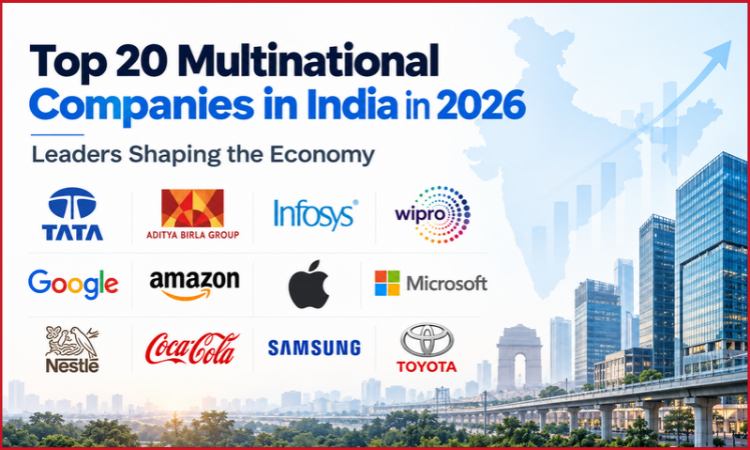
As of 2026, multinational companies continue to contribute to India’s business environment through investment, employment, manufacturing, technology development and professional services. The following list highlights 20 prominent multinational businesses with significant operations in India. It is a broad editorial selection rather than a ranking based solely on revenue.
Here is the list of the top 20 multinational companies operating in India
| Company name | Founded | Headquarters / main base in India | Primary industry |
|---|---|---|---|
| 1. Tata Group | 1868 | Mumbai | Diversified conglomerate |
| 2. Aditya Birla Group | 1857 | Mumbai | Metals, cement, textiles and financial services |
| 3. Infosys | 1981 | Bengaluru | IT services and consulting |
| 4. HCLTech | 1976 | Noida | IT services and technology |
| 5. Wipro | 1945 | Bengaluru | IT services and consulting |
| 6. Google India | 2004* | Bengaluru and other Indian offices | Technology and digital services |
| 7. Amazon India | 2013* | Bengaluru and other Indian offices | E-commerce and cloud computing |
| 8. Apple India | 1996* | Bengaluru and other Indian offices | Consumer electronics and technology |
| 9. Microsoft India | 1990* | Hyderabad and other Indian offices | Software and cloud computing |
| 10. Nestlé India | 1961* | Gurugram | Food and beverages |
| 11. IBM India | 1992* | Bengaluru and other Indian offices | IT, consulting and AI |
| 12. Coca-Cola India | 1993* | Gurugram | Beverages |
| 13. Hindustan Unilever | 1933 | Mumbai | FMCG |
| 14. Toyota Kirloskar Motor | 1997 | Bidadi, Karnataka | Automobiles |
| 15. LG Electronics India | 1997* | Greater Noida | Consumer electronics |
| 16. Citibank India | 1902* | Mumbai | Banking and financial services |
| 17. HP India | 1988* | Bengaluru and other Indian offices | Computers and printing |
| 18. Sony India | 1994* | New Delhi and other Indian offices | Consumer electronics and entertainment |
| 19. Samsung India | 1995* | Gurugram and other Indian offices | Electronics and mobile devices |
| 20. DHL Express India | 1979* | Mumbai and other Indian offices | International logistics |
*For foreign companies, the year shown refers to their Indian business establishment or relevant local entity, rather than the founding year of the global parent. Exact dates can vary by legal entity and business division. The main base column is descriptive and does not necessarily identify a company’s registered headquarters.
1. Tata Group
Founded: 1868 · Headquarters: Mumbai, India
Tata Group is one of India’s most valuable Indian brands, with a strong presence in India and around the world. It operates in several industries, including steel, automobiles, IT, consumer products, hospitality, and aviation.
The group includes well-known companies such as Tata Consultancy Services (TCS), Tata Motors and Tata Steel. Their operations connect Indian manufacturing, technology and services with customers and markets around the world.
Key features
- Operations across multiple countries and continents.
- A diversified business portfolio spanning technology, manufacturing, consumer services and hospitality.
- A focus on innovation, sustainability and corporate social responsibility across its businesses.
2. Aditya Birla Group
Founded: 1857 · Headquarters: Mumbai, India
Aditya Birla Group is a diversified Indian multinational business group with operations in sectors including metals, cement, textiles, chemicals, financial services and fashion retail. Its businesses serve customers across India and international markets.
UltraTech Cement, Hindalco Industries, Grasim Industries and Aditya Birla Capital are among the group’s prominent businesses. The group has developed a broad international presence, particularly in manufacturing and materials, while continuing to expand across consumer-facing sectors.
Key features
- A diverse portfolio spanning industrial and consumer businesses.
- International operations across multiple markets.
- Investment in manufacturing, resource efficiency and business development.
3. Infosys
Founded: 1981 · Headquarters: Bengaluru, India
Infosys is a global IT services and consulting company headquartered in Bengaluru. It helps businesses modernise their technology infrastructure, improve operational efficiency and develop digital services for customers across industries.
Its services include software development, business consulting, cloud computing, data analytics, artificial intelligence and digital transformation. Infosys operates internationally and serves clients across sectors such as banking, retail, manufacturing, healthcare and telecommunications.
For the financial year 2024–25, Infosys reported consolidated revenue of ₹1,62,990 crore, representing year-on-year growth of 6.1%. The company reported 323,578 employees globally at the end of that financial year.
Key features
- Global IT services and consulting operations.
- Expertise in cloud, AI, data analytics and enterprise technology.
- Continued investment in employee training and digital skills.
- A large international client base.
4. HCLTech
Founded: 1976 · Headquarters: Noida, India
HCLTech, formerly known as HCL Technologies, is a global technology company headquartered in Noida. It provides IT and business services, engineering and research and development services, and technology products and platforms.
The company works with businesses looking to modernise legacy systems, strengthen cybersecurity, adopt cloud infrastructure and integrate AI into their operations. Its engineering capabilities also support industries that require specialised technology development.
HCLTech’s international operations make it an important participant in India’s IT services and technology consulting sector.
Key features
- IT and business services for enterprise clients.
- Engineering and research and development capabilities.
- Cloud, AI, cybersecurity and digital transformation services.
- A global delivery network supporting customers across industries.
5. Wipro
Founded: 1945 · Headquarters: Bengaluru, India
Wipro is an Indian multinational technology services and consulting company with clients across multiple countries. It supports organisations with technology implementation, business process improvement and digital transformation.
Its service portfolio includes IT consulting, cloud services, cybersecurity, data analytics, engineering and business process services. Wipro also works with enterprises that are modernising their technology environments and adopting new digital tools.
For the financial year 2024–25, Wipro reported revenue of ₹89,091.6 crore in its published financial data. This is an FY2024–25 figure, not a current calendar-year revenue estimate.
Key features
- Global IT services and consulting operations.
- Digital transformation and enterprise technology solutions.
- Services spanning cloud, cybersecurity, engineering and data.
- Continued focus on sustainability and responsible business practices.
6. Google India
Parent company: Alphabet Inc. · Indian operations: Multiple locations
Google India is part of Google’s global technology business and plays a role in India’s digital ecosystem. Its services include Google Search, YouTube, Google Maps, Android, Google Workspace and Google Cloud, supporting both individual users and organisations.
The company works with businesses, developers, advertisers and public-sector organisations across the country. Google Cloud also provides infrastructure, data analytics and AI-related services for organisations that need to develop or scale digital products.
Google’s Indian presence includes offices and teams in several cities, supporting sales, engineering, partnerships and other business functions.
Key features
- Digital platforms used by consumers and businesses.
- Cloud computing, enterprise software and AI-related services.
- Support for developers, advertisers and digital businesses.
- Operations across multiple Indian locations.
7. Amazon India
Parent company: Amazon.com, Inc. · Indian operations: Multiple locations
Amazon India operates across e-commerce, logistics and technology-related services. Its marketplace connects customers with sellers across a wide range of product categories, while its logistics network supports deliveries across different parts of the country.
Amazon’s wider business portfolio includes Amazon Web Services (AWS), Prime Video and other digital services. AWS provides cloud infrastructure, databases, analytics and AI tools to businesses, developers and public-sector organisations.
Amazon India has developed a substantial operational footprint through fulfilment centres, delivery infrastructure, technology teams and seller services. Its e-commerce and cloud businesses serve different customer needs and should be considered separately when assessing the company’s operations.
Key features
- An online marketplace connecting sellers and customers.
- Fulfilment, warehousing and delivery infrastructure.
- Cloud computing through Amazon Web Services.
- Digital entertainment and subscription services.
8. Apple India
Parent company: Apple Inc. · Indian operations: Multiple locations
Apple has expanded its presence in India through retail, manufacturing, distribution and services. Its product portfolio includes the iPhone, Mac, iPad, Apple Watch and AirPods, along with software and digital services.
India has become an increasingly important market for Apple’s sales and manufacturing strategy. Local production and the wider electronics supply chain have gained importance as manufacturers diversify production and serve both domestic and international demand.
Apple also operates retail stores in India, providing customers with access to its products, technical assistance and in-store services. Its global business includes hardware, software and services that work together across its product ecosystem.
Key features
- A portfolio of smartphones, computers, wearables and accessories.
- Retail stores and authorised sales channels in India.
- Growing importance of local iPhone manufacturing.
- Software and digital services supporting its devices.
9. Microsoft India
Parent company: Microsoft Corporation · Indian operations: Multiple locations
Microsoft India supports businesses, developers, public-sector organisations and consumers through software, cloud infrastructure and digital services. Its products include Windows, Microsoft 365, Azure, Dynamics 365, GitHub and enterprise security solutions.
Microsoft Azure is an important part of the company’s business, offering cloud infrastructure, data services, application development tools and AI capabilities. Organisations use these technologies to modernise their systems, manage information and build digital products.
Microsoft’s Indian operations also include engineering, research, consulting, sales and customer support functions. The company serves organisations across sectors such as finance, manufacturing, healthcare, education and retail.
Key features
- Enterprise software and productivity tools.
- Cloud infrastructure through Microsoft Azure.
- AI, data analytics and cybersecurity services.
- Engineering, research and business operations in India.
10. Nestlé India
Parent company: Nestlé S.A. · Headquarters in India: Gurugram
Nestlé India is part of the Swiss multinational Nestlé Group and has a long-standing presence in the Indian food and beverage market. Its product portfolio includes Maggi, Nescafé, KitKat and several other brands available to Indian consumers.
The company operates manufacturing facilities and a distribution network that serves both urban and rural markets. Its business includes packaged foods, beverages and nutrition-related products, with an emphasis on product quality, food safety and consumer preferences.
Nestlé India’s financial results should be distinguished from those of its global parent. For FY2025–26, the Indian business reported revenue from operations of approximately ₹23,155 crore, according to its published financial figures.
Key features
- A diverse portfolio of food and beverage products.
- Established distribution across Indian markets.
- Manufacturing and supply-chain operations in India.
- Focus on food safety, product quality and consumer needs.
11. IBM India
Parent company: International Business Machines Corporation (IBM) · Indian operations: Multiple locations
IBM India is part of the global technology and consulting company IBM. Its work covers enterprise IT, hybrid cloud, artificial intelligence, cybersecurity, automation and business consulting.
IBM supports organisations that need to modernise complex IT environments, manage business data and integrate technology into their operations. Its consulting and technology services serve clients in sectors such as banking, healthcare, manufacturing, telecommunications and government.
India is also an important location for IBM’s technology professionals and business operations. The company continues to develop enterprise solutions that help clients improve efficiency, manage risk and respond to changing technology requirements.
Key features
- Enterprise technology and IT consulting.
- Hybrid cloud and AI-related solutions.
- Cybersecurity, automation and data services.
- Business and technology operations serving international clients.
12. Coca-Cola India
Parent company: The Coca-Cola Company · Indian operations: Multiple locations
Coca-Cola India is part of the global beverage company The Coca-Cola Company. Its business includes a portfolio of soft drinks, sparkling beverages, juices and other beverage categories marketed to Indian consumers.
The company operates through a network of bottling partners, distributors, retailers and suppliers. This network supports production, packaging and distribution across different regions of India.
Local consumer preferences are important to the beverage industry, so product availability, pack sizes and distribution strategies can vary between markets. Coca-Cola’s Indian operations also depend on water management, packaging practices and the efficiency of its supply chain.
Key features
- A broad portfolio of beverages and consumer brands.
- Bottling, distribution and retail partnerships.
- Extensive reach across different Indian markets.
- Focus on water stewardship, packaging and operational efficiency.
13. Hindustan Unilever Limited (HUL)
Parent company: Unilever PLC · Headquarters: Mumbai, India
Hindustan Unilever Limited (HUL) is one of India’s major fast-moving consumer goods companies. It is part of the global Unilever group and offers products across home care, personal care, beauty, hygiene, and food and refreshment categories.
Its brands are sold through a large distribution network that reaches metropolitan areas, smaller towns and rural markets. This broad presence helps the company serve consumers with different shopping habits and product preferences.
HUL’s business also reflects the importance of product innovation, marketing, pricing and supply-chain management in the FMCG industry. Its operations connect manufacturing and distribution with the everyday needs of Indian households.
Key features
- Products across home care, personal care and beauty categories.
- A wide distribution network across India.
- Strong presence in everyday consumer goods.
- Initiatives related to sustainability and responsible sourcing.
14. Toyota Kirloskar Motor
Parent company: Toyota Motor Corporation and the Kirloskar Group · Main manufacturing base: Bidadi, Karnataka
Toyota Kirloskar Motor (TKM) is an automobile manufacturer established in India as a joint venture between Toyota Motor Corporation and the Kirloskar Group. Its Indian operations include vehicle manufacturing, sales and customer service.
Toyota’s Indian portfolio serves different segments of the passenger vehicle market. The company is also associated with hybrid vehicle technology and efforts to improve vehicle efficiency, safety and manufacturing quality.
Its manufacturing operations in Karnataka contribute to India’s automotive ecosystem through production, supplier relationships, employment and technical capabilities. Toyota’s broader global business includes vehicle manufacturing and mobility-related technologies.
Key features
- Vehicle manufacturing at Bidadi, Karnataka.
- Passenger vehicles serving multiple customer segments.
- Hybrid technology and fuel-efficiency initiatives.
- Emphasis on manufacturing quality, safety and customer service.
15. LG Electronics India
Parent company: LG Electronics · Corporate office: Noida, Uttar Pradesh
LG Electronics India is part of the South Korean electronics company LG Electronics. Its product portfolio includes televisions, refrigerators, washing machines, air conditioners, monitors and other home appliances.
The Indian business combines manufacturing, sales, distribution and after-sales service. Its manufacturing facilities in Greater Noida and Pune support domestic production, while its service network helps customers maintain and repair products.
LG has also been investing in manufacturing efficiency and energy-related initiatives. These areas are increasingly relevant as consumers pay more attention to appliance performance, electricity consumption and long-term operating costs.
For FY2025–26, LG Electronics India reported annual revenue from operations of ₹24,605 crore, according to its company announcement.
Key features
- A broad range of consumer electronics and home appliances.
- Manufacturing facilities in India.
- Sales and after-sales service networks.
- Product development focused on convenience, performance and energy efficiency.
16. Citibank India
Parent company: Citigroup Inc. · Indian operations: Primarily institutional and corporate banking
Citibank has a long history in India’s financial sector and is part of Citigroup, a global financial services company headquartered in the United States. Its Indian business has historically served individual customers as well as corporate and institutional clients.
An important distinction for the current timeline is that Citigroup sold its consumer banking business in India to Axis Bank. The transaction was completed in 2023. As a result, Citibank should not be described as operating its former retail banking business in India in the same way it did before the sale.
Citi continues to serve corporate and institutional clients through financial services such as transaction banking, trade finance, treasury services and institutional banking. These services support companies operating across borders and managing international financial flows.
Key features
- Corporate and institutional financial services.
- Cross-border payments and transaction banking.
- Trade finance and treasury-related services.
- A global network supporting multinational businesses.
17. HP India
Parent company: HP Inc. · Indian operations: Multiple locations
HP India is part of HP Inc., a global technology company known for personal computers, laptops, printers and related solutions. Its products serve individual consumers, small businesses, large enterprises and educational institutions.
HP’s business in India includes product sales, distribution, technical support and business technology solutions. Computers and printing products remain important parts of its portfolio, alongside services that help organisations manage their devices and workplace technology.
The company operates in a competitive market where customers increasingly consider device performance, security, reliability, service availability and total ownership costs when choosing technology products.
Key features
- Laptops, desktops, printers and related accessories.
- Products for consumers, businesses and educational institutions.
- Enterprise computing and workplace technology solutions.
- Technical support and product servicing.
18. Sony India
Parent company: Sony Group Corporation · Indian operations: Multiple locations
Sony India is part of Japan’s Sony Group, whose businesses include electronics, gaming, entertainment, music and imaging technology. In India, Sony is known for products such as televisions, cameras, audio equipment and gaming-related offerings.
Its business also connects with Sony’s wider entertainment ecosystem, including PlayStation and content-related activities. The company’s Indian operations serve consumers looking for products across different price ranges and technology categories.
In consumer electronics, product performance, picture and sound quality, product design and after-sales support remain important factors influencing purchasing decisions.
Key features
- Televisions, cameras, audio products and electronics.
- Gaming and entertainment-related offerings through the wider Sony ecosystem.
- Products across different consumer segments.
- Distribution and after-sales service in India.
19. Samsung India
Parent company: Samsung Electronics · Indian operations: Multiple locations
Samsung India is part of South Korea’s Samsung Electronics and operates across smartphones, televisions, home appliances, monitors and other electronic products. Its portfolio serves consumers and businesses across multiple product categories.
India is an important market for Samsung’s consumer electronics business. The company has manufacturing operations in the country, including its well-known mobile phone manufacturing facility in Noida, Uttar Pradesh. Its Indian operations also include sales, distribution, customer service and research-related activities.
Samsung competes across several market segments, from entry-level smartphones and appliances to premium devices. Its product strategy includes connected devices, display technology and features designed to improve the experience of using multiple Samsung products together.
Key features
- Smartphones, televisions and home appliances.
- Mobile phone manufacturing in Noida.
- Research, product development and business operations in India.
- Connected-device technology and a wide product portfolio.
20. DHL Express India
Parent company: DHL Group · Indian operations: Nationwide logistics network
DHL Express India is part of DHL Group, the international logistics company headquartered in Germany. DHL Express specialises in international time-definite shipping and courier services, helping businesses and individuals send documents and parcels across borders.
Its Indian operations support exporters, importers, e-commerce businesses and companies that depend on international supply chains. Services include international express delivery, shipment tracking and customs-related shipping processes.
DHL’s wider group operates across several logistics segments, including express delivery, global forwarding, freight and supply-chain services. DHL Express should be distinguished from these other business divisions because their services and operating models differ.
Key features
- International express courier and parcel delivery.
- Support for cross-border shipping and trade.
- Shipment tracking and logistics technology.
- Services for businesses, exporters and individual customers.
Conclusion
The 20 multinational companies covered in this article represent a broad mix of businesses operating across India’s technology, manufacturing, consumer goods, automotive, financial services and logistics sectors.
Indian business groups such as Tata Group and Aditya Birla Group have developed substantial international operations, while companies such as Google, Amazon, Apple, Microsoft, Samsung and Toyota connect India with global technology, consumer and manufacturing networks.
These businesses contribute to India’s economy through investment, employment, distribution, manufacturing, technology development and professional services. Their roles differ, however, and their global revenue should not be confused with the revenue they generate within India.
As India continues to develop its digital infrastructure, manufacturing capabilities and consumer market, multinational companies are likely to remain an important part of its business landscape. Their future performance will depend on how effectively they respond to customer needs, competition, technology changes and the demands of operating across different markets.
Frequently Asked Questions (FAQs)
Q1. What qualifies as a multinational company in India?
A multinational company (MNC) is a business that operates in more than one country. It may have headquarters in one country and subsidiaries, offices, manufacturing facilities or other business operations in India and elsewhere. Such companies operate across industries including IT, consumer goods, automobiles, electronics, finance and logistics.
Q2. Which are some of the major multinational companies operating in India in 2026?
Major multinational businesses operating in India include Tata Group, Aditya Birla Group, Infosys, HCLTech, Wipro, Google, Amazon, Apple, Microsoft, Nestlé India, IBM, Coca-Cola, Hindustan Unilever, Toyota Kirloskar Motor, LG Electronics, Citibank, HP, Sony, Samsung and DHL Express. This is an editorial selection, not an official ranking by revenue.
Q3. Why do multinational companies choose to operate in India?
India offers a large consumer market, a substantial skilled workforce, established technology services, manufacturing capabilities and access to regional and international markets. These factors can make the country attractive for sales, technology development, manufacturing, research and business operations.
Q4. Does a multinational company have to be headquartered outside India?
No. A multinational company is defined by its operations across countries, not simply by where it is headquartered. Indian businesses such as Tata Group, Aditya Birla Group, Infosys, HCLTech and Wipro have international operations and therefore qualify as multinational businesses.
Q5. Are the revenue figures of these companies based on their Indian operations?
Not necessarily. Global parent-company revenue includes business conducted across multiple countries, whereas Indian revenue refers to the business generated by an Indian entity or its operations in India. These figures should be compared only when their reporting periods, accounting definitions and business scopes are clear.
Q6. Which industries do multinational companies in India operate in?
Multinational companies in India operate across information technology, software, consulting, e-commerce, consumer electronics, automobiles, food and beverages, FMCG, banking, manufacturing and logistics. Many businesses also provide cloud computing, AI, cybersecurity and other digital services.