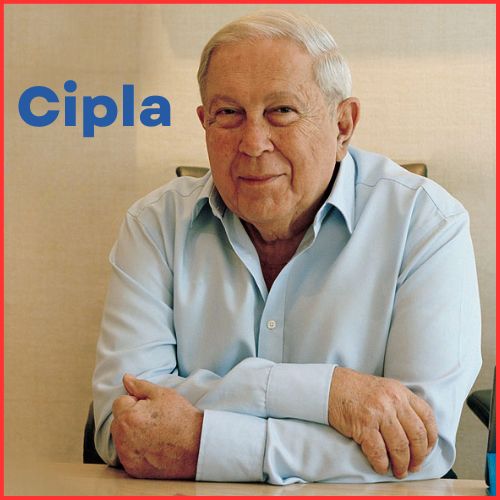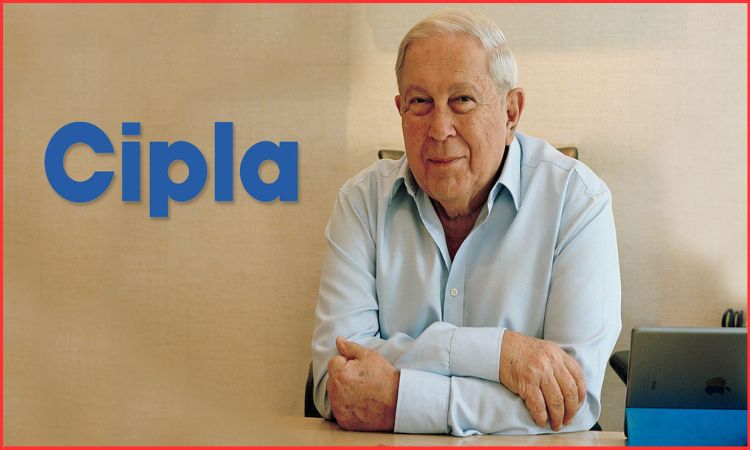
Source:myhealthyclick
When thinking of leaders who have changed the global pharmaceutical landscape, the name Yusuf Hamied comes to mind. The leader who assisted in enabling Cipla to flourish into a successful pharmaceutical company went beyond this, and he became a champion of compassion by advocating for the affordability of medications for lifesaving therapies. This is a story of both vision and bravado and an innovative leader who changed expectations for access to care related to health, arguably the most significant global health challenge.
This article discusses Hamied’s childhood, his contribution to leadership, Cipla’s growth and impact around the globe, associated interests, and his legacy.
Early Life and Education of Yusuf Hamied
- Date of Birth: July 25, 1936 in Vilnius, Lithuania (later moved to India)
- Family Background: Son of Khwaja Abdul Hamied, founder of Cipla
- Education:
- Attended secondary school in Mumbai
- Studied Natural Sciences at Christ’s College, Cambridge
- PhD in Organic Chemistry, University of Cambridge
Hamied’s experiences in science and the international community shaped his mindset. Even among the few traditional pharma leaders who shared his view, he could disagree with them on the key belief that profit was the most important aspect of pharma. Hamied saw an opportunity to introduce something new, but at a price point that was affordable for the world.
Cipla Before Yusuf Hamied
Before Hamied took over, Cipla was already a respected Indian company, founded in 1935. However, it was mostly India-focused with limited international influence.
Table: Cipla Before vs After Yusuf Hamied’s Leadership
| Aspect | Before Yusuf Hamied | After Yusuf Hamied |
| Market Presence | Mostly India | Global (80+ countries) |
| Focus | Generics in India | Affordable global healthcare |
| Innovation | Limited | Strong R&D and breakthroughs |
| Reputation | Local pharma company | Global leader in HIV, cancer, and respiratory drugs |
Visionary Leadership and Innovation
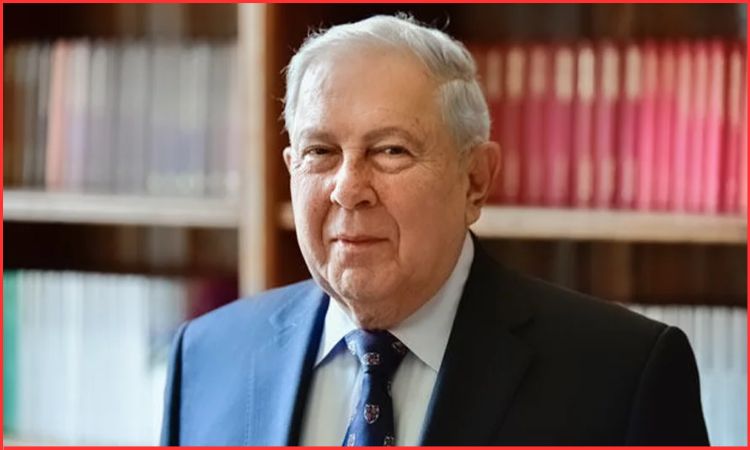
Source: livehindustan
Affordable Treatment for HIV/AIDS
In the early 2000s, a global crisis had emerged regarding HIV/AIDS. Treatments cost upwards of $10,000+ per patient each year, placing most patients in Africa and Asia beyond access to treatment.
- Yusuf Hamied responded by providing the medications at the price of $1 a day, shocking even the most powerful pharmaceutical companies in the West.
- Cipla was not only the first company to produce the antiretroviral medications generically but also had saved millions of lives worldwide as a result.
Strong Research and Development
- Research and development focused on respiratory therapy, oncology, and anti-infectives
- Investment in cutting-edge biotechnology and biosimilars
- Creation of world-class manufacturing in India with quality equal to that of international quality
Cipla Expansion into Global Markets
Hamied expanded Cipla’s reach to over 80 countries, providing medications not just in India but also in Africa, Latin America, Europe and Asia.
Cipla’s Global Impact

Source: financialexpress
Key Innovations:
- HIV/AIDS Treatment: Provided access to affordable treatment in the poorest regions.
- COVID-19 Response: Generated treatments such as Remdesivir and Favipiravir at remarkable speed.
- Respiratory Care: One of the world’s leaders in inhalers and asthma medications.
- Cancer Treatment: Allows access to more affordable specialty medications that would otherwise be high-cost options.
Data Snapshot (2023):
- Active in over 80 countries
- Employees: 25,000+
- Revenue: ₹22,000 crore+ (approx. 2.7 billion USD)
Challenges Faced by Yusuf Hamied
- Patent Issues: Western pharmaceutical businesses claimed that Cipla was infringing patent rights, while Hamied was steadfast in his pursuit of the goal to allow medicines to be accessible to all.
- Regulatory Regulations: Cipla was required to demonstrate quality while embroiled in legal battles.
- Balancing Profitability with Purpose: Hamied had to balance the tension of access versus the tension of growing profit in the future.
Through it all, Hamied was guided by his moral compass, which has led him to have respect all around the world.
Values in Leadership
The values of Yusuf Hamied are based on three words: Compassion, Innovation, and Access.
- Believes health care is a right, not a privilege.
- Values have a longer-term impact than quarterly profits.
- Believes in supporting scientific research and ensuring medicines are affordable.
Conclusion
Yusuf Hamied’s journey is not just the account of a businessman growing a business; it is the journey of a new way of defining the societal role of business. In an industry that often, unfortunately, emphasizes profit over people, Hamied has demonstrated that humanity can go hand in hand with commercial viability. His bravery in challenging global corporations, his assertion that healthcare is a fundamental human right, and his ability to execute and grow Cipla into a successful and worthy global brand make him one of India’s most transformative leaders today.
Hamied’s journey pushes for a larger question that is relevant for future entrepreneurs and corporate leaders: Is success defined only by numerics or the lives you change and the positive impact you create?
FAQs
Q1: Who is Yusuf Hamied?
A: Yusuf Hamied is the Chairman of Cipla and a global leader in making medicines affordable.
Q2: What is Cipla known for?
A: Cipla is famous for producing affordable medicines and pioneering generic HIV/AIDS treatments.
Q3: How did Yusuf Hamied make HIV drugs accessible?
A: He introduced generic antiretroviral drugs at $1 per day, helping millions in developing countries.
Q4: What is Cipla’s focus under Hamied’s leadership?
A: Cipla focuses on innovation, research, and providing affordable healthcare globally.
Q5: Why is Yusuf Hamied influential in global healthcare?
A: His work challenged global pharma norms, promoting affordable access to essential medicines.