A modern economy is not only centered on progressive infrastructure and strategic leadership but also demands effective compliance, updated regulatory frameworks, and ethical vigilance. A data-driven world evidently comes with more information that any paper documentation can ever handle. Ethical data handling is the need of the hour because it is connected to economic growth, national security, and making informed decisions about public or private administration.
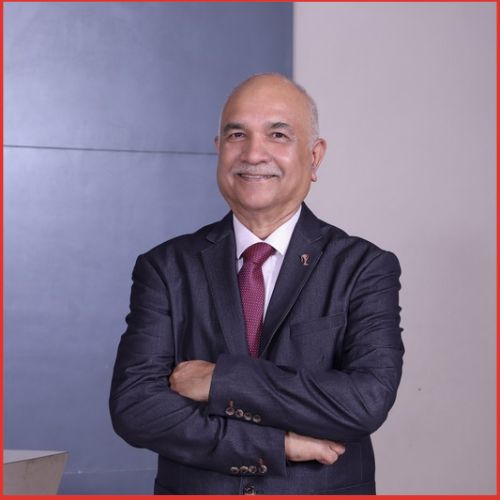
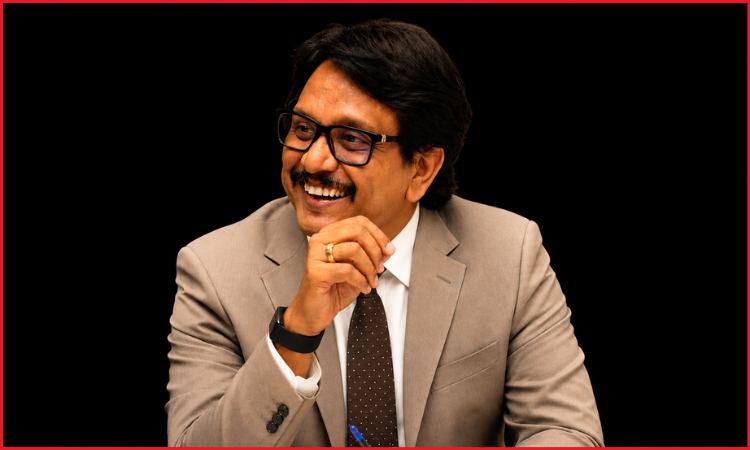
At the intersection of data recognition and handling comes the efficacy of RNIT AI Solutions, India’s leading and fastest-growing AI company, spanning Facial Recognition Systems (FRS), digital transformation, and business processes. Raja Srinivas Nadigam, Founder and Managing Director, speaks with Business Outreach Magazine in an exclusive interview about how RNIT is connecting data-driven services with public administration and benefits.
As a publicly listed company in the Bombay Stock Exchange, RNIT AI Solutions evolved from a simple “proof-of-concept” to being “India’s largest AI-based Facial Recognition System (FRS) SaaS provider to government, processing more than three billion facial templates and over fifteen million verifications a day.” Under the leadership of Raja Srinivas, RNIT has expanded its services into higher and technical education in Andhra Pradesh and Telangana. The company has also dipped its toe into entirely new domains like legal metrology in Andhra Pradesh, the Panchayat Department, Goa, and the School Education Department, Union Territory of Lakshadweep, thus showcasing unique technical artistry and leadership excellence.
Raja Srinivas Nandigam: “We have signed our first international MoU in the Kingdom of Saudi Arabia and the GCC and won a statewide pilot implementation for Niaᵀᴹ—our proprietary conversational generative AI platform.”
As an industry expert, Raja draws a distinctive experience from his over two decades working at top Fortune 500 organizations like Accenture, Wipro, HCL, and Mahindra Systems. He has worked as an enterprise architect and program leader. Raja saw firsthand that while private enterprise aced with world-class infrastructure, the public services system relied on archaic paperwork, leading to a huge gap in development goals.
RNIT AI solutions work on a wide array of verticals, each championing Raja’s leadership towards accountability in a “citizen-facing department.”
The identity and attendance division checks with AI facial recognition on students, teachers, health department staff, the Swachh Bharat workforce, panchayat on-field staff, and municipal corporate staff.
The beneficiary verification is an “AI-based real-time beneficiary identification at the point of social welfare benefits disbursements through platforms like RBIS and THR FRS.” RNIT’s system is eliminating ghost, duplicate, and ineligible beneficiaries so that the benefits reach the desired person only.
Towards the education sector, RNIT is generating value by creating end-to-end platforms such as Shiksha Setu Axom, DSE-FRS, and JnanaBhumi. These platforms ensure identity, attendance, mid-day meal tracking (MDMS), inspection (RDIS), and dropout prediction, thereby providing detailed analysis for industry experts.
Raja Srinivas: “Shiksha Setu Axom is a flagship 360-degree school-education platform deployed across the largest northeastern state, serving around 50 lakh students and over 2 lakh staff across 47,000 schools; it has won the “National e-Governance Award” and the “Prime Minister’s Award” for Excellence in Public Administration 2024. DSE-FRS and JnanaBhumi FRS extend AI attendance across school and higher-education ecosystems using 70+ facial coordinates and liveness detection.”
When it comes to serving the health sector, RNIT AI Solutions is coming with HEALTH FRS as an “AI-driven ERP” for the public health department and the “Municipal FRS for sanitation and field staff.”
But most importantly, Raja Srinivas has been vocal about unlocking accessibility and opportunities that lead to employability, which is why they have their in-house conversational GenAI agent, Niaᵀᴹ. This engine helps in “AI-based resume building, customized intelligent job scraping, AI-based real-time interviews, and skill assessment with detailed feedback on strengths and areas of improvement.”
Raja Srinivas Nandigam has invested years in designing and delivering “large-scale digital transformation rollouts” across several regions. His sectoral know-how and practical applications over AI, data analytics, and the Internet of Things have shaped rigorous market solutions. Business Outreach asked Raja Srinivas about some more data about RNIT’s capabilities as an AI platform. Raja said that his technology has processed over three billion facial identifications. Their daily operation includes more than 15 million transactions and “CMMI Level 3 process maturity.”
RNIT AI Solutions is a publicly listed AI company and industry leader in the FRS SaaS space, spanning about one lakh institutions and around one crore students and staff. Recently, the company has made statewide facial-recognition rollouts in Goa (NIYAMIT GOA), Lakshadweep, and the Telangana School Education Department. Additionally, the Government of Meghalaya has awarded a unique pilot project integrating with the Meghalaya ONE and CM Connect apps as part of citizen-centric services.
In spite of overcoming monumental challenges like instilling stakeholder confidence over the ethical factor of using FRS, Raja’s journey is just getting started. He also found it overwhelming to transition from a private company to getting listed on the BSE. Of course, Raja says that merging with Autopal Industries under an NCLT-approved resolution plan was a strategic move.
Raja Srinivas: “The real power of AI is not replacing people but empowering them.”
He sits with us answering some insightful industry questions.
How can the world adapt and integrate with AI, and how is RNIT positioning itself in its industry?
The world will adapt to AI the way it adapted to electricity or the internet—not by treating it as a separate product, but by weaving it invisibly into everyday systems until it simply becomes how things work. The key is to lead with problems, not algorithms.
RNIT is positioning itself at exactly that intersection of AI and public value. By being the trusted, responsible AI backbone for governments first and then extending that same rigor to corporates through Faceify®, we aim to make AI-driven governance as fundamental to public service as banking platforms are to finance. In summary, AI should enable every genuine student to be verified, every welfare benefit to be protected, and every public rupee to be accounted for.
What is your definition of leadership, specific to your area of expertise?
In AI-driven governance, leadership is the ability to hold two things at once: the courage to move fast on frontier technology and the discipline to never compromise on accuracy, privacy, and fairness. Leadership here is not about having the loudest vision—it is about earning trust, because we are handling the identities and entitlements of millions of citizens.
Do you think everyone is ready to adapt to AI, and what’s your take on the pace of AI entering every part of life and systems?
Honestly, not everyone is ready yet — and that is perfectly natural. Technology almost always moves faster than institutions and habits can absorb it. What I have learned in the field is that readiness is less about awareness and more about trust and access: people adopt AI quickly when it clearly makes their work easier and when they believe it is fair and secure. Our job is to close that gap by designing for inclusion—multilingual, offline-capable, phone-accessible solutions that meet people where they are.