From a textile mill in the heart of Mumbai to a powerhouse shaping India’s modern retail landscape, Phoenix Mills has become a place in every major city where people go not just to shop but to eat, work, watch, and unwind. Over the decades, it has redefined urban living, turning old mill lands into vibrant destinations that blend luxury retail, entertainment, hospitality, and business under one roof. What makes Phoenix Mills stand out is its vision: not just building malls, but crafting spaces that become part of a city’s identity. Read this article to know how Phoenix Mills became India’s leading retail real estate company.
Phoenix Mills’ Business Profile
| Founded | 1905 |
| Industry | Real Estate and Hospitality |
| Headquarters | Mumbai |
| Chairman | Mr. Atul Ruia |
| Net Worth (2025) | Rs. 5,316 crore (As per Groww) |
Origin of Phoenix Mills
In 1905, Ramnarain Ruia founded Phoenix Mills as a cotton textiles manufacturer in Bombay. They got listed on the BSE in 1959. In 1977, a fire destroyed their spinning units. By the 1980s, textile production was declining in Mumbai, while urban land was becoming more valuable. Hence, they pivoted to the real estate business.
In 1986-87, they converted their mill lands into commercial and retail property. This led to High Street Phoenix in Mumbai, a mixed-use destination combining shopping, entertainment, residences, and many more.
High Street Phoenix: A Turning Point
In the early 2000s, the High Street Phoenix officially emerged as one of Mumbai’s first large mixed-use retail destinations. They introduced big hypermarkets, bowling, multiplexes, and various brands to differentiate their spaces.
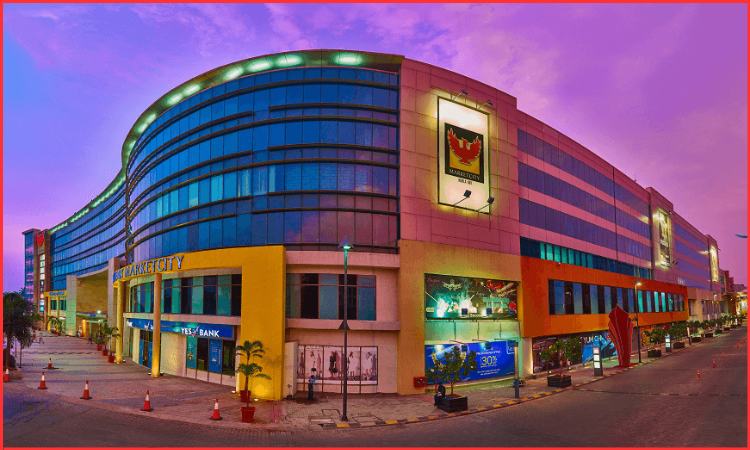
In 2001, they were among the first to introduce the hypermarket concept in India with Big Bazaar at High Street Phoenix. After the success of the High Street Phoenix model, they launched Phoenix Marketcity in Pune, Bengaluru, Chennai, and other cities. These developments also included hotels, offices, or residences.
Strategic Partnerships
To fund expansion and reduce risk, they worked with strong external partners. One of their significant partnership was with the Canada Pension Plan Investment Board [CPPIB]. Together, they created a joint venture to build and operate retail-led mixed-use developments.
They also acquired land in strategic locations and repurposed existing properties. That gave them both a first-mover advantage and control over key real estate in growing urban zones.
Diversification beyond Retail
When COVID hit, Phoenix Mills had a diversified portfolio across cities and income streams from hospitality, offices, and residential properties. They tightened operations, restructured debt, and bounced back quickly once restrictions eased. After COVID, footfalls and leasing numbers recovered faster than most expected.
Phoenix Mills now has over 11.5 million sq. ft. of operational retail space, with several new developments in the process. Their focus has shifted from just expansion to creating destination retail and places that blend luxury, entertainment, dining, and lifestyle. They are growing in Tier-1 and Tier-2 cities, expanding Bengaluru’s Whitefield campus, and building new malls in Ahmedabad, Indore, and Lucknow.
Financials
For Q1 FY26, Phoenix Mills reported consolidated revenue from operations of ₹953 crore, a 5% increase compared to Q1 FY25. Operating revenue reached ₹564 crore, up 6% year-on-year. Within its core businesses, retail, office, and hotel revenue stood at ₹881 crore, growing 4%, while operating EBITDA came in at ₹544 crore, up 2%. With the capital-intensive nature of real estate and the scale at which Phoenix operates, even this modest growth is significant for them.
Challenges faced by Phoenix Mills
- Highly Competitive Market: With malls, shopping centres, and commercial spaces spreading very quickly across India, Phoenix Mills constantly faces pressure to differentiate itself and attract both retailers and consumers.
- Changing Consumer Preferences: Shoppers are increasingly moving towards online shopping and experiential retail. Adapting mall offerings, entertainment zones, and lifestyle experiences to retain footfall is a continuous challenge.
- Regulatory and Policy Hurdles: Real estate projects in India often encounter delays due to approvals, zoning restrictions, and compliance requirements. Phoenix Mills has had to navigate complex regulations for its mixed-use developments.
- High Operational Costs: Managing large luxurious malls and commercial spaces involves significant maintenance, staffing, and utility costs, which can impact profitability, especially during low-occupancy periods.
- Sustainability and ESG Pressures: Investors and customers increasingly demand environmentally sustainable and socially responsible developments. Incorporating green building standards and energy-efficient infrastructure is challenging but necessary.
Why Phoenix Mills Stands Out
Despite these headwinds, Phoenix Mills has carved out a position few can match. Its portfolio is strategically located in high-growth urban centres in Mumbai, Bengaluru, Pune, Chennai, along with a growing presence in Tier-2 cities like Lucknow and Indore. These locations give it both steady footfalls and long-term appreciation potential.
Their scale and execution capability are another differentiator. Despite building just malls, they have built destination hubs that combine retail, hospitality, and commercial spaces. That integrated model creates multiple revenue streams and makes their assets more resilient to market shifts.
Their brand positioning also works in their favour. Phoenix Malls are known for a premium, well-curated mix of tenants, strong experiential offerings, and sustained footfall. This keeps occupancy rates high and attracts top retail brands.
Lastly, Phoenix has been smart with its capital strategy, working with global partners like CPPIB early on, then gradually consolidating ownership to strengthen control. It is not just growing fast; it is growing with a plan. That combination of prime locations, diversified revenue, premium positioning, and financial discipline is why it continues to lead India’s retail and estate space.
Recent Awards & Recognition
- In 2024, they won the National Energy Conservation Award for Phoenix Marketcity Mumbai and the National Safety Council of India Award for their Minstone Mall project team.
- Both the Mumbai and Bengaluru Phoenix Marketcity locations were recognised at the CII National Awards for Excellence in Energy Management in 2024.
- Millennium Towers in Pune was named the Iconic Commercial Project of the Year at the Times of India Real Estate Conclave and Awards 2024-25.
- They received the Secure Shopping Mall of the Year for Palladium Mumbai and the Fire Safe Shopping Mall of the Year for the Phoenix Marketcity Bangalore at the Times Secure India Summit 2025.
- They also won at the IMAGES Shopping Centre Awards 2025 across categories of performance, design, and experience.
- Phoenix Marketcity, Pune, received the Most Admired Shopping Centre of the Year award in 2025.
- Phoenix Citadel in Indore received the Retail Marketing Campaign of the Year and Shopping Centre of the Year at the Global Awards for Retail Excellence in March 2025.
Future Plans
Over the next five years, Phoenix Mills plans to expand its retail space from roughly 11.5 million sq. ft. to more than 14 million sq. ft. by 2027, and push that number closer to 18 million by 2030. New malls are planned in Kolkata, Surat, Coimbatore, Thane, Chandigarh, and a few other high-growth cities. In Mumbai’s Lower Parel, they will add about 450,000 sq. ft. to their existing properties.
Their second big focus is commercial real estate. Phoenix wants to more than double its office portfolio, from 3 million sq. ft. to 7 million sq. ft. by 2027. Pune, Bengaluru, Chennai and Mumbai are major cities for additions.
For hospitality, Phoenix is set to triple its hotel capacity from around 600 rooms to nearly 1800 by 2030. Big-ticket projects like the Grand Hyatt in Bengaluru and a large hotel at Phoenix MarketCity Bangalore are already in development. Alongside, they are acquiring land in strategic spots like Mohali and Coimbatore to build new mixed-use projects that combine retail, offices, and hotels.
Conclusion
What began as a single textile mill over a century ago has evolved into India’s largest retail-led real estate powerhouse. A company that understands both the pulse of the consumer and the rhythm of urban growth. By standing ahead of retail trends, partnering with global investors, and focusing on experience-driven destinations, Phoenix Mills has built more than malls; it has built city landmarks. With its plans of expanding across Tier-1 and Tier-2 cities, Phoenix is rising as a symbol of India’s evolving urban culture, where shopping meets lifestyle, business meets leisure, and every visit feels like an experience.
FAQs
Q-1 What does Phoenix Mills do?
Phoenix Mills develops, owns, and operates large-scale retail-led mixed-use properties across India. Their projects typically include malls, offices, hotels, and residential spaces.
Q-2 Who is the Chairman of Phoenix Mills?
Mr Atul Ruia is the Chairman of Phoenix Mills
Q-3 Which are the major projects of Phoenix Mills?
Some of their major developments include High Street Phoenix (Mumbai), Palladium (Mumbai), and Phoenix Marketcity malls in Pune, Bengaluru, Chennai, and Lucknow.
Q-4 Is Phoenix Mills listed on the stock exchange?
Yes, Phoenix Mills is listed on the BSE and the NSE.
Q-5 Who are Phoenix Mills’ key investors?
One of their most notable partnership is with the Canada Pension Plan Investment Board [CPPIB] for developing retail-led mixed-use projects across India.