Twenty years ago, a small Haridwar-based Ayurvedic pharmacy took on Colgate, Hindustan Unilever, Nestlé, and Dabur — and won shelf space in almost every Indian household. In 2026, Patanjali Ayurved is no longer the underdog. It’s a multi-thousand-crore FMCG and Ayurveda conglomerate that owns Patanjali Foods (formerly Ruchi Soya), runs hospitals, exports products globally, and still makes headlines every month — sometimes for growth, sometimes for legal trouble.
So what does Patanjali’s marketing strategy look like today, and why does it still work in one of the world’s toughest consumer markets? Let’s break it down.
The Indian Consumer Market: Still the Hardest Market to Crack
India remains a graveyard for global brands that misread local psychology. Companies like Ford and Chevrolet couldn’t sustain operations here, while giants like Nestlé and Kellogg’s still struggle to match consumer expectations. Two forces explain why:
1. Price Sensitivity Over Everything
Indian consumers, especially in Tier 2 and Tier 3 cities, are extremely price-conscious. Quantity and affordability often outweigh premium positioning, which is why value-for-money pricing remains a core FMCG marketing strategy in India.
2. Emotion-Driven Buying Behaviour
Indian buying decisions are deeply emotional and culturally rooted. One tone-deaf ad — like Tanishq’s much-debated interfaith marriage commercial — can trigger a brand crisis overnight. Brands that understand consumer sentiment, trust, and tradition win; brands that don’t, lose fast.
Patanjali built its entire brand strategy around understanding — and monetizing — these two realities.
About Patanjali Ayurved: From Ayurvedic Pharmacy to FMCG Powerhouse
Founded by Baba Ramdev and Acharya Balkrishna in 2006, Patanjali Ayurved started as a small venture promoting Ayurvedic medicine and yoga. Today it’s one of India’s most disruptive fast-moving consumer goods (FMCG) companies, with a product range spanning toothpaste, biscuits, cosmetics, protein bars, ghee, and even packaged foods.
Patanjali Foods (the erstwhile Ruchi Soya, acquired by the group and known for its Nutrela soya products) continues to be the group’s listed flagship. In its latest reported quarter, Patanjali Foods posted standalone net sales of roughly ₹9,798.84 crore, up over 20% year-on-year, showing that despite intense competition and regulatory scrutiny, the underlying business engine is still growing.
The group has also expanded well beyond FMCG in 2026:
- It opened the Patanjali Emergency & Critical Care Hospital, inaugurated by Union Home Minister Amit Shah, pushing the brand deeper into integrated healthcare.
- It signed an MoU with the Russian government to promote Ayurveda and wellness internationally — a signal of Patanjali’s global expansion ambitions.
- It announced a mega food park project spread across 170+ acres in Andhra Pradesh, reinforcing its manufacturing-led growth strategy.
The Founders Behind the Brand
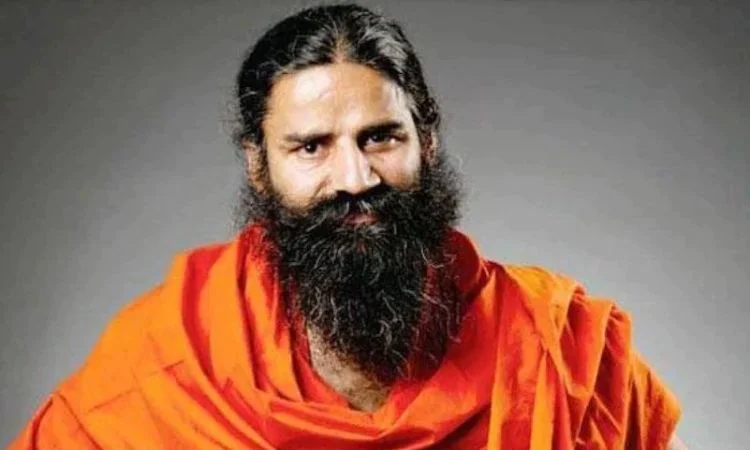
Baba Ramdev remains India’s most recognisable yoga guru and the brand’s most powerful (and free) marketing asset. His yoga camps, TV appearances, and public persona continue to drive trust and top-of-mind recall for Patanjali products, without the company having to pay a single rupee in celebrity endorsement fees.
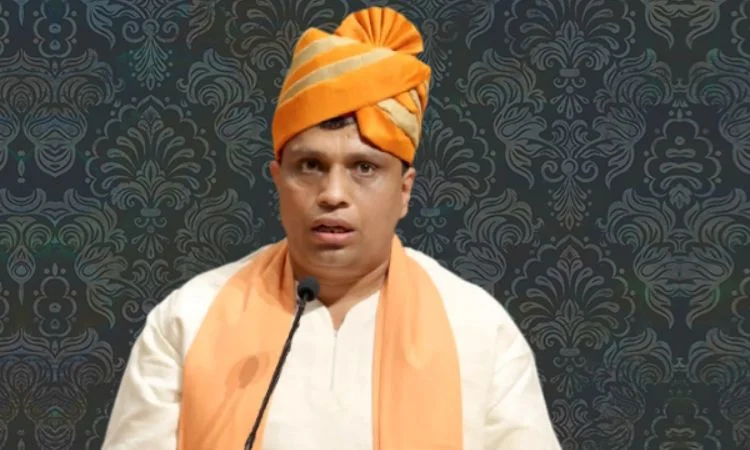
Acharya Balkrishna, the company’s Managing Director and now widely reported as its CEO, is the strategic and scientific backbone of Patanjali. His expertise in Ayurvedic formulations shaped the product pipeline, while his business acumen has steered the company through rapid diversification — from herbal toothpaste to hospitals.
Together, their public credibility and operational expertise created the trust-based marketing engine that continues to define Patanjali’s positioning.
Patanjali’s Core Marketing Strategy: 9 Pillars That Still Apply in 2026
1. Ayurveda and Natural Positioning
Patanjali’s foundational pitch — natural, herbal, Ayurvedic, chemical-free — still resonates as clean-label and “back to roots” consumption trends grow globally, not just in India.
2. Swadeshi and Nationalist Branding
Patanjali’s “Swadeshi” narrative — buy Indian, support Indian manufacturing — remains one of the most effective brand differentiators in Indian marketing history. Even its “Made in Bharat” labelling (instead of “Made in India”) is a deliberate linguistic and emotional choice designed to connect with Hindi-speaking, tradition-first consumers.
3. Celebrity Power Without Celebrity Cost
Baba Ramdev functions as founder, spokesperson, and brand ambassador — all in one. This collapses what would normally be a massive celebrity endorsement budget into an organic, always-on marketing channel.
4. Value Pricing Strategy
Patanjali continues to price everyday essentials aggressively while charging a premium on high-trust categories like Patanjali toothpaste and chyawanprash — a smart hybrid pricing model that balances volume and margin.
5. Category Diversification
From personal care to health supplements to hospitals, Patanjali has turned itself into a one-stop wellness ecosystem, reducing dependence on any single product category.
6. Grassroots and Word-of-Mouth Marketing
Yoga camps, TV shows, and community health drives remain some of the most cost-efficient customer acquisition channels in the Indian FMCG playbook — and Patanjali built its empire on them before “influencer marketing” was even a phrase.
7. Health and Wellness Campaigns
In-store “free Ayurvedic consultation” counters are a textbook example of experiential marketing: consumers get a free service and walk out having bought a Patanjali-prescribed medicine.
8. Trust-Led, Low-Certification Messaging
Patanjali’s messaging leans on cultural trust in Ayurveda rather than heavy reliance on external certifications — a strategy that builds strong loyalty but has also invited regulatory pushback (more on that below).
9. Digital Marketing and E-commerce Push
Having grown on word-of-mouth and TV, Patanjali has steadily scaled its digital marketing, D2C website, and social media presence to reach younger, tech-savvy, urban shoppers who don’t attend yoga camps but do scroll Instagram.
How Patanjali Uses Consumer Psychology and Belief Systems
What truly separates Patanjali from a typical FMCG brand is its use of cultural insight marketing:
- Nationalism as a Growth Lever: By framing purchases as a patriotic act, Patanjali turned a commodity decision (toothpaste, soap, biscuits) into an identity decision.
- Ayurveda as Inherited Trust: Ingredients like tulsi and ashwagandha already carry generations of trust, so Patanjali doesn’t need to “convince” consumers — it just needs to remind them.
- Anti-Urban, Pro-Natural Living Narrative: Messaging around “chemical-free” and “natural living” taps into rising environmental and lifestyle anxiety among Indian consumers.
- Yoga and Wellness Culture: Positioned Patanjali not just as a product company but as a lifestyle movement, particularly popular with older, health-conscious demographics.
- Emotional and Social Causes: Baba Ramdev’s public interventions on issues like black money built a halo of trust that carries over into product credibility — classic founder-led branding before the term existed.
The Legal and Regulatory Reality Check (2026 Update)
No modern Patanjali marketing analysis is complete without acknowledging the brand’s growing list of courtroom battles — because in 2026, this is part of its marketing story.
- Supreme Court vs. Misleading Ads: Following a long-running case filed by the Indian Medical Association (IMA), the Supreme Court has repeatedly warned Patanjali against publishing false or misleading claims about curing diseases through its medicines, at one point temporarily restraining advertising of certain products.
- Dabur Chyawanprash Dispute: The Delhi High Court restrained Patanjali from airing ads that called rival Chyawanprash brands “dhoka” (fraud) — a comparative advertising case that’s still winding through appeals in 2026, with the court cautioning against “luxury litigation.”
- GST Penalty Upheld: The Allahabad High Court dismissed Patanjali’s challenge to a ₹273.5 crore GST penalty, ruling that such penalties are civil, not criminal, in nature.
- Product Recall: Patanjali Foods recalled a batch of red chilli powder after FSSAI flagged non-conformity with food safety norms — a reminder that quality control incidents can undercut even the strongest trust-based brand.
These episodes matter because they highlight the flip side of Patanjali’s aggressive, trust-and-emotion marketing style: regulators and courts are increasingly holding the brand accountable for the same bold claims that once fuelled its growth.
SWOT Analysis of Patanjali (2026 Perspective)
Strengths
- Deep-rooted brand trust built on Ayurveda and Swadeshi identity
- Diversified portfolio across FMCG, healthcare, and hospitality
- Founder-led credibility via Baba Ramdev and Acharya Balkrishna
- Competitive, accessible pricing across mass-market categories
- Strong rural and semi-urban distribution network
Weaknesses
- Repeated regulatory action over misleading advertising claims
- Occasional product quality and food-safety incidents
- Heavy brand dependence on two individuals
- Limited scientific validation compared to allopathic competitors
Opportunities
- Global demand for natural, herbal, and Ayurvedic wellness products
- International expansion, including new government-level partnerships
- E-commerce and D2C growth among younger digital-first consumers
- Healthcare diversification through hospitals and clinical services
Threats
- Intense competition from Dabur, HUL, ITC, and other legacy FMCG players
- Tightening regulatory oversight on advertising and product claims
- Reputational risk from ongoing litigation
- Shifting consumer preferences toward scientifically validated, certified products
What Other Brands Can Learn From Patanjali’s Marketing Playbook
- Cultural insight beats big budgets. Understanding what your audience already believes is more powerful than trying to change their mind.
- Founder-led branding builds trust faster than paid endorsements. Consumers respond to a face and a story, not just a logo.
- Value pricing wins volume, but premium anchors build margin. A hybrid pricing strategy can serve both price-sensitive and brand-loyal customers.
- Bold marketing claims carry legal risk. Growth built on aggressive positioning must be backed by compliance, not just conviction.
- Diversification protects long-term brand equity. Spreading across categories and now healthcare reduces Patanjali’s dependence on any single revenue stream.
Conclusion
Patanjali’s marketing strategy in 2026 is still fundamentally the same story it was in 2006: sell trust, sell tradition, sell “Swadeshi” — but the brand now operates at a scale, and under a level of regulatory scrutiny, that its founders never had to navigate in the early years. Its ability to blend Ayurveda-rooted emotional branding with modern FMCG scale, hospital expansion, and international partnerships will determine whether it becomes India’s first truly global wellness conglomerate — or whether courtroom battles start to erode the trust it spent two decades building.
FAQs on Patanjali’s Marketing Strategy
Q1. What is Patanjali’s core marketing strategy? Patanjali’s marketing strategy centers on Ayurveda, Swadeshi (nationalist) branding, founder-led celebrity endorsement through Baba Ramdev, competitive pricing, and grassroots word-of-mouth marketing through yoga camps and wellness campaigns.
Q2. Who are the founders of Patanjali Ayurved? Patanjali Ayurved was founded in 2006 by yoga guru Baba Ramdev and Ayurvedic expert Acharya Balkrishna, who currently serves as the company’s Managing Director and CEO.
Q3. Why is Patanjali facing legal action in 2026? Patanjali is currently involved in multiple cases, including a Supreme Court matter over allegedly misleading medical advertising claims, a Delhi High Court dispute with Dabur over comparative Chyawanprash ads, and a GST penalty case upheld by the Allahabad High Court.
Q4. What makes Patanjali different from other FMCG brands in India? Its use of nationalist “Swadeshi” messaging, founder-driven credibility, and Ayurvedic positioning sets it apart from multinational competitors like HUL, Nestlé, and Colgate, who typically rely on conventional celebrity endorsements and premium positioning.
Q5. Is Patanjali expanding internationally? Yes. Patanjali has signed wellness and Ayurveda-related agreements with international partners, including a reported MoU with the Russian government, as part of its global expansion strategy.