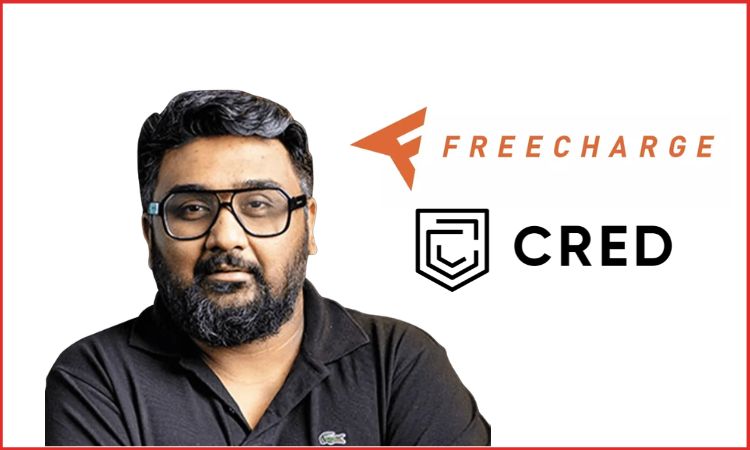
In a startup ecosystem, Kunal Shah stands out as a rare figure, a founder who built by discipline, trust, and deep consumer insight. His focus on genuine problem-solving fosters admiration and respect in readers.
That question led to the creation of CRED, India’s most intellectually admired fintech startup. Before CRED, Kunal Shah had already tasted success by building and selling Freecharge to Snapdeal, one of India’s most significant startup acquisitions at the time.
Who is Kunal Shah?
- Name: Kunal Shah
- Birthplace: Mumbai, India
- Education: Wilson College, Mumbai
- Profession: Entrepreneur and Fintech Visionary
- Ventures: Freecharge and CRED
- Known for: Consumer psychology and credit discipline advocacy
Kunal Shah was born on May 20, 1983, and completed his Bachelor’s of Arts in Philosophy from Wilson College, Mumbai. He saw the challenges of running traditional businesses. Thus, developed a sharp understanding of consumer behaviour, payments, and incentives by observing how Indians interact with money, especially credit.
Before becoming a founder, Kunal Shah worked across consulting, payments, and finance, which gives him an insider’s view of systemic inefficiencies in India’s financial ecosystem. Let’s talk about the idea that changed digital payments!
Kunal Shah Biography
A quick snapshot of his journey:
| Year | Milestone | Notes |
| 2003–2006 | Early Jobs | Freelancing, consulting, and website building. |
| 2010 | Freecharge | A platform that rewards users for recharging online. |
| 2015 | Freecharge Acquisition | Sold to Snapdeal. |
| 2016–2018 | Research and Study | Learning about markets, behaviour, and trust. |
| 2018 | Founded CRED | Rewards-based credit card bill payment platform. |
| 2020–2024 | CRED Expansion | Loans, rewards, UPI, Mint, RentPay, and more. |
Early Life of Kunal Shah
Kunal Shah’s journey in entrepreneurship demonstrates his unwavering determination to innovate. In his earlier life, he showed interest in technology and business. After completing his studies, he set out on his entrepreneurial path and founded his first startup, PaisaBack, in 2009.
Initially, he focused on promoting discounts, which laid the groundwork for his future endeavours. Following this success, he founded Freecharge.
Building of Freecharge

Freecharge was founded in 2010, when mobile recharges in India were still done offline. People went through a lot for something as simple as a recharge. Kunal Shah noticed this and began with a simple mobile recharge platform that offered cashback instead of discounts. This subtle difference created a powerful habit, where users felt rewarded without devaluing the service.
Why Freecharge Worked?
The idea was simple: “Recharge your phone and get the same value back in coupons from top brands.” He spotted three trends converging:
- Rising smartphone usage
- Growing internet penetration
- Indian’s love for good deals
And that’s how Freecharge worked:
- It solved real problems with online recharges.
- Zero-cost recharges funded by brand partnerships.
- High repeat usage due to cashback psychology.
- Asset-light, scalable digital infrastructure.
By 2014, Freecharge had become one of India’s fastest-growing digital payment platforms. For example, a person spends ₹100 on a mobile recharge and gets ₹100 worth of coupons from places like McDonald’s or Barista. It costs nothing extra, but you get something free. The idea of “free ka recharge” (free recharge) caught people’s attention like wildfire in India.
Freecharge Acquisition by Snapdeal
In 2015, Freecharge was acquired by Snapdeal in a cash-and-stock deal valued at, making it one of the biggest fintech exits in India at the time.
Why Kunal Shah Built CRED

After stepping away from Freecharge, Kunal Shah spent his years in deep research, studying:
- Credit behaviour of Indian consumers
- Trust deficits in financial services
- Reward fatigue caused by discounts
With companies like:
- Sequoia Capital
- Y Combinator
- Government committees
He discovered that India’s most creditworthy individuals received the least respect from financial institutions, which led him to found CRED in 2018.
What is CRED?
CRED is a members-only fintech platform that rewards users for timely credit card bill payments, while allowing access to premium financial products.
Eligibility Criteria
- Credit score of 750+
- Invitation-only onboarding (initially)
This was created exclusively to build aspirational trust, not mass-market dependency. CRED started by offering reward coins for timely bill payments, which users can redeem for offers, experiences, and products. CRED expanded into:
- CRED Cash (instant loans)
- CRED RentPay
- CRED Mint (peer-to-peer lending)
- CRED UPI
- CRED Insurance
- CRED Housing Services
CRED’s Impact on India’s Startup Ecosystem
- Making premium design a standard.
- Showing that high-income customers are a strong market.
- Encouraging trust-based business models.
- Proving that rewards can change financial behaviour.
Marketing Strategy
Instead of relying on conventional fintech promotions, CRED focused on creating cultural moments, such as advertising during the Indian Premier League (IPL). These were not mere brand plugs, but they were mini spectacles. Featuring celebrities like Rahul David, Bappi Lahiri, and Jackie Shroff in unexpected roles, the ads sparked virality, turning brand awareness into affection.
The self-aware storytelling helped CRED build an identity. The humour was niche, the production was premium, and the message was clear.
Beyond video campaigns, content marketing and thoughtful leadership also played essential roles. Kunal Shah’s social media presence on LinkedIn, Instagram, and Twitter made it a direct marketing channel for the brand. His active presence and frequent sharing of insights on consumer psychology, inequality, and behavioural economics align with CRED’s direct aim.
CRED’s Revenue Engines
Today, the business has five major revenue engines, such as:
- Pill Payments: Small commissions on credit card, utility bill payments, and a cut from UPI plug-ins.
- Lending: From CRED Cash, CRED Flash (BNPL), and now-paused CRED Mint.
- Insurance: Through CRED Garage cashback offers.
- Shopping and Travel: D2C brands and travel packages promoted via the CRED Store.
- Wealth and Investment: Recently acquired Kuvera allows CRED to offer mutual funds, FDs, SIPs, and financial planning tools.
Reasons Behind Kunal Shah’s Success
Understanding Consumers’ Psychology Over Discounts
Kunal Shah believes discounts destroy long-term brand equity. That’s why CRED rewards behaviour, not transactions.
Trust as Currency
By allowing only high-credit users, CRED positioned itself as a trusted financial keeper, not a payments app.
Long-Term Options
CRED monetises through:
- Lending distributions
- Credit card partnerships
- Commerce (CRED Store)
- Financial product cross-selling
Apart from his entrepreneurial ventures, Kunal Shah is renowned for his insightful perspectives on technology, business, and human behaviour. As an active speaker and a thought leader, he frequently shares his expertise on various platforms and provides valuable guidance to aspiring entrepreneurs and industry enthusiasts alike.
Kunal Shah as an Investor
His investment philosophy is to focus on founders who believe in solving real problems in society, rather than on business models alone. He is one of the most active angel investors in India and invested in:
- Razorpay
- Unacademy
- Zilingo
- Innov8
- TinyOwl
- GoMechanic
- CoinSwitch Kuber
- Dukaan
- Shiprocket
- Pixxel
- Jupiter
Kunal Shah as a Philanthropist
He strongly believes in the upliftment of communities. Through his charitable efforts and mentorship initiatives, he actively encourages and guides aspiring entrepreneurs, enabling them to pursue their ambitions and make a significant contribution to society. His dedication reflects his broader goal of creating a better and more equitable future for everyone.
Kunal Shah Success Story | Awards and Recognition
He has received many awards and recognitions for his remarkable journey that highlights his creative ideas. Some of them are:
- Forbes India Leadership Awards in 2015
- Entrepreneur of the Year in 2016
- Top 10 Most Innovative CEOs in 2017
- Young Business Leader in 2018
- India’s Most Admired Entrepreneur in 2019
- Impactful Tech Leader in 2020
Kunal Shah Net Worth
Kunal Shah Net Worth is estimated to be around ₹15,000 crore (approximately) as of 2025. Most of Kunal Shah’s net worth comes from his stake in CRED, the fintech company he founded, and from the successful sale of Freecharge to Snapdeal. He is also an active angel investor in startups like Razorpay, Unacademy, and CoinSwitch, which adds to his overall wealth. However, a large part of Kunal Shah Net Worth is linked to company valuations and investments, not direct cash holdings.
Challenges for the CRED Empire
- Profitability Concerns: CRED has been criticised for high cash burn and delayed profitability.
- Valuation Scrutiny: Post-2022, market correction led to scepticism around late-stage fintech valuations.
- Niche Audience Risk: Serving only premium users limits scale, but improves unit economics.
Pros of CRED’s Model
- High-quality customer base
- Lower default risk
- Strong brand loyalty
- Rich credit behaviour data
- Cross-selling potential across financial services
What Lies Ahead for CRED
- Expansion into credit underwriting
- Deeper fintech infrastructure plays
- More focus on profitability and unit economics
- Potential IPO in long-term horizon (market-dependent)
Conclusion
Kunal Shah’s success story, from Freecharge to building CRED, redefines what startup success means in India. He did not chase users; he chose them and built a fintech company rooted in financial discipline, not financial temptation. In an ecosystem looking for shortcuts, Kunal Shah’s story reminds us that clarity of thought is the ultimate competitive advantage. From a young boy curious about human behaviour to building Freecharge and CRED, to becoming a top angel investor, his journey is inspiring for every aspiring entrepreneur in India.
FAQs
Q1. Why did Kunal Shah leave Freecharge after its success?
A: Kunal Shah believed Freecharge had reached its strategic peak after the acquisition and exited to avoid long-term operational conflicts and focus on solving deeper structural problems in India’s financial ecosystem.
Q2. Is CRED profitable today?
A: CRED has prioritised scale, data, and product depth over short-term profitability. While losses exist, the company is moving toward sustainable unit economics.
Q3. Why is CRED invite-only?
A: Exclusivity ensures that trust, premium engagement, and disciplined financial behaviour are central to CRED’s brand positioning.
Q4. What makes Kunal Shah different from other founders?
A: His deep understanding of behavioural economics, long-term thinking, and resistance to discount-led growth sets him apart from others.
Q5. Will CRED launch an IPO?
A: An IPO is possible in the long term, but Kunal Shah has emphasised building a durable business before public listing.