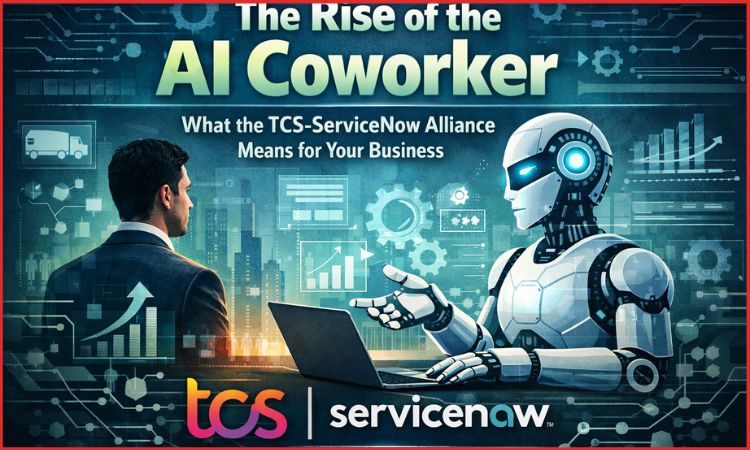
The “wait and see” era of Artificial Intelligence is officially over. For the past year, corporate boardrooms have been filled with talk of AI pilots and experimental chatbots. But as 2026 unfolds, the focus has shifted from potential to production.
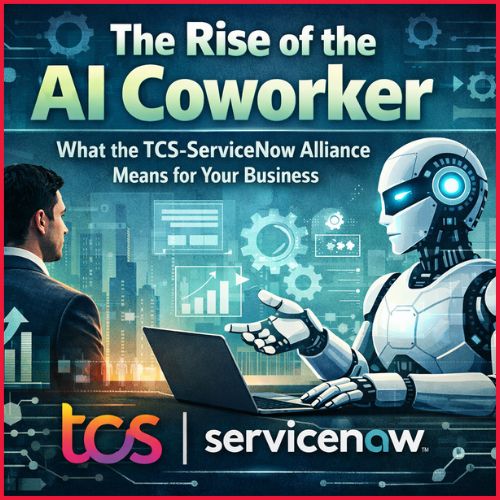
In a massive move for the tech sector, Tata Consultancy Services (TCS) and ServiceNow have announced a multi-year strategic partnership designed to do one thing: scale Enterprise AI adoption across the global business landscape. This is not just a technical upgrade; it’s a fundamental reimagining of how work gets done.
The Death of the “Isolated Experiment”
For many CEOs, the biggest frustration with AI has been its fragmentation. You might have an AI tool for HR and another for Finance, but they rarely talk to each other. This creates “silos” that stifle growth.
The TCS-ServiceNow alliance aims to bridge this gap by embedding Agentic AI, AI that doesn’t just suggest tasks but actually executes them, directly into the core workflows of an organisation. By combining ServiceNow’s “AI control tower” platform with TCS’s deep industry expertise, the duo is turning manual, fragmented processes into autonomous, self-learning systems.
Scaling AI with the “AI Autonomy Framework”
What makes this partnership different? It’s the methodology. TCS is bringing its proprietary Five-Stage AI Autonomy Framework to the table. This allows businesses to move through a structured journey:
- Data Governance: Ensuring the AI is built on “trusted” data.
- Workflow Modernisation: Cleaning up legacy processes before automating them.
- Agentic Integration: Deploying AI agents that can handle end-to-end tasks.
- Insight-Driven Operations: Using real-time data to make proactive business decisions.
- Full Scale Transformation: Achieving a business-wide “AI-first” operating model.
From HR to Supply Chain: Real-World Impacts
So, what does this look like in the trenches of a Fortune 500 company? The partnership is targeting high-impact areas where efficiency has traditionally been hard to find:
- The “Hire-to-Retire” Lifecycle: Transforming HR from a series of disconnected tickets into a unified, AI-driven experience that boosts employee retention.
- The Revenue Engine: Converting slow, manual customer order cycles into high-velocity “revenue engines” that improve cash flow and financial predictability.
- Supply Chain Resilience: Using AI to predict disruptions and automatically adjust procurement orders before a crisis hits.
“Enterprises are ready to move beyond AI pilots to business-wide transformation,” says Aarthi Subramanian, President and COO of TCS. “Our partnership brings together trusted AI and modern workflows to drive sustained competitive advantage.”
Why This Partnership Matters for Business Leaders
For readers of Business Outreach, the takeaway is clear: the infrastructure for the AI-Driven Enterprise is being built right now. TCS is not just selling this to clients; they are “Client Zero.” TCS is currently the largest user of ServiceNow’s IT Asset Management, having deployed it across thousands of devices in record time.
This real-world validation provides a “blueprint” for other global firms looking to modernise legacy environments without breaking their existing operations.
The Bottom Line: The Future is Autonomous
The collaboration between TCS and ServiceNow signals a shift toward Autonomous Business Operations. We are moving away from tools that require constant human prompting toward systems that work in the background to solve problems before they reach the manager’s desk.
In the race for Digital Transformation, those who can scale AI across their entire organisation, rather than just their IT department, will lead the next decade of industry growth.