Tesla’s rise to a trillion-dollar valuation is closely linked to Elon Musk, who joined the company as an investor in 2004. He led the company’s transformation from high-performance electric sports cars to mass-market vehicles, global manufacturing, and energy solutions. Under his leadership, Tesla overcame financial challenges, secured critical funding, and expanded its product lineup. Read this article to learn how Elon Musk led Tesla to reach a trillion-dollar valuation.
Tesla’s Business Profile
Source: Rolling Stone
| Founded | 1 July 2003 |
| Industry | Automotive/ Renewable energy |
| Headquarters | Austin, Texas |
| CEO | Elon Musk |
| Revenue | $22.50 billion [June 2025] |
Genius of Tesla
Source: CNBC
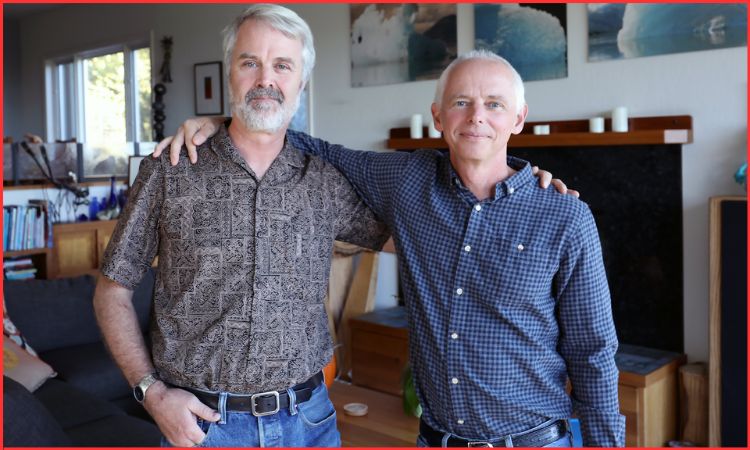
Martin Eberhard and Marc Tarpenning wanted to create high-performance electric sports cars as an alternative to the underperforming, unexciting electric vehicles available then. After experimenting and experiencing the AC Propulsion tzero, and seeing the potential for lithium-ion batteries from their prior work with e-readers, they founded Tesla Motors in 2003. Ian Wright also joined them a few months later.
Elon Musk Joins Tesla
Source: Times of India
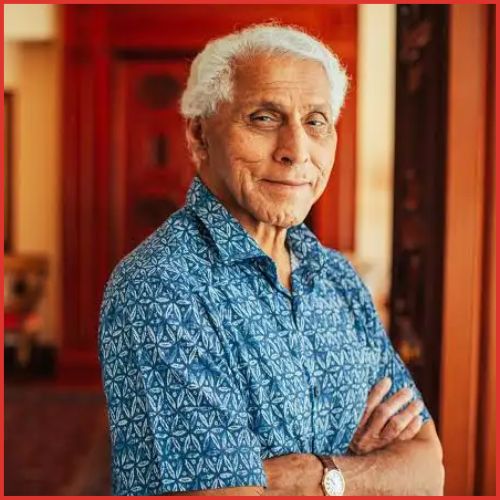
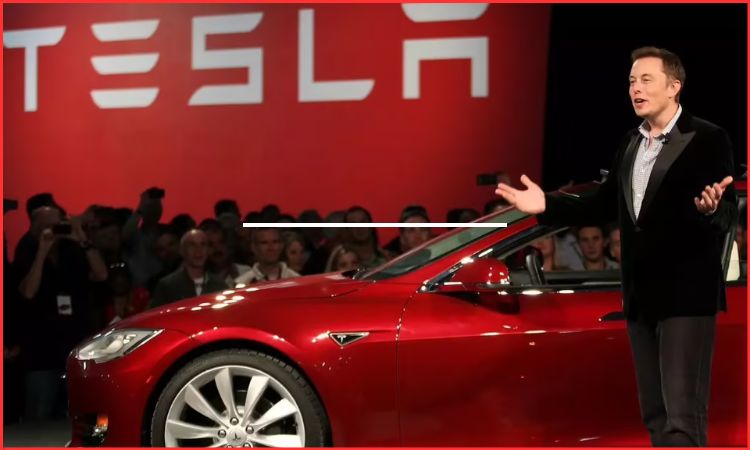
In 2004, Elon Musk invested around $6.5 million in the company in a Series A funding round totalling $7.5 million. He then became the chairman of the board of directors and the largest shareholder of Tesla. In May 2004, J.B. Straubel joined the company as Chief Technical Officer [CTO].
After becoming chairman, Elon Musk took an active role within the company. However, he was not deeply involved in day-to-day business operations. Initially, they made a strategy of starting with a premium sports car focused on early adopters and then moving into mainstream vehicles, such as sedans and other affordable compacts.
In August 2007, Eberhard stepped down as CEO at the request of the board, led by Elon Musk, and became the President of Technology. However, in January 2008, Eberhard left the company. Marc Tarpenning, who served as the Vice President of Electrical Engineering of Tesla, also left the company in January 2008.
After Eberhard, Michael Marks was brought in as interim CEO. In December 2007, Ze’ev Drori became the CEO and President of the company. In October 2008, Musk, succeeding Drori, became CEO of Tesla.
Tesla’s First Step: The Roadster and Model S
Source: Wikipedia
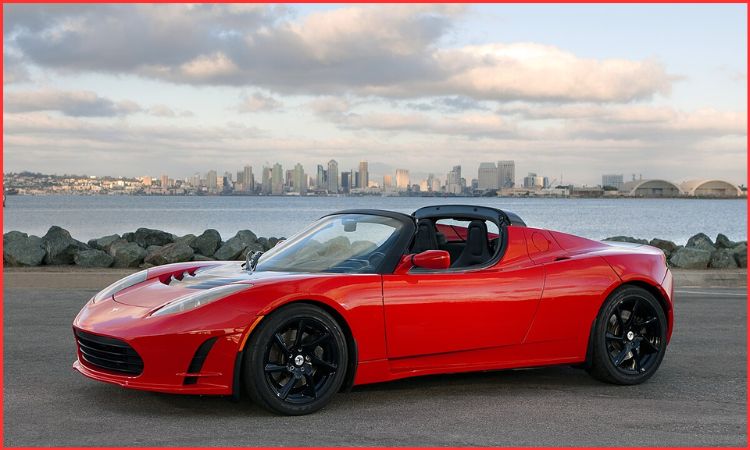
Tesla began production of the Roadster in 2008 inside the service bays of a former Chevrolet dealership in Menlo Park. By January 2009, they had raised $187 million and delivered 147 cars. Musk contributed $70 million of his money to keep the company afloat when it was burning cash and had no revenue for its first four years.
Securing Funding and Moving Toward IPO
In June 2009, Tesla got approved to receive $465 million in interest-bearing loans from the United States Department of Energy. The funding of $8 billion received in the Advanced Technology Vehicles Manufacturing Loan Program supported the engineering and production of the Model S sedan, as well as the development of commercial powertrain technology. This loan got repaid in May 2013, with $12 million in interest.
In May 2010, they purchased the NUMMI plant in Fremont, California, from Toyota for $42 million. On 29 June 2010, Tesla went public via an IPO. It was the first American car company to go public since Ford Motor in 1956.
Expansion into the Luxury Market
In October 2010, they opened the Tesla Factory to start production of the Model S. In January 2012, they ceased production of the Roadster. In June, they launched their second car, the Model S luxury sedan. On 15 July 2013, they became a NASDAQ-100 company.
Autopilot
Source: Bernard Marr
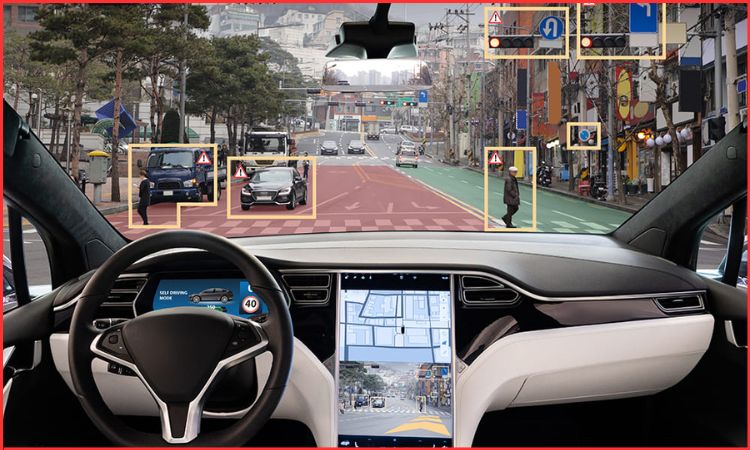
In 2014, Tesla announced the Tesla Autopilot, a driver-assistance system. In September, all Tesla cars started shipping with sensors and software that supported the feature, later called ‘Hardware version 1’.
Tesla Energy
Source: Quartz
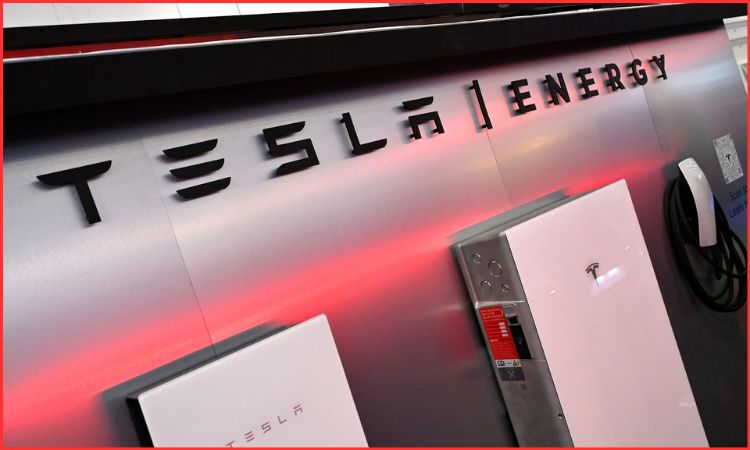
In April 2015, they entered the energy storage market, unveiling their Tesla Powerwall and Tesla Powerpack battery packs. They received orders valued at $800 million within a week of the unveiling. In September, they began shipping their third vehicle, the luxury SUV Tesla Model X, which had 25,000 pre-orders at the time.
Tesla’s Mass-Market Breakthrough
In April 2016, Tesla unveiled its first mass-market vehicle, the Model 3 Sedan. The Model 3 was less expensive than Tesla’s previous three vehicles, and within a week, the company received over 325,000 paid reservations. To speed up production and control expenses, they invested heavily in robotics and automation to assemble the Model 3, but the robotics actually slowed the production of the vehicles. Hence, this led to significant delays and production problems. However, by the end of 2018, the production problems had been overcome, and the Model 3 became the world’s best-selling electric car from 2018 to 2021. They were under significant financial pressure. During this time, they became one of the most shorted companies in the stock market.
SolarCity Acquisition and Rebranding
Tesla entered the solar installation business in November 2016 with the purchase of SolarCity, in an all-stock $2.6 billion deal. SolarCity was merged with Tesla’s existing battery energy storage products division to form the Tesla Energy subsidiary. Therefore, in February 2017, Tesla Motors changed its name to Tesla, Inc. to better reflect the scope of its expanded business.
Profitability and Tesla’s S&P 500 Inclusion
Tesla reported four consecutive profitable quarters from July 2019 to June 2020, qualifying for S&P 500 inclusion. In 2020, Tesla’s share price surged 740%, making it one of the most valuable US automakers. On 21 December 2020, Tesla joined the S&P 500.
Global Expansion with Gigafactories
In March 2019, Tesla introduced the Model Y crossover SUV. They expanded production with Gigafactory Shanghai, Berlin, and Texas. Shanghai rolled out its first Model 3 in December 2019. Berlin began Model Y production in March 2022, and Texas started in mid-2022. Tesla also announced plans for a future Gigafactory in Mexico.
Tesla Expands in California
After disputes with local officials, Tesla moved its legal headquarters to Texas in December 2021. It continues to expand its California operations, including a Mega factory for Megapack batteries and a corporate engineering campus in Palo Alto.
Tesla and Cryptocurrency Investments
In early 2021, Tesla became a major investor in bitcoin, acquiring $1.5 billion of the cryptocurrency, and on 24 March 2021, it started accepting bitcoin as a form of payment for US vehicle purchases.
Cybertruck Launch
Between May 2023 and February 2024, almost all major North American EV manufacturers announced plans to switch to Tesla’s North American Charging Standard adapters on their EVs by 2025, which is expected to be a stable source of recurring revenue for Tesla. In November, Tesla started shipping the Cybertruck, produced at Gigafactory Texas.
Legal Rulings & New Autonomous Vehicles
In April 2024, the company announced it was laying off 10% of its employees. In June, they moved their incorporation from Delaware to Texas. In October, they unveiled a concept version of two autonomous vehicles, the Cybercab and Robovan and detailed that both would be an integral part of a Tesla ride-hailing service called the Tesla Network, a future service they had previously teased in 2019.
In December 2024, a Delaware court rejected Elon Musk’s $56 billion pay package from Tesla, ruling that it was not properly approved by the company’s board. The decision arose from a lawsuit by Tesla shareholders who claimed the compensation was excessive and not aligned with performance metrics.
AI Push & Entry into India
Source: Mint
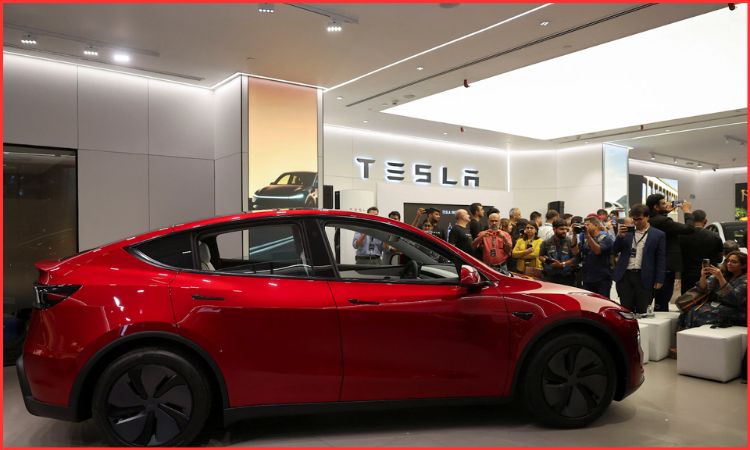
In July 2025, Tesla released a software update adding the artificial intelligence (AI) chatbot Grok to its vehicles. While the update provides in-car chatbot functionality, it does not give Grok control over vehicle functions. The same month, Tesla opened its first showroom in India at the Bandra-Kurla Complex in Mumbai, showcasing the Model Y as its debut offering. In August, Tesla integrated Deepseek and Bytedance’s Doubao AIs into Chinese models.
Elon Musk’s Leadership Style & Controversies
Source: Quartz
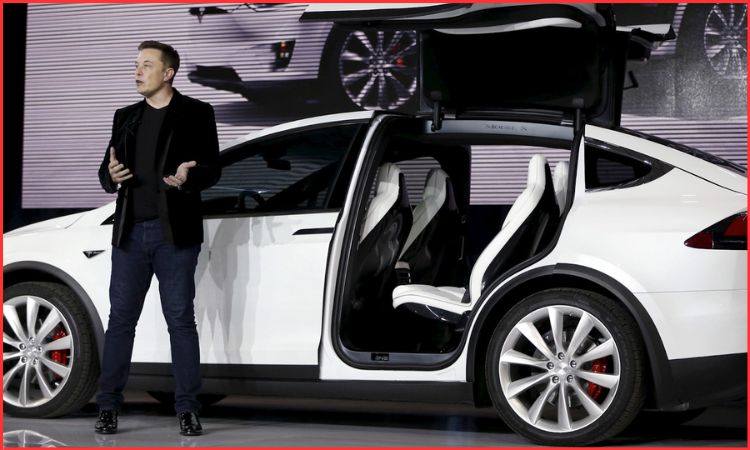
Elon Musk is known for his relentless drive, willingness to take risks, and a tendency to set bold goals. This approach has inspired Tesla employees to push boundaries, but it has also led to periods of chaos inside the company. Musk often says that he thrives under pressure, and much of Tesla’s survival has hinged on his refusal to accept failure.
At the same time, Musk’s outspoken personality has sparked controversy. His tweets have landed him in legal trouble, most notably with the U.S. Securities and Exchange Commission in 2018, after he declared he had ‘funding secured’ to take Tesla private at $420 a share. That single statement cost him the role of chairman and forced Tesla to pay millions in fines.
Musk’s ventures outside Tesla, particularly his acquisition of Twitter [renamed X], have also divided public opinion. Critics argue that his political statements and online battles risk separating potential customers, while supporters admire his willingness to challenge the establishment.
What this really means is that Musk’s identity is inseparable from Tesla’s. His visionary leadership turned a niche EV startup into a global powerhouse, but his volatility sometimes casts a shadow over the brand.
Conclusion
Elon Musk’s leadership and strategic decisions have been central to Tesla’s growth from a niche electric car startup to a trillion-dollar company. Through targeted product development, global expansion, and diversification into energy solutions, Tesla has reshaped the automotive and renewable energy markets. While Musk’s approach has faced controversy and financial challenges, his influence on Tesla’s trajectory is undeniable. It shows how focused leadership and bold strategic moves can lead a company into a global powerhouse.
FAQs
Q1: When was Tesla founded?
Tesla was founded by Martin Eberhard and Marc Tarpenning on 1 July 2003.
Q2: When did Elon Musk join Tesla?
Elon Musk joined Tesla in 2004 as an early investor and later became CEO.
Q3: How did Tesla achieve its high market valuation?
Through mass-market vehicle launches, global expansion, energy solutions, and strategic leadership under Elon Musk, Tesla became a highly valuable company.