Blockchain is one of the most talked-about technologies of our age. It is changing industries and the way we store, share, and secure data. For most people, Blockchain still feels complicated. That is why this article is designed as a complete beginner’s guide to Blockchain Technology in 2025.
It is important to remember that Blockchain is much broader than just cryptocurrencies. It is a wider technology that provides security, trust, and transparency in many fields. The implications of Blockchain technology are far-reaching. It is changing the way we do business and even how governments operate, in every field from finance to healthcare, and now even supply chains. By the end of this guide, you will know what Blockchain is, why Blockchain is important, and how Blockchain will be used in 2025.
What Is Blockchain Technology?
Blockchain is a digital system for securely recording transactions. It is referred to as a “chain of blocks” because information is stored in blocks, and each block is linked to the previous one, creating an unbreakable chain that is difficult to hack.
In simple terms, Blockchain is like a notebook that is open to everyone. Once you write something down in it, you cannot erase or change it. An open and decentralized source of truth is an immensely powerful tool for trust and transparency.
Why Blockchain Matters in 2025
By 2025, Blockchain is moving beyond Bitcoin and Ethereum; it is gradually becoming part of the everyday business and technology landscape. Reports indicate that the global Blockchain market is forecasted to exceed $94 billion by 2027, with growth greater than 66% each year.
This monumental growth signifies that Blockchain is moving beyond cryptocurrency and entering other sectors. Its value is being realized in banking, logistics, identity management, healthcare, and government services.
Essential Features of Blockchain
Blockchain has distinguishable features that provide it with strength and power, as reported in this beginner’s guide 2025. The essential features include:
- Decentralization – It is not controlled by a single authority. Control is shared among many computers (nodes) that own the system together.
- Transparency – All of the changes and transactions recorded on the Blockchain are visible to anyone at all times.
- Immutability – Once data is added to the Blockchain, nothing can alter that information after it has been added.
- Security – Cryptography secures the data from hackers, potentially compromising their information.
- Smart Contracts – Smart contracts run automatically when a given condition is met and function like regular contracts.
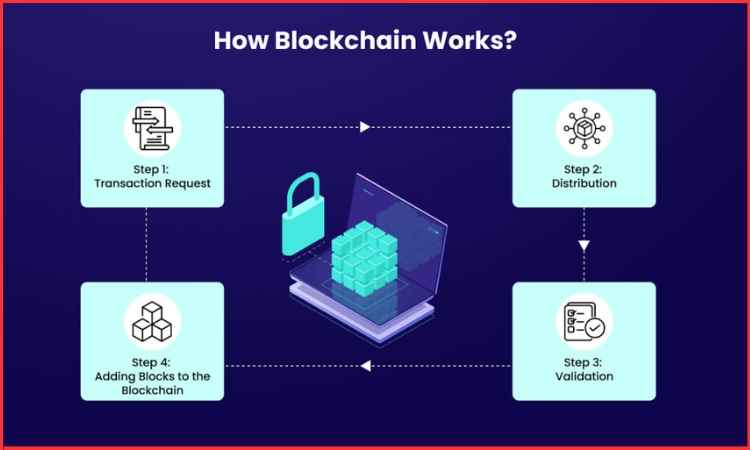
How does Blockchain work?
To keep it simple, let’s create a scenario or an example.
Five friends begin documenting their expenses in a shared diary. Only once a friend records something in the diary, everyone else has to confirm it (validate) before the note is accepted. Once written in stone, it is hard (if not impossible) to “erase” it, just like any transaction on Blockchain technology.
Every transaction has to be verified by a large number of actors (computers), called nodes. Once verified, the transaction is added to the block. Finally, the block is linked to blockchain – creating a permanent and unchangeable record.
Different Types of Blockchain Networks
Blockchain isn’t the only type. There are four types of blockchain that every beginner should be aware of in this guide 2025:
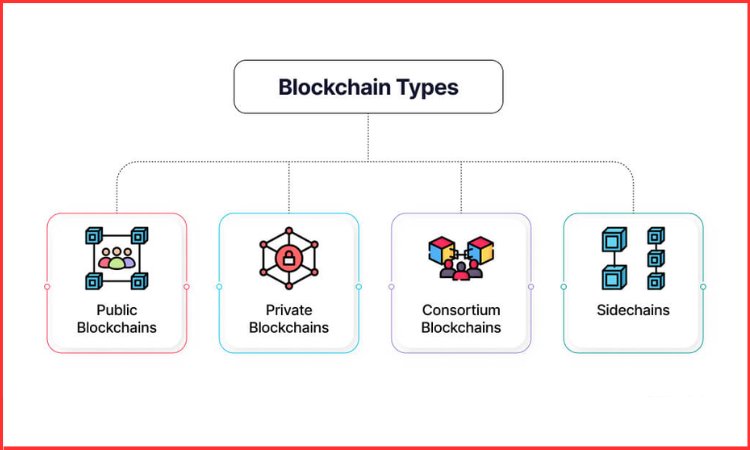
Blockchain isn’t just one type. There are four main types that every beginner should be aware of in 2025:
- Hybrid Blockchain – A combination of public and private features.
- Public Blockchain – Everyone can participate and view the ledger. Example: Bitcoin, Ethereum.
- Private Blockchain – One organization controls the blockchain. Companies often use this for internal systems.
- Consortium Blockchain – A group of organizations controls the blockchain. Example: banking networks.
A Step-by-Step Guide for Beginners
Here is a concise but clear step-by-step guide to begin learning blockchain technology
1. Understand the basics- Learn ledger, block, node, and consensus.
2. Understand cryptography basics- Learn hashes, public/private keys, and signatures.
3. Try wallets and testnets- Install a wallet (for example, MetaMask), and use a testnet coin to play around with.
4. Get to know smart contracts- Learn what they are good for, and why bugs can be dangerous.
5. Choose a platform and language- Begin with Solidity (Ethereum) or Rust (Solana/Polkadot).
6. Follow along with hands-on tutorials- Start building simple applications: a token transfer, a voting system, or even a to-do dApp.
7. Get to learn developer tools- Understand Remix, Hardhat / Truffle, Ganache, and web3 libraries (ethers/web3.js).
8. Deploy on a testnet first- Never deploy to mainnet until you have tested and passed auditing on your code.
9. Get to learn security practices- Look up common vulnerabilities (for example, reentrancy or overflow) and read audit reports.
10. Get involved in the community- Use forums, GitHub, Discord, and meetups, and contribute to small projects.
11. Build a portfolio- Publish code, demos, and short write-ups to show off your skills.
Blockchain vs Traditional Databases
Many beginners also confuse Blockchain networks with regular databases. Here’s the difference:
1. Traditional databases are controlled by one authority. Blockchain does not have a single owner.
2. Traditional databases can have the data replaced/altered. The data in Blockchain cannot be changed.
3. A database can be faster than a blockchain for some tasks, but an immutable, peer-reviewed ledger can provide trust and security like no other.
This is why more businesses in 2025 are adopting Blockchain.
Real-World Uses of Blockchain in 2025
Blockchain is changing industries around the world. In India and elsewhere, every year we see its applications become more and more visible. Here are what we see as the most critical applications:
1. Finance and Banking
Blockchain will fast-track payments and make them safer. It will reduce fraudulent payments and remove the intermediary. In 2025, banks are using Blockchain for cross-border payments, digital identities, and fraud detection.
2. Supply Chain
Companies like Walmart and IBM use Blockchain to track goods from the factory to the consumer. Essentially, Blockchain is giving buyers and sellers an immutable way to track goods against a digital identity, reducing counterfeit products.
3. Healthcare
Blockchain safeguards the data of patient records. The data can only be unlocked by the authorized doctors. This builds trust and mitigates data leaks through the data’s immutability.
4. Government Services
Some countries are using Blockchain for voting, land registration, and issuing certificates. This will help reduce corruption and improve trust.
5. Digital Identity
The exciting aspect of Blockchain allows people to maintain control of their personal identity documents and manage them online. This will help reduce identity theft.
Benefits of Blockchain Technology
No beginner’s guide to Blockchain can be complete without covering some of the pros of Blockchain.
- Security – Your data is secure and not subject to hacking.
- Transparency – No one is hiding information. Everyone can verify.
- Trust – Companies can conduct transactions without intermediaries.
- Efficiency – Transactions are faster and less expensive.
- Innovation – New models like DeFi (Decentralized Finance) and NFTs are possible.
Cons of Blockchain Technology
Even with all its possible opportunities, Blockchain does have some barriers in 2025.
- Scalability – Lots of transactions still can’t be processed fast enough.
- Energy Consumption – Some Blockchain networks use a lot of power.
- Regulation – Governments are still figuring out viable regulations.
- Complexity – For the beginner, Blockchain is very confusing.
Blockchain & Cryptocurrencies
Many beginners often confuse Blockchain with cryptocurrency, but the two are different. Blockchain is a technology, while cryptocurrency is one of its applications.
Bitcoin, Ethereum, and thousands of other coins run on Blockchain. However, Blockchain can be used without crypto, like supply chains or healthcare.
Trends in Blockchain in 2025
Any guide in 2025 wouldn’t be complete without talking about trends. Some of the most significant trends are
- Green Blockchain- focused on eco-friendly networks that use less energy.
- Blockchain in AI- used to secure data for artificial intelligence systems.
- Metaverse and Blockchain- enabling digital worlds built on Blockchain.
- CBDCs (Central Bank Digital Currency)- several countries, including India, are testing various digital currencies on Blockchain.
Why Beginners Should Learn Blockchain in 2025
Many employers want Blockchain skills. Businesses, banks, and governments are looking for Blockchain experts. Beginners can start by learning the fundamentals and then considering encoding, smart contracts, or Blockchain project management.
The World Economic Forum predicts that by 2030, over 10% of the world’s GDP will be stored on Blockchain systems. That demonstrates how essential it will be in careers and business.
Conclusion
Blockchain is no longer just a concept of the future. In 2025, it is revolutionize industries, governments, and everyday lives. This Blockchain Technology Beginner’s Guide 2025 has explained the fundamentals in a clear way.
From financial transactions to healthcare, Blockchain is creating a secure, trusted, and transparent future. For beginners, now is the perfect time to learn and experience Blockchain. This technology is moving forward rapidly, and those who learn it today will lead tomorrow.
FAQs
1. Is Blockchain legal in India in 2025?
Yes, Blockchain is legal, but cryptocurrencies are regulated separately.
2. Can Blockchain be hacked?
It is very secure, but it could potentially be compromised if the app or wallet has poor coding.
3. Do I need coding to learn Blockchain?
Not always. Beginners can first understand Blockchain concepts and then learn coding later.
4. Who is using Blockchain in India?
Banks, IT firms such as Infosys, and many start-ups in supply chain and healthcare are using Blockchain technologies.
5. What skills are best for Blockchain careers?
Smart contract development, cryptography, cloud computing, and project management.