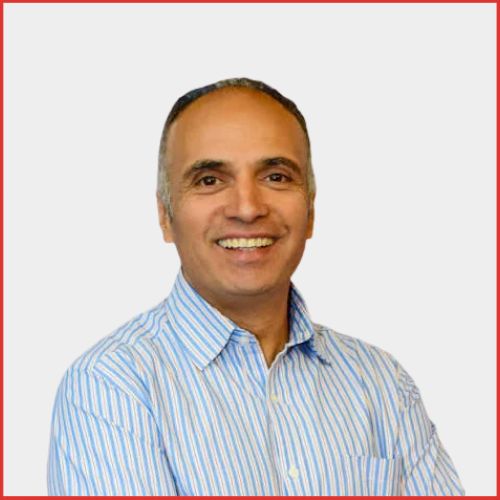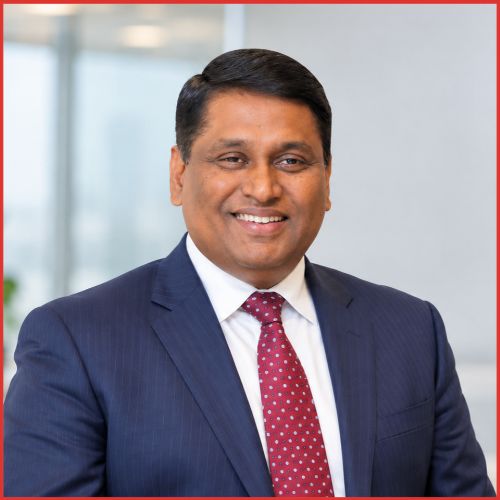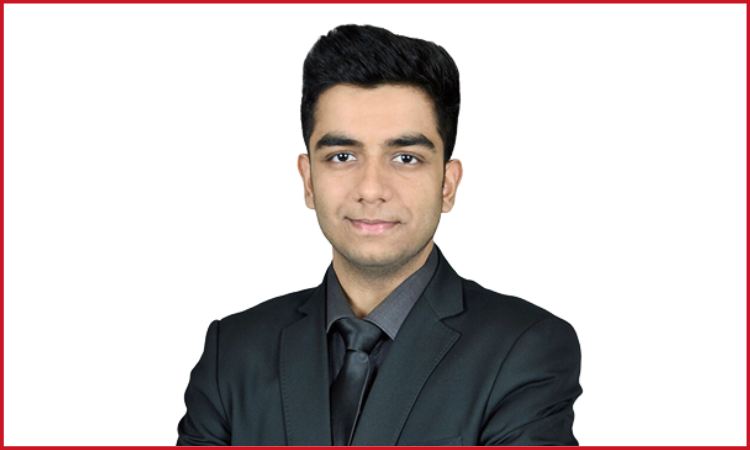
At 22, fresh out of college, Tanish Sharrma got his first credit card and felt unstoppable.
“I was like, okay, great, fantastic. I’ve got my credit card now. I’ll make some expenses,” he said. Then the bill arrived. “Oops, I was stuck paying the minimum amount due myself.”
That early stumble, he says, is exactly what is happening to millions of Indians right now. Today, Sharrma is the co-founder, CEO and CTO of BillCut.com, a platform built to pull borrowers out of the same trap he once fell into. He told Business Outreach in an interview that the scale of the problem is bigger than most people realise.
“Today in India, there’s over 80 million credit card holders in India and the approximate credit card debt is over $30 billion,” said the Delhi-based fintech entrepreneur, who started coding at the age of 9.
“Out of that debt, roughly 30% of that amount is revolved every month.”
Revolving is the quiet killer in that equation. It happens when a cardholder pays only the minimum amount due instead of clearing the bill in full, letting the rest carry forward at high interest.
“Credit card companies charge a lot of interest if you just pay the minimum amount due,” he said. “On the remaining amount, they charge between 42 to 60% interest.”
He said the minimum-due option is designed to feel safe, which is part of the problem. “It gives the customers the comfort that it is the minimum amount due because of credit score, and second, there are no penalties levied if you only pay the minimum amount dues,” he said. “But within the fine print, it is written, and something that a lot of customers don’t know, is that credit card companies charge a lot of interest.”
How BillCut steps in
BillCut’s pitch is simple: most people are paying more interest than their credit profile actually deserves. Founded in July 2022, BillCut is an AI-powered loan portfolio management platform that helps consumers reduce the cost of debt by analysing their credit profile, identifying overpriced loans, and restructuring repayments into smarter, lower-interest EMI plans.
“What BillCut does is we help our customers understand their credit profile, and then we tell our customers that, do you know that there are better debt options available to you,” Sharrma told Business Outreach.
The service covers credit cards, personal loans, home loans, gold loans and loans against property. “Let’s say my credit score is 800. So today, if I go to BillCut, BillCut would tell me that, let’s say I’m paying 15% interest on my debt, then people with 800 credit score typically deserve a much better rate of interest, let’s say 9% or 10%,” he said. “Would you like BillCut to find you a better deal? So that’s what we do, help our customers find a better deal on their debt.”
BillCut itself does not lend. It has tie-ups with banks and NBFCs such as L&T Finance, Tata Capital and other leading partners.
“We make our money from a partner bank and NBFC. So we call it a win-win-win model,” he said. “For the customers, BillCut today is a free service for any lending products where customers get a lower rate of interest and save money. The banks acquire a new customer, and BillCut, for facilitating this whole transaction, makes money directly from the banks.”
Who uses BillCut, and where it’s headed
BillCut’s typical customer today is urban, salaried and mid-career.
“Today, what it looks like is folks from tier one cities who are salaried folks who’ve been working between the ages of 34 and 37 and are earning between 75,000 and 1,50,000 typically come to BillCut in search for better deals on their existing debt,” he said.
Growth, Sharrma said, will come from new products and smaller cities. “BillCut has recently launched getting a balance transfer on a home loan and loan against property. And that’s where we’re able to unlock bigger markets and different markets for us, especially with tier 2, tier 3 cities, where secured debt is given at a high rate of interest,” he said.
He added that the company is widening its target group. “People in their mid 30s, people in their 40s who have already taken debt and who want a better way to manage it, who simply want to just pay a lower EMI,” he said.
On deal sizes, he said unsecured debt cases average ₹10-12 lakh per customer. “For secured debt, I mean, you know, again, home loan, loan against property, this amount touches 40-50 lakhs on an average,” he said.
BillCut has signed up 1.5 million customers since it was founded in 2022, and is adding roughly a quarter million more every month, Sharrma said.“We have been growing super fast and we have been growing profitably,” he said. “We don’t have any tentative plans as of today, but we are open and we are exploring all opportunities.”
AI decides who gets what deal
Sharrma said BillCut’s recommendations to users run largely on AI. “BillCut decisioning and customer advisory, customer servicing is largely driven through AI, where customers come on a platform and our AI recommends services to you,” he said.
He gave an example of how that plays out: a user paying ₹85,000 a month across multiple EMIs gets flagged and offered a way to bring that down to ₹68,000. “That is where AI plays a lot of part. We predict your rate of interest, what services you could be eligible for, what demographic you are, and where you need our help and advice,” he said.
Before BillCut, Sharrma turned down a tech job offer abroad to start a live-streaming startup during the pandemic, which he shut down after nearly two years. He said advisors Visham Sikand and Bhavesh Gupta, an active investor and advisor to the company, helped him learn the finance side of the business. “We were able to have a lot of discussions, where I was able to learn a lot from them,” he said.
His advice to anyone holding or applying for a credit card circles back to where his own story started. “Understand what you’re getting into,” he said. “A lot of folks currently do not have the financial discipline to manage such a product.” He pointed again to his own slip at 22. “Try to understand the discipline behind it as well, and what these 30% revolvers are going through today.”