(Image Source: Realty Plus Magazine)
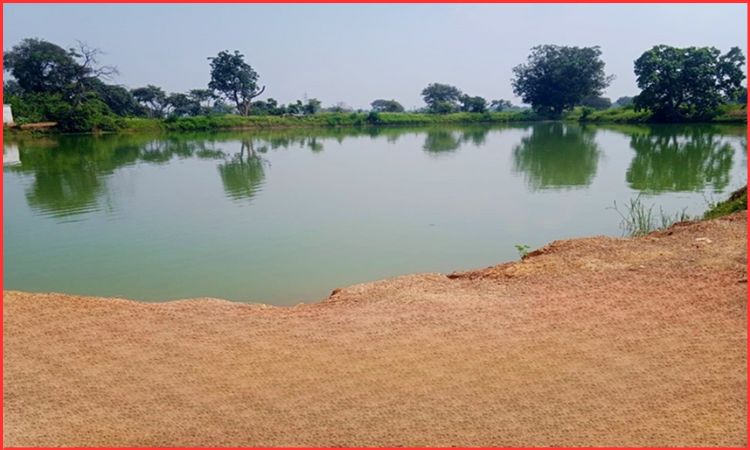
Ambuja Cements’ Bhatapara unit is tackling a real problem in Maldi village. The company has started deepening and rejuvenating a community pond that supplies water to Maldi and seven neighbouring villages. For these communities, this single water body is often the difference between having water during dry season and going without.
The move shows that cement companies are rethinking how they operate in rural areas. Rather than treating water scarcity as a side project, Ambuja is making watershed management central to how it engages with communities around its Chhattisgarh plant.
The Water Problem Is Getting Worse
Villages in the Baloda Bazaar-Bhatapara region face a consistent problem. Ponds keep drying up faster as populations grow and farming demands more water. When summer arrives, shallow ponds disappear entirely. Families and farmers depend almost completely on seasonal rainfall and whatever water bodies exist.
Local authorities occasionally dredge the ponds, but that only works for a while. The real issue is that the ponds simply aren’t deep enough to hold water through the dry months. Ambuja decided to fix the underlying problem instead of just doing temporary cleanup work.
How the Project Actually Works
The company is deepening the pond and reshaping its bottom and sides to hold more water. Better shape means water stays in the pond longer instead of evaporating quickly. Monsoon runoff gets captured more efficiently. The result should be water lasting through more months of the year instead of drying up by June.
Ambuja already did this same work in Magarway village. That pond now holds over 3,600 cubic metres of water and stays full for six to eight months. The Maldi project is following the same playbook.
The company worked with local village leaders and district officials to plan the work. This wasn’t something Ambuja decided and imposed. Local people had a say in how it was designed.
Why Companies Actually Care About This
It might seem like pure charity, but cement manufacturers have real business reasons to care about water in surrounding villages. When communities don’t have water, they get angry. Angry communities make it harder for factories to operate. They protest, block access roads, and create problems that disrupt production.
Ambuja also benefits indirectly. When groundwater gets recharged properly, it helps the plant’s own water supply. Better community relations mean fewer conflicts and regulatory hassles. The company can expand more easily if villages see it as a partner instead of just a factory taking resources.
Ambuja, which is now owned by Adani Group, has made water management a priority across all its plants. The Bhatapara facility already uses water efficiently and actually puts back more water than it takes. Extending that thinking to nearby villages makes the story consistent.
This Model Can Spread
If the Maldi pond works as expected, Ambuja could do the same thing at other locations. The company already runs similar water projects in multiple states. The model is straightforward enough to repeat.
For other cement companies facing pressure about water use, this offers a proven approach. You can show communities that you’re solving their water problems, not creating them. You can point to actual results. Regulators like seeing measurable outcomes.
What This Really Means
Ambuja is essentially saying that operating successfully in rural India means being genuinely useful to the villages around your factory. You can’t just take resources and ignore what’s happening outside your gates. That approach doesn’t work anymore.
The Maldi project is part of a bigger strategy. The company is linking water security, agriculture and community survival. If communities have reliable water, farmers do better. When farmers do better, the region becomes more stable. When the region is stable, the factory can operate without constant conflict.
For large Manufacturers in water-stressed areas, this isn’t optional charity work. It’s how you actually stay in business long term. You either become part of the solution or you become part of the problem. Ambuja is choosing the former.