(Image Source: Shutterstock)
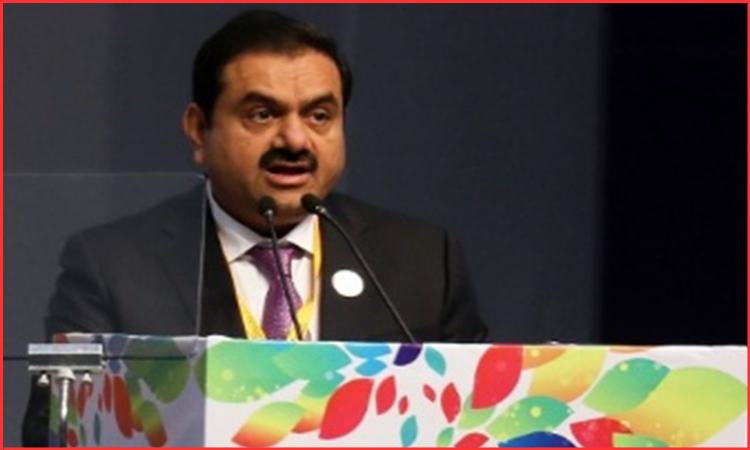
Gautam Adani has put a massive number on the table. The chairman of Adani Group announced on Tuesday that his company will invest over $75 billion in the energy transition space over the next five years. That’s not theoretical money or vague commitments. That’s actual capital flowing into renewable energy, grid infrastructure, and storage systems right now.
He announced the 100th anniversary celebration of the Indian Institute of Technology’s School of Mines in Dhanbad. The timing and venue were deliberate. Adani was speaking to students and academics who understand that energy infrastructure shapes entire economies.
What the Money Actually Buys
The investment breaks down across several critical areas. Adani Green Energy plans to put $21 billion into scaling renewable capacity to 50 gigawatts by 2030, up from 14.2 gigawatts currently. Adani Power is committing $22 billion to roughly double its thermal power capacity from 17.6 gigawatts to 41.9 gigawatts over the same period. Adani Energy Solutions is investing $17 billion to build out transmission lines from 19,200 kilometers today to 30,000 kilometers by 2030. But here’s what matters most: the company is already delivering. At Khavda in Gujarat, Adani is building the world’s largest renewable energy park across 520 square kilometers. The first 10 gigawatts are already commissioned. By 2030, the entire facility will generate 30 gigawatts of clean energy. That’s enough electricity to power more than 60 million homes annually.
The company just announced something equally important. It’s entering battery energy storage at a massive scale with a 1,126 megawatt project that will be completed by March 2026. This will be the largest battery storage installation in India. The group plans to scale battery capacity to 50 gigawatts over five years.
Why This Matters for India
India faces a genuine energy paradox. The country is the world’s third-largest electricity consumer, yet per capita consumption remains tiny. The average Indian uses less than 1,400 kilowatt-hours annually compared to the global average, half of that in America, and one-fifth of Europe. India needs vastly more power to lift living standards.
Simultaneously, India has committed to a dramatic energy transition. Over 50 percent of the country’s installed electricity generation capacity now comes from non-fossil sources. That’s five years ahead of India’s own targets and represents the fastest energy transition any major economy has executed.
Adani’s investment reflects confidence that both trends are real and durable. The company is betting that India will need hundreds of gigawatts of new capacity over the next decade and that renewables and storage will form the backbone of that growth.
The Global Context
Adani positioned this investment within a larger narrative about what he calls the “largest industry of our time.” The global green energy transition is worth trillions of dollars over the coming decades. It will fuel electricity-based manufacturing, green steel, green fertilizers, hydrogen ecosystems, and the infrastructure that artificial intelligence and digital economies depend on.
His announcement also included a pointed response to criticism from the recent COP-30 climate conference in Brazil. A report there downgraded India’s sustainability ranking, arguing that India lacks a coal-exit timeline and continues auctioning coal blocks.
Adani countered that perspective. India’s per capita emissions are among the lowest globally. Over 200 years of industrial activity, India is responsible for just four percent of cumulative global emissions compared to thirteen percent from Europe, nineteen percent from America, and twenty percent from China.
The Practical Reality
What stands out about the Adani announcement isn’t just the size. It’s the specificity. The company has identified exact projects, deployment timelines, and capacity targets. Battery storage capacity to 15 gigawatts by 2027. Transmission lines extend to 30,000 kilometers by 2030. Renewable capacity to 50 gigawatts by the same year.
These aren’t aspirational goals or marketing statements. They’re capital deployment commitments from one of India’s largest business groups. The company is essentially saying it believes India’s energy transition is an actual economic opportunity large enough to justify $75 billion in real investment over five years.
For the Indian economy, that’s a significant vote of confidence.