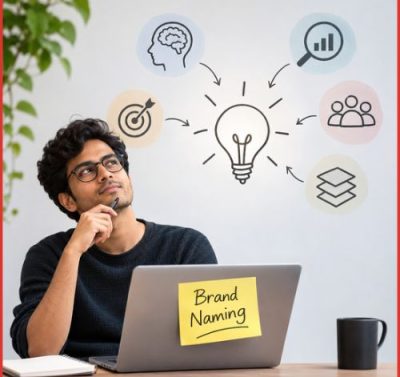
Who decided to name a food delivery service Swiggy? Or a supermarket chain, DMart? How do people come up with names that millions of people use in everyday conversation?
Most people know about the services offered by copywriters, graphic designers, and other marketing specialists. However, there is another form of creative work fewer people know about: brand naming.
Yes, many people actually make a living naming brands.
Coming up with a new word requires more thought and effort than putting familiar words together or inventing a word that no one has ever heard before․
A commercial brand naming service may spend a lot of time researching competitors’ names and pronunciations and consumer perceptions of different unfamiliar names․
So, what is this profession, and what services does it offer? Why are Indian companies hiring them? Let’s find out.
Brand Naming As a Profession
Brand naming is traditionally a service provided by advertising and copywriting agencies and brand consulting firms․ Now, many agencies offer it as a standalone service that focuses on creating and evaluating names.
India has already seen examples of this specialty․
But who qualifies to do brand naming?
The work of a brand namer includes:
- Linguistics: Familiarity with the etymology, pronunciation, and usage of words.
- Consumer psychology: Studying how consumers memorize and respond to names․
- Brand strategy: Linking a brand’s name to its positioning․
- Cultural awareness: Knowledge of how language is used in particular markets․
- Creative writing: Combining words in new and imaginative ways․
There are no formal education or certification requirements for this profession․ Common professionals include those with backgrounds in marketing‚ communications‚ English‚ creative writing‚ and other related areas․
So‚ What Does a Brand Namer Do?
The interesting thing is that recommending names is a small part of the overall job.
Naming professionals need to know about your business before actual creative work starts.
What products does the company offer? Who are its competitors? What are customers’ needs? How does the company want to be perceived: friendly, old-fashioned, modern, or different?
For example, a business dealing in indoor adventure parks may want to include movement, adventure, or exploration in its company name.
Then the search for the names begins․
Here is how it’s done:
- Set limits: Consider things such as dependability‚ work rate‚ accuracy‚ and willingness to work․
- Explore vocabulary: Examine possible etymologies and other vocabulary terms, grammatical patterns, and forms․
- Build a candidate pool: Come up with multiple name options, not just slight variations of one idea.
- Compare alternatives: Think about aspects like meaning, interference from other words, pronunciation, and other practical considerations.
- Suggest a rationale: Explain the benefits of reviewing other alternatives․
For instance, Mumbai-based company naming agency Tiepograph has helped clients in India develop more than 500 brand names. Tiepograph’s services for developing brand names offer research into clients’ industries and market positions. It has a database of more than 7,500 morphemes, or the basic building blocks of words, that explore new naming possibilities.
There Is More Science Behind Words Than Many People Realize
Some of the most interesting research in the study of language focuses on the processing of unfamiliar words․
A 2024 study in the Journal of Consumer Psychology looked at phonesthemes‚ or recurring sound-based combinations that are associated with particular meanings.
Consider English words that begin with “sn,” such as “sniff,” “sneeze,” and “snort.” Many of these words are associated with the nose or breathing․
It was found that invented brand names with appropriate phonesthemes led consumers to have positive attitudes toward products when the meanings reflected the products.
This proves that a fictional name does not necessarily mean it’s meaningless․
Some sounds are similar to words customers may know․
For brand namers, linguistic analysis can help with:
- Whether the name should convey gentleness or strength.
- Whether unfamiliar sounds convey the preferred identity․
- Whether the sound of the name fits the product category․
- Whether customers would see it differently from the intended meaning․
However, associations between sounds and meanings differ across languages and regions. The same sounds might have other associations in other languages and cultures․
This interest in common language use has also motivated Hitesh Talreja, founder of Tiepograph․ His love for words has led him to master how people speak, interpret unfamiliar sounds, or shorten coined terms.
This can help Indian business owners big time․ A business name that considers language is more likely to appeal to a larger group of people than just the business owner, particularly if it hopes to attract customers in other areas of the country.
Is It a Creative Profession or a Research Profession?
Perhaps the most interesting answer is that it’s both.
A professional namer needs the creativity to develop unexpected possibilities and the discipline to reject ideas that don’t serve the business.
The two sides of the profession are closely connected.
| Creative responsibility | Research responsibility |
| Explore new word combinations | Examine category conventions |
| Develop possible naming territories | Understand business positioning |
| Find interesting linguistic associations | Investigate cultural interpretation |
| Produce distinctive candidates | Evaluate practical limitations |
| Communicate the naming idea | Explain the reasoning behind it |
This also changes how the work should be evaluated. A founder may ask for fifty name suggestions for their brand, but that doesn’t depict how carefully they have been curated to reflect the brand identity. In this case, maybe a list of fewer but carefully shortlisted names may be more valuable.
What If a Customer Changes the Name?
A brand naming professional recommends words for customers to use․ But customers decide how to use those words․
Some names are abbreviated․ Some get nicknames․ Some phrases get associated with certain companies even after those companies change their products or services․
A 2026 article in Psychology & Marketing discusses Nominal Scaffolding Theory, studying the effects of brand names on consumer memory over time.
The researchers used “X, formerly Twitter, as an example of how an established brand identity can still remain relevant after a name change.
It highlights some practical issues with naming:
- Will customers shorten the name?
- Can it still be relevant if the company diversifies?
- Is it recognizable without its original logo?
- Would renaming it later be confusing?
A professional namer chooses a word that people will use for many years․
This makes future value a crucial consideration, even if it is unclear what the future value of the brand will be․
Could Brand Naming Be a Recognized Career?
Professional naming is likely a smaller field than advertising‚ graphic design‚ and general marketing․
Still, the existence of specialist consultancies suggests that naming has developed beyond an occasional creative assignment.
The work of brand naming agencies such as Tiepograph illustrates how an interest in language can develop into a niche career.
With more than seven years of experience and a strong clientele of over 500 naming projects, it demonstrates how creativity, research, and market understanding can come together in a way many business professionals may not be aware of․
And unlike other creative professions, people sometimes adopt items related to the profession into general use.
That’s perhaps the most interesting feature of working in this profession․
Most consumers will never know who names their favorite brands․ But somewhere behind those words is a person who made a key decision about why a brand deserves that name.