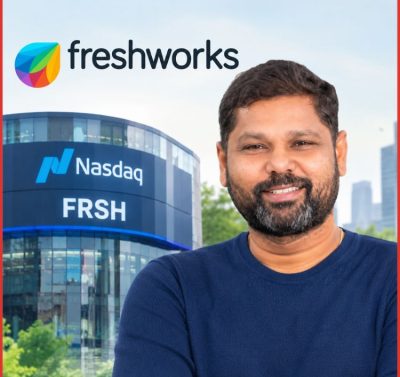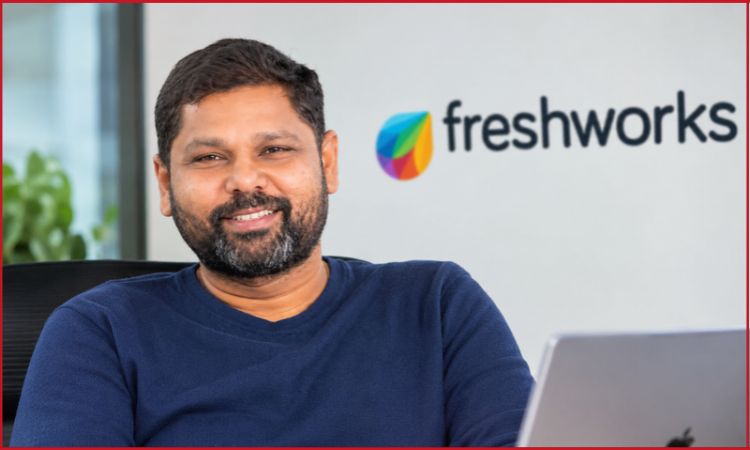
Building a global software company from Chennai once sounded far-fetched to most people watching India’s tech scene. Girish Mathrubootham didn’t think so. His decision to walk away from a comfortable corporate job and bet on a customer-support idea eventually grew into Freshworks, one of the country’s most talked-about SaaS companies. The Girish Mathrubootham Success Story isn’t really about a founder getting rich it’s about spotting a problem most people had already stopped noticing, then building something around it patiently enough that it eventually reached Nasdaq.
Quick Glance
| Aspect | Detail |
| Founder | Girish Mathrubootham |
| Company | Freshworks (originally launched as Freshdesk) |
| Founded | 2010, Chennai |
| Previous Employer | Zoho Corporation (then AdventNet); joined 2001 |
| Co-founder | Shan Krishnasamy |
| IPO | Nasdaq, September 2021, ticker FRSH |
| IPO Size | Approx. $1.03 billion raised |
| Valuation at IPO | Approx. $10.1 billion |
| Current Role | Executive Chairman (CEO transition to Dennis Woodside, May 2024) |
Who Is Girish Mathrubootham?
Before he became known as the face of Freshworks, Girish Mathrubootham spent nearly a decade at Zoho Corporation back when the company still went by the name AdventNet. He joined in 2001 as a pre-sales engineer and worked his way up to Vice President of Product Management within the ManageEngine division, spending years building helpdesk tools for enterprise customers. That stretch matters a lot to anyone trying to piece together the full Girish Mathrubootham biography, because it’s where he learned the product he’d eventually rebuild from scratch.
According to Freshworks’ own account of its founding, that early exposure to on-premise helpdesk software, combined with a front-row seat to the shift toward cloud computing, gave the Freshworks founder a head start most first-time entrepreneurs never get.
The Spark Behind Freshdesk
The origin story is almost anticlimactic for something that ended in a billion-dollar IPO. Mathrubootham was reading Hacker News nothing more dramatic than that when he came across a thread full of frustrated Zendesk customers reacting to a steep price hike. Most people would have scrolled past. He didn’t.
He’d spent years around helpdesk software and had already watched cloud-based tools start replacing clunky on-premise systems. So when he saw customers venting about pricing, he read it as an opening rather than noise.
Freshworks has described this moment as the point where he realized his own industry knowledge lined up almost perfectly with where the market was heading.
It’s a small, easy-to-miss detail in the wider Girish Mathrubootham career story, but it’s also one of the earlier data points anyone assembling a full Girish Mathrubootham biography tends to point back to it’s the moment that actually got the company started.
Leaving a Comfortable Job to Bet on Freshdesk
Leaving a nine-year career at a company you know well is never an easy call, and Mathrubootham didn’t rush it. He and his former colleague Shan Krishnasamy spent nights and weekends testing the idea before either of them touched their resignation letters.
Freshworks’ internal history of the company notes that both co-founders resigned in October 2010 and started working on Freshdesk full-time from that point.
The earliest team was tiny a couple of developers, one designer, someone handling QA and support, and Mathrubootham running product while acting as CEO. There was no cushion of corporate resources behind them, just an idea, a handful of people, and a market they were fairly sure was underserved. For the Freshworks founder, this was the first real gamble of his career.
Why an Indian Startup Incorporated in the US
One detail that surprises people reading the Girish Mathrubootham business journey for the first time: Freshdesk was built and run out of India, yet incorporated in the United States almost from day one.
The reason wasn’t glamour it was payments. Recurring billing needed infrastructure that Indian payment processors couldn’t fully support at the time, and several of the options the team wanted required a US bank account just to get started. So they incorporated the company in the US while keeping the team and the day-to-day work in India.
That structure ended up shaping how the company scaled internationally later on, long before anyone was talking about a Freshworks Nasdaq IPO.
Getting the First Customers Without a Big Budget
Freshdesk’s early growth wasn’t fueled by heavy ad spend. The team wanted proof, not vanity numbers, so they built a simple site with a beta signup form and tested small budgets across Google AdWords, Facebook and LinkedIn.
By Mathrubootham’s own account, roughly $350 to $400 in ad spend brought in more than 150 legitimate signups. Rather than celebrating the number, the team studied who those signups actually were, looking for patterns in the kind of businesses that cared enough to sign up.
That habit chasing signal over spend is one of the more practical lessons buried inside the Girish Mathrubootham career story, and one of the more overlooked chapters in the Girish Mathrubootham business journey, especially for founders who assume growth needs deep pockets from day one.
From Freshdesk to Freshworks
The product didn’t stay a single helpdesk tool for long. As the company built out products for customer engagement and employee experience, the Freshdesk name stopped covering everything it did, and the business rebranded as Freshworks.
What began as one support-ticket tool turned into a broader SaaS platform used by businesses well outside India. Freshworks’ own company profile credits Mathrubootham with taking the business from a raw idea to a Nasdaq-listed company in roughly a decade, backed along the way by investors including Accel, Sequoia, Tiger Global Management and CapitalG.
That expansion is a big part of why the Freshworks SaaS unicorn story gets brought up so often in conversations about Indian tech.
Building Toward a SaaS Unicorn
Freshworks didn’t build for the Indian market and hope the rest of the world noticed later it aimed globally almost from the start. That’s not a small distinction. SaaS products can, in theory, sell the same core software to a business in Ohio and a business in Pune without reinventing anything for either market, and Freshworks leaned into that.
McKinsey pointed to Freshworks as a standout example of India’s product-startup ecosystem maturing, noting that the company had grown to around 4,300 employees and reached a $10.1 billion valuation after going public.
That’s the backbone of the Freshworks SaaS unicorn story not just the valuation number, but proof that a company built in Chennai could compete for customers anywhere in the world. For the Freshworks founder, that global-first mindset ended up mattering more than any single product feature.
The Freshworks Nasdaq IPO
September 2021 is the date most people associate with this whole story. Freshworks went public on Nasdaq under the ticker FRSH, offering 31.35 million Class A shares priced at $36 each, including the underwriters’ full option to purchase additional shares.
The Freshworks Nasdaq IPO brought in roughly $1.03 billion and valued the company at around $10.1 billion, based on McKinsey’s reporting.
What made it bigger than the numbers is that Freshworks became the first India-born SaaS company to list on a US exchange something Freshworks itself has called a milestone for India’s broader startup ecosystem, not just for one company. For the Freshworks founder, the Nasdaq listing was years of product work finally converging into a single moment.
Life After the IPO
Going public wasn’t the finish line for the Girish Mathrubootham business journey. In May 2024, Freshworks announced that Mathrubootham would step back from the CEO role and become Executive Chairman, handing day-to-day leadership to Dennis Woodside as CEO and President. He stayed on as chairman of the board.
Freshworks’ leadership page today lists him as Founder and Executive Chairman, noting that he now advises more than 60 companies alongside doing venture investing.
His focus has clearly shifted from running one company day-to-day to supporting a much wider set of founders trying to do something similar. It’s a fitting next chapter for the Girish Mathrubootham biography, one built around mentorship rather than daily operations.
Conclusion
The Girish Mathrubootham Success Story holds up well because it doesn’t lean on luck or timing alone. He noticed a real complaint, matched it against experience he already had, and built a company patient enough to grow for more than a decade before going public. Along the way, Freshworks became one of the clearest examples of what a Freshworks SaaS unicorn built from India can look like once it stops treating the local market as its ceiling. The Freshworks Nasdaq IPO wasn’t the beginning or the end of that journey just the moment the rest of the world started paying closer attention to what had already been built quietly, year after year, out of Chennai.
Frequently Asked Questions
1. Who is Girish Mathrubootham?
Girish Mathrubootham is the founder and Executive Chairman of Freshworks. He started the company in 2010, shortly after leaving Zoho, and originally launched it as Freshdesk.
2. What is Girish Mathrubootham best known for?
He’s best known for building Freshworks from a Chennai-based startup into a global SaaS company that listed on Nasdaq in 2021.
3. When was Freshworks founded, and under what name?
Freshworks launched in 2010 as Freshdesk, before later rebranding as its product lineup expanded beyond helpdesk software.
4. When did the Freshworks Nasdaq IPO happen?
The Freshworks Nasdaq IPO took place in September 2021, with shares trading under the ticker FRSH.
5. Is Freshworks an Indian company?
Freshworks has Indian origins it was founded in Chennai but the company is headquartered in San Mateo, California, and was incorporated in the US early in its history while keeping its operations in India.
6. Is Girish Mathrubootham still involved with Freshworks?
Yes. After stepping down as CEO in May 2024, he remains involved as Executive Chairman and continues advising other companies and investing in startups.