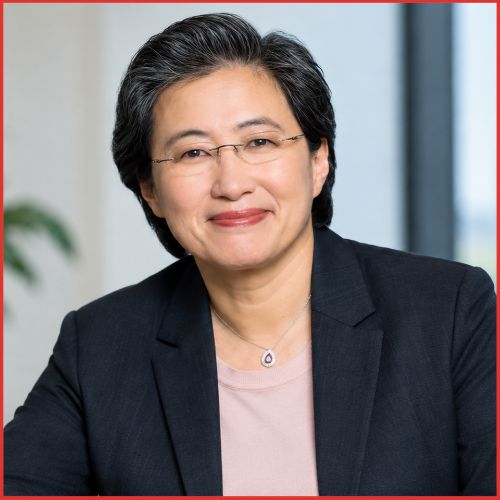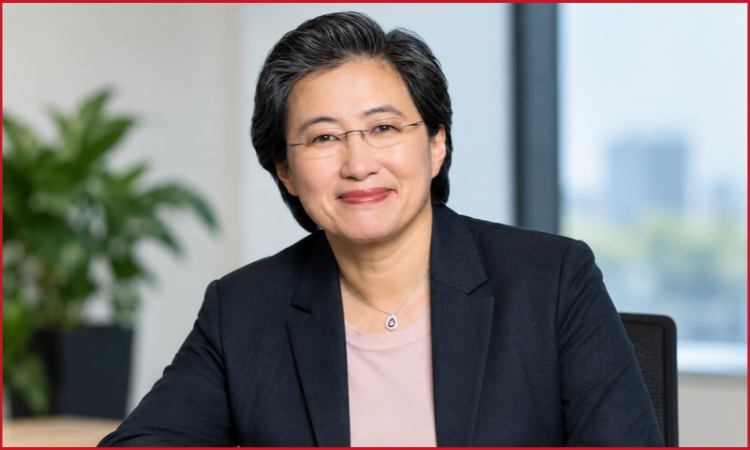
In October 2014, when Lisa Su was named chief executive of Advanced Micro Devices, AMD’s stock traded close to $3, and several Wall Street analysts openly questioned whether the company would survive Intel’s dominance. Twelve years later, AMD’s shares trade in triple digits, its market capitalisation runs into hundreds of billions of dollars, and the engineer who rebuilt it has become one of the most closely tracked executives in global technology. Lisa Su net worth 2026 estimates now run into the billions of dollars almost entirely a reflection of the AMD stock she has earned as chair, president and CEO, rather than inherited or externally invested wealth. This Lisa Su biography traces her full arc: her education, her rise through engineering ranks, Lisa Su’s salary and disclosed compensation at AMD, and the Lisa Su leadership journey that turned a near-bankrupt chipmaker into an AI-era heavyweight.
For studying what disciplined, engineering-led leadership actually looks like in practice, Lisa Su’s career and compensation record together form one of the most fully documented Lisa Su success story narratives in modern corporate turnarounds.
Quick Glance
| Attribute | Detail |
| Full Name | Lisa Tzu-Fang Su |
| Born | November 7, 1969, Tainan, Taiwan |
| Nationality | American (Taiwan-born) |
| Education | B.S., M.S. and Ph.D. in Electrical Engineering, MIT |
| Current Role | Chair, President and CEO, Advanced Micro Devices (AMD) |
| Became CEO | October 2014 |
| Became Chair | February 2022 (after the Xilinx acquisition closed) |
| FY2025 Total Compensation | Approx. $55.16 million (per AMD’s proxy filing) |
| Estimated Net Worth (2026) | Roughly $1.3–$2.9 billion (estimate; mainly AMD stock) |
| Known For | Turning AMD from near-collapse into a top global chipmaker |
Early Life and Education: The Roots of the Lisa Su Biography
Lisa Su was born on November 7, 1969, in Tainan, Taiwan. Her family emigrated to the United States when she was two or three years old and settled in Queens, New York. Her father worked as a statistician and her mother trained as an accountant before starting her own business an upbringing that, by Su’s own accounts, prized precision, discipline and measurable results.
She attended the Bronx High School of Science, one of New York City’s most selective public schools, before enrolling at the Massachusetts Institute of Technology (MIT). At MIT, Su completed a bachelor’s, a master’s and a doctorate, all in electrical engineering an unusually deep technical foundation for an executive who would go on to run a hardware company competing at the frontier of chip design. Her doctoral research focused on silicon-on-insulator semiconductor technology, a field she would return to throughout her early engineering career. This academic grounding is a recurring theme in every Lisa Su biography: few chief executives in any industry hold a doctorate in the core technology their company sells.
Lisa Su Career Journey: From Texas Instruments to AMD CEO
No Lisa Su biography is complete without tracing the engineering roles that built her technical authority long before she became Lisa Su, AMD CEO. The Lisa Su career story below moves chronologically through four companies and more than three decades in semiconductors.
Su’s professional career began in 1994 at Texas Instruments, where she worked in the company’s Semiconductor Process and Device Center. A year later, she moved to IBM, where she would remain for thirteen years. It was at IBM that Su first built a reputation beyond the laboratory: she played a central role in developing copper interconnect technology, replacing the aluminium wiring long used inside chips and enabling meaningfully faster processors an innovation that became an industry standard. She rose to vice president of IBM’s Semiconductor Research and Development Center, overseeing the company’s silicon technology roadmap, and later founded IBM’s Emerging Products division, whose work fed into the Cell microprocessor used in the Sony PlayStation 3.
In 2007, Su joined Freescale Semiconductor as chief technology officer, later taking charge of its networking and multimedia business as senior vice president and general manager. She is widely credited with helping stabilise Freescale ahead of its 2011 public listing.
Su joined AMD in January 2012 as senior vice president and general manager of global business units, a role centred on converting AMD’s technology roadmap into revenue. She was promoted to chief operating officer in mid-2014 and, within months, to president and chief executive officer in October 2014 becoming Lisa Su, AMD CEO, and the first woman to lead a major semiconductor company. In February 2022, following AMD’s completed acquisition of programmable-chip maker Xilinx, the board named her chair as well, consolidating her authority over the combined company. This single decade from senior vice president to chair is the fastest-moving stretch of the entire Lisa Su career timeline.
| Period | Career Milestone |
| 1994 | Joins Texas Instruments as a process engineer. |
| 1995–2007 | Thirteen years at IBM; helps pioneer copper interconnect chip technology and later leads the Emerging Products division. |
| 2007–2011 | Chief technology officer, then business-unit head, at Freescale Semiconductor. |
| January 2012 | Joins AMD as senior vice president, global business units. |
| Mid-2014 | Promoted to chief operating officer of AMD. |
| October 2014 | Appointed president and CEO of AMD. |
| October 2020 | AMD announces a $35 billion all-stock acquisition of Xilinx. |
| February 2022 | Named chair of AMD’s board as the Xilinx deal closes. |
| 2024 | Named Time magazine’s CEO of the Year. |
The AMD Turnaround: Business Model and the Lisa Su Success Story
AMD designs microprocessors, graphics chips and, increasingly, AI accelerators, but manufactures almost none of them itself. Production is outsourced chiefly to foundry partners such as TSMC, which frees AMD’s capital for design and engineering rather than factories. When Su took over in 2014, AMD was burning cash, carrying heavy debt, and losing ground to Intel across both PCs and servers. She narrowed AMD’s focus to three bets: high-performance CPUs (the Ryzen and EPYC families), competitive graphics processors, and semi-custom chips for gaming consoles such as the Xbox One and PlayStation 4. The console business supplied steady cash flow while Ryzen and EPYC rebuilt AMD’s technical credibility against Intel.
The 2020 announcement and 2022 completion of AMD’s $35 billion all-stock acquisition of Xilinx extended the company into programmable FPGA chips and adaptive computing, markets Su has said represent a combined opportunity of roughly $135 billion. More recently, AMD’s MI300 and MI450-series accelerators, together with its Helios rack-scale systems, have positioned the company as the most credible alternative to Nvidia in AI data-centre chips the single largest growth story in semiconductors today, the backbone of the broader Lisa Su success story, and the backdrop against which most current discussion of Lisa Su net worth 2026 is framed.
The Lisa Su Leadership Journey: Strategy and Decision-Making Style
Colleagues and industry coverage consistently describe Su’s leadership as engineering-first and data-driven rather than built on showmanship. A few threads recur across the Lisa Su leadership journey:
- Focus over sprawl: rather than chasing every market, she narrowed AMD’s roadmap to a small number of product lines it could realistically win, then reinvested profits into R&D as those bets paid off.
- Publicly committed roadmaps: AMD under Su has repeatedly laid out multi-year chip roadmaps and then delivered on them, building trust with customers such as Microsoft, Sony, Meta and Oracle.
- Pay tied to performance: the bulk of Su’s own compensation vests only if AMD’s stock price and earnings hit specific multi-year targets, aligning her incentives directly with shareholders.
- Calm crisis management: she took charge of a company some analysts expected to fail, and chose steady debt reduction and product discipline over dramatic restructuring headlines.
Measurable, Verifiable Achievements
- AMD’s share price has risen from roughly $3 in October 2014 to well over $100 in 2026 among the largest turnarounds in large-cap technology history.
- AMD’s market capitalisation has grown from under $2 billion in 2014 to more than $200 billion.
- Completed the $35 billion Xilinx acquisition in 2022, AMD’s largest deal to date.
- Named Time magazine’s CEO of the Year in 2024.
- Recipient of the IEEE Robert N. Noyce Medal and the Semiconductor Industry Association’s highest industry honour.
- Regularly featured on Forbes’ World’s Most Powerful Women list.
- First woman to lead a major semiconductor company.
Lisa Su AMD CEO Salary: Compensation Breakdown
AMD discloses Lisa Su’s salary annually in its proxy statement filed with the U.S. Securities and Exchange Commission. According to that filing, her compensation for fiscal year 2025 totalled approximately $55.16 million, up sharply from fiscal 2024, when her total compensation was reported at roughly $31 million. The structure of Lisa Su’s salary is deliberately weighted toward long-term equity rather than fixed cash about three-quarters of her equity award is performance-based restricted stock that vests only if AMD hits specific share-price and earnings targets over a multi-year window, with the remainder in time-based stock options. As Lisa Su, AMD CEO, she remains the only AMD executive with a base salary above $1 million.
| Component (FY2025) | Amount (USD) |
| Base Salary | $1.29 million |
| Annual Cash Bonus | $3.13 million |
| Stock Options | $8.95 million |
| Stock Awards (RSUs/PRSUs) | $41.67 million |
| Other Compensation | $0.12 million |
| Total Compensation | $55.16 million |
Figures are drawn from AMD’s SEC proxy disclosures as reported by salary.com and Bullfincher; actual realised value depends on when and whether performance-based awards ultimately vest. Every figure quoted here as Lisa Su salary data is company-disclosed, not estimated.
Lisa Su Net Worth 2026: Compensation, Ownership and Estimated Wealth
Discussions of Lisa Su net worth 2026 often blur four separate things her annual pay, her AMD shareholding, AMD’s company valuation, and her personal estimated wealth. It is worth separating them:
- Annual compensation: disclosed and audited each year in AMD’s proxy statement approximately $55 million for fiscal 2025.
- Direct ownership: SEC Form 4 filings tracked by insider-trading platforms such as GuruFocus show Su holding roughly 2.87 million AMD shares as of mid-2026, worth an estimated $1.4 billion at prevailing prices, alongside a small stake in Analog Devices, where she also sits on the board.
- Company valuation: AMD’s own market capitalisation now well above $200 billion is a measure of the company’s worth, not Su’s personal wealth, though her equity-heavy pay ties the two closely together.
- Estimated personal net worth: financial trackers place the figure anywhere between roughly $1.3 billion and $2.9 billion depending on the date and the tracker used, since almost all of it is unrealised AMD stock whose value moves with the share price. This should be treated strictly as an estimate rather than an audited figure, since no independent regulator formally certifies personal net worth.
What is not in dispute is the source: Su has made relatively few open-market stock sales relative to her total holding, and almost none of her wealth comes from outside investments, crypto assets or family inheritance. Her fortune has risen and fallen with AMD’s share price since 2014, which is precisely the alignment her compensation structure was designed to create.
What Makes the Lisa Su Leadership Journey Unique?
- Engineer-CEO: she holds a Ph.D. in the exact technology her company sells rare among large-cap technology chief executives, and a detail every Lisa Su biography highlights.
- A genuine first: she remains the first woman to run a major semiconductor company, in an industry still overwhelmingly led by men.
- Four companies, one specialism: more than three decades spent entirely within semiconductor engineering and strategy a Lisa Su career built on depth, not lateral moves across industries.
- A documented family link to a rival: Su and Nvidia CEO Jensen Huang are reported to be first cousins once removed, meaning two of the most consequential rivals in the AI chip race share family roots in Tainan, Taiwan.
- A full-cycle turnaround: few CEOs take a company from the edge of bankruptcy to a top-three global position in the same product category within one continuous tenure.
Conclusion
Lisa Su’s success story is unusual not because of any single dramatic decision, but because of consistency sustained over more than a decade a rare quality in an industry defined by rapid product cycles and short executive tenures. From a struggling, debt-laden chipmaker in 2014 to a company at the centre of the global AI infrastructure build-out, AMD’s rise under her leadership mirrors her own Lisa Su leadership journey. Lisa Su net worth 2026 figures will keep moving with AMD’s stock price, and Lisa Su’s salary will keep being recalibrated against performance targets each year. But the underlying lesson for founders, CXOs and investors following the Lisa Su career and studying her Lisa Su biography is steadier than any single number: technical depth, disciplined focus, and compensation aligned with long-term outcomes can rebuild a company that the market had already written off. That, ultimately, is why Lisa Su, AMD CEO, remains one of the most instructive leadership stories in business today.
Frequently Asked Questions
1. What is Lisa Su’s net worth in 2026?
Estimates place Lisa Su’s net worth in 2026 in the range of roughly $1.3 billion to $2.9 billion, depending on the tracker and date used. The figure is an estimate, not an audited number, since nearly all of it sits in unrealised AMD stock.
2. What is Lisa Su’s salary at AMD?
Her fixed base salary is about $1.29 million, but her total annual compensation including bonus and stock awards reached approximately $55.16 million in fiscal 2025, according to AMD’s SEC proxy filing. Lisa Su’s salary structure leans heavily on performance-linked equity rather than cash.
3. How did Lisa Su become AMD CEO?
She joined AMD in January 2012 as senior vice president of global business units, was promoted to chief operating officer in 2014, and was named president and CEO in October 2014 after a rapid, execution-focused rise through the company the pivotal turn in the Lisa Su career timeline.
4. What is Lisa Su’s educational background?
She holds a bachelor’s, master’s and Ph.D. in electrical engineering, all from the Massachusetts Institute of Technology (MIT), after attending the Bronx High School of Science in New York a foundational chapter in her biography.
5. Is Lisa Su related to Nvidia CEO Jensen Huang?
Yes. Multiple reports describe Su and Huang as first cousins once removed, with family roots in Tainan, Taiwan, though the two built entirely separate careers and now lead rival companies.
6. Why is the Lisa Su leadership journey seen as a success story for CXOs?
The Lisa Su leadership journey combines deep technical credibility, a documented full-cycle corporate turnaround, and a compensation structure tightly linked to long-term performance a combination business schools and boardrooms frequently cite as a model for executive accountability, and a large part of why her success story keeps resurfacing in CXO and investor discussions.