Abbas Sajwani did not begin his career by developing multimillion dollar villas in Dubai. Before AHS Properties became associated with ultra luxury real estate, he was involved in smaller businesses, investments and property transactions.
Today, that scale is very different. Forbes estimated Sajwani’s real time net worth at about $1.9 billion in August 2026, while Forbes Middle East placed him at No. 24 on its 2026 list of the richest people in Arabs. He was also identified as the youngest Arab billionaire on that ranking.
The numbers are striking, but they only tell part of the story. Sajwani’s business career has moved through several distinct stages: small operating businesses, stock market investments, luxury villa transactions, land acquisitions and, eventually, large residential and commercial developments.
AHS Properties sits at the centre of that progression.
Who is Abbas Sajwani?
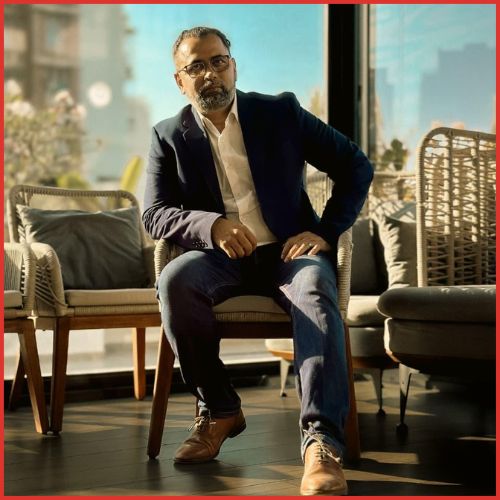
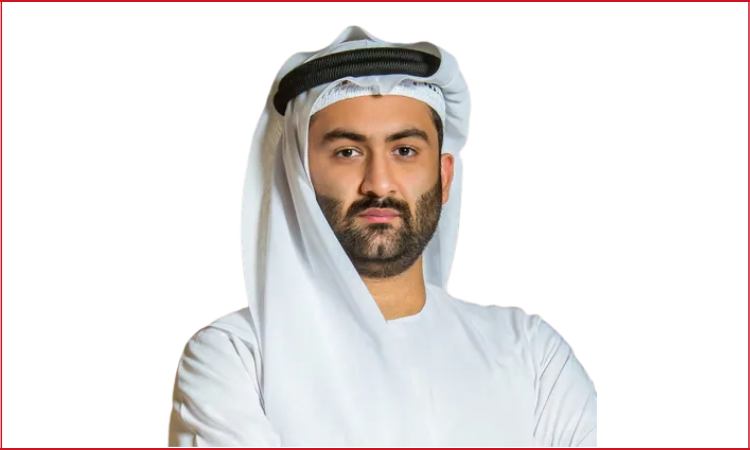
Abbas Sajwani is an Emirati entrepreneur, investor and the founder and CEO of AHS Properties, a Dubai based developer focused on ultra luxury real estate.
He is also the son of Hussain Sajwani, the founder and chairman of DAMAC Properties. That family connection gave Abbas Sajwani early exposure to Dubai’s property business, although his own career included businesses and investment activity outside the family company.
Forbes has reported that Sajwani previously operated an internet café and a car wash. He also traded shares of Simon Property Group between 2020 and 2021.
His personal career timeline states that he established AHS Group in 2017, when he was 18. AHS Properties itself was founded in 2021.
That distinction matters. His property development business did not appear fully formed from the beginning. It developed over several years, with each stage involving larger assets and more complex transactions.
Abbas Sajwani’s Early Career and Business Ventures
The early businesses were small compared with the properties AHS Properties handles today.
An internet café and a car wash do not require the same capital or development expertise as a luxury residential tower. They do, however, involve basic business decisions that remain relevant at a larger scale: finding customers, managing costs, understanding demand and deciding where capital should go.
Sajwani’s own career timeline places the creation of AHS Group in 2017. At that point, the group served as a wider base for investments and business ventures.
His route into real estate therefore appears to have been gradual rather than immediate. He first dealt with smaller businesses, then financial investments, and eventually moved toward property transactions where the value of individual assets was considerably higher.
From Entrepreneurship to Investing
The stock market became another part of Sajwani’s early career.
Forbes reported that he made a small fortune trading Simon Property Group shares between 2020 and 2021. Simon Property Group is one of the world’s major owners and operators of retail real estate, so the investment was also closely connected to the sector in which Sajwani would later build his business.
There is a limit to what can be concluded from that period. Sajwani’s own descriptions of his investing approach emphasise timing and patience, but those are his stated views rather than an independent measure of his investment performance.
What is clear is that he was already buying and selling assets before AHS Properties moved into large scale development.
That experience became relevant when the size of his property transactions increased. Real estate development involves many of the same basic questions an investor faces: what to buy, when to buy it, how much capital to commit and what might increase the value of an asset.
The Founding of AHS Properties
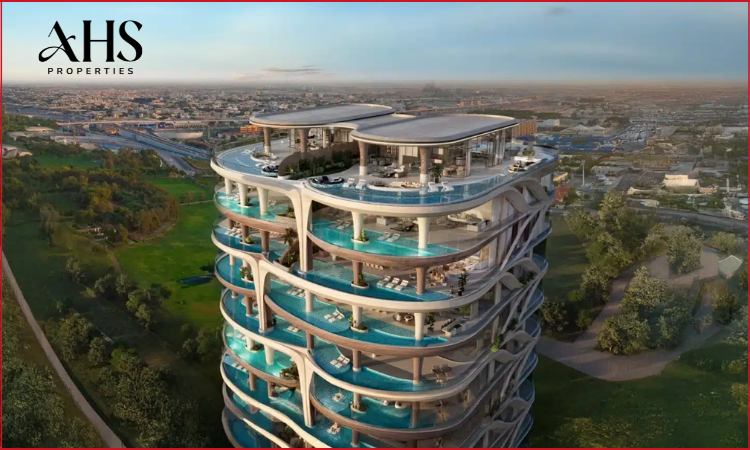
Sajwani founded AHS Properties in 2021 with a narrow focus: Dubai’s ultra luxury property market.
The decision put the company into a segment where the value of a small number of properties can be very high. Instead of trying to build a broad residential portfolio, AHS Properties concentrated on luxury homes and premium locations.
Its early projects were closely associated with parts of Dubai already known for high value residential property, including Palm Jumeirah and Emirates Hills.
The choice of segment also shaped the company’s development style. At this end of the market, buyers are not simply purchasing square footage. Architecture, privacy, waterfront access, views, finishes and the scarcity of the location all affect the value of a property.
AHS Properties built its business around those characteristics.
How Abbas Sajwani Built AHS Properties
The first property deals were considerably smaller in scale than the projects associated with the company today.
Starting with Luxury Villas
AHS Properties initially bought and renovated high end villas in Emirates Hills and Palm Jumeirah.
Sajwani has said the company started with five villas in six months. The properties were renovated and sold, giving the business a relatively direct way to enter Dubai’s luxury market.
The model was simple. Buy an expensive property, improve it and sell it at a higher value.
That approach also limited the complexity of the company’s earliest projects. Renovating an existing villa is very different from assembling land, obtaining approvals and delivering a large residential development.
The villa transactions gave AHS Properties experience with luxury buyers and premium property markets before the company moved into larger developments.
Moving into Land and Towers
The business changed direction in 2022.
After selling the villas, Sajwani began acquiring land along the Dubai Water Canal for residential towers. This was a much larger undertaking than renovating individual homes.
The difference was more than scale.
With a development project, the company had to make decisions around land, design, construction and the final positioning of the building. Instead of simply improving an existing property, AHS Properties was now creating new real estate assets.
That shift became one of the most important steps in the company’s growth.
The company’s project portfolio later expanded to developments such as One Canal, One Crescent, Casa Canal and Casa AHS. These properties have been marketed around large living spaces, privacy, architecture and prime waterfront locations.
Building a Position in Dubai’s Ultra Luxury Market
There is a fairly consistent pattern across AHS Properties’ portfolio.
The company has concentrated on locations where land is scarce and property values are already high. Palm Jumeirah and the Dubai Water Canal are not interchangeable with ordinary residential districts. They give a developer access to a small but high spending customer base willing to pay substantial premiums for location and design.
This is where Sajwani’s business strategy becomes easier to see through the actual transactions.
AHS Properties did not attempt to build hundreds of thousands of standard apartments. It pursued fewer, higher value developments and positioned them at the upper end of Dubai’s real estate market.
By March 2026, Forbes Middle East reported that AHS Properties had more than 929,000 square metres of built space, more than $10 billion in gross development value and more than 12 ultra luxury projects.
That figure needs some context. Gross development value is the estimated total value of property being developed. It is not the same thing as the founder’s personal wealth.
Expansion into Commercial Real Estate
Residential property was not the end of the strategy.
In 2025, Sajwani acquired Dubai’s long vacant Big Ben tower for $120 million. AHS Properties began converting the building into a luxury office project called AHS Tower.
The transaction marked a move into commercial real estate and gave the company a different type of asset to manage.
The logic was relatively straightforward. AHS Properties already operated in Dubai’s high value property market. Moving into offices allowed the company to apply its experience with premium locations and high end design to another category.
The transaction also showed that the business was no longer dependent solely on villas and residential towers.
Abbas Sajwani and the Shangri La Dubai Acquisition
The company’s expansion continued in 2026.
Forbes reported in August 2026 that AHS Properties had acquired the Shangri La Dubai for $300 million in May, according to Sajwani.
The acquisition adds a major hospitality asset to a portfolio that had already expanded from individual villas to residential developments and commercial property.
For an entrepreneur building a property business, transactions of this size also change the nature of the company. Capital requirements become larger, projects take longer to complete and mistakes can become much more expensive.
That is one reason Sajwani’s career is better understood through the individual deals than through broad labels such as “young visionary” or “real estate prodigy.” The business has grown because the assets and projects under AHS Properties have grown.
Abbas Sajwani Net Worth 2026
Forbes estimated Abbas Sajwani’s real time net worth at approximately $1.9 billion as of August 7, 2026.
Forbes Middle East also put his wealth at about $1.9 billion in its 2026 ranking of the richest Arabs, where he was listed at No. 24.
Real time billionaire estimates can move. The value of private companies, property holdings, investments and other assets can change, and different publications may use different valuation assumptions.
The $1.9 billion figure should therefore be treated as a reported estimate for 2026 rather than a fixed amount of cash or permanently established wealth.
How Abbas Sajwani Built His Wealth
The largest part of Sajwani’s reported wealth is connected to real estate and AHS Properties.
His path to that wealth involved several steps rather than one major transaction.
He first operated smaller businesses. He then became involved in financial markets, including trading Simon Property Group shares. After that came the luxury villa business. The company moved into land acquisition and residential development, then added commercial real estate and other large assets.
The scale of AHS Properties is central to that story.
More than $10 billion in reported gross development value across more than 12 ultra luxury projects gives an indication of the size of the business by 2026. It does not mean Sajwani personally owns $10 billion worth of property.
Personal net worth and company GDV measure different things. Net worth attempts to estimate the value of an individual’s assets and interests after relevant liabilities, while GDV refers to the gross value of property being developed.
The two figures should not be treated as interchangeable.
Abbas Sajwani’s Business Strategy and Leadership
Sajwani’s decisions provide more useful evidence about his management approach than generic descriptions of his personality.
The first decision was to stay focused on a narrow market. AHS Properties built its name around ultra luxury property rather than entering Dubai’s entire residential market.
The second was location.
The company repeatedly selected areas where land and high end residential property already command significant value. Palm Jumeirah and the Dubai Water Canal became important parts of its portfolio.
Then came a change in scale.
The business started with villas, moved into land and towers, and eventually expanded into commercial property. That progression reduced the gap between property trading and full scale development over time.
There was also a shift in how value was created. The early model involved buying and improving existing properties. Later projects relied much more heavily on land acquisition, development and construction.
That is a much larger business model, but it also gives a developer more control over the final asset.
What Stands Out in Abbas Sajwani’s Career?
One fact is easy to miss because the current numbers are so large: AHS Properties did not start with billion dollar developments.
Its early work involved five villas, according to Sajwani. The company then moved into larger and more capital intensive projects.
That progression suggests that experience was accumulated in stages.
His earlier businesses gave him operating experience. Stock trading added exposure to financial assets. Villa transactions introduced the company to Dubai’s luxury property market. The next step was land and development.
The pattern is visible in the transactions themselves. Each stage involved a larger asset base and a more complex form of property ownership or development.
Business Lessons from Abbas Sajwani’s Journey
The most practical lesson from Sajwani’s career is not simply to “think big.” The record shows something more specific.
A business can begin with smaller transactions and use them to learn a market before taking on larger ones. AHS Properties’ move from renovated villas to major residential developments is a clear example.
The second lesson is that focus can matter more than breadth. The company did not try to become a general purpose developer. It concentrated on a narrow part of Dubai’s property market and built its projects around a particular type of buyer.
The third lesson is that an established model does not have to remain fixed. AHS Properties moved away from villa renovations as it grew. It entered residential development, then commercial property.
The fourth is particularly relevant to real estate: location is not just a marketing detail. It is part of the asset itself. Waterfront land and established luxury communities can command prices that are difficult to replicate elsewhere.
Finally, scale usually brings a different set of risks. A five villa transaction and a $120 million tower acquisition cannot be managed in the same way. As AHS Properties grew, the size of its investments grew with it.
Abbas Sajwani and the Future of AHS Properties
AHS Properties entered 2026 as a significantly larger business than the company that began with villa renovations.
Its portfolio now includes ultra luxury residential developments, commercial property and the Shangri La Dubai acquisition reported in August 2026. Forbes Middle East had already reported more than $10 billion in gross development value across more than 12 projects by March.
That makes the next phase of the company important to watch, but future growth should not be assumed as a certainty. Property development depends on construction timelines, financing, market demand, property values and the performance of individual projects.
For now, the direction of travel is clear from the assets already acquired. AHS Properties has moved from individual luxury homes toward larger residential, commercial and hospitality properties while keeping its focus on the upper end of Dubai’s real estate market.
Conclusion
Abbas Sajwani’s career has developed in stages.
He started with smaller businesses and investment activity, moved into luxury villa transactions and then shifted toward land acquisition and large property developments. AHS Properties became the main vehicle for that expansion.
The company’s early villa projects in Palm Jumeirah and Emirates Hills were followed by residential developments along the Dubai Water Canal. The acquisition of the Big Ben tower in 2025 brought AHS Properties into commercial real estate, while the reported $300 million acquisition of Shangri La Dubai in 2026 added another major asset category.
Forbes estimated Sajwani’s net worth at about $1.9 billion in August 2026. Forbes Middle East reported more than $10 billion in gross development value for AHS Properties by March 2026.
Those figures explain the scale of the business today. The transactions explain how it got there.
Frequently Asked Questions About Abbas Sajwani
Who is Abbas Sajwani?
Abbas Sajwani is an Emirati entrepreneur and the founder and CEO of AHS Properties, a Dubai based real estate developer focused mainly on the ultra luxury market. He is the son of Hussain Sajwani, founder and chairman of DAMAC Properties.
What is Abbas Sajwani’s net worth?
Forbes estimated Abbas Sajwani’s real time net worth at approximately $1.9 billion as of August 7, 2026.
How did Abbas Sajwani make his money?
His wealth is primarily associated with real estate and AHS Properties. Before building the development business, he was involved in smaller businesses and investment activity, including trading Simon Property Group shares.
What is AHS Properties?
AHS Properties is a Dubai based real estate development company founded by Abbas Sajwani in 2021. It focuses on ultra luxury residential property and has expanded into commercial and other large property assets.
Is Abbas Sajwani related to Hussain Sajwani?
Yes. Abbas Sajwani is the son of Hussain Sajwani, the founder and chairman of DAMAC Properties.
What businesses does Abbas Sajwani own?
His main business is AHS Properties, which develops ultra luxury real estate in Dubai. The company has expanded from villas into residential towers, commercial property and other major assets.
What are some major AHS Properties projects?
AHS Properties has developed or announced projects including One Canal, One Crescent, Casa Canal and Casa AHS. The company also acquired Dubai’s Big Ben tower and began converting it into AHS Tower.