The world is moving at an unprecedented speed. With the rapid rise of artificial intelligence, companies are becoming more efficient, automated, and scalable. But as AI becomes deeply embedded into business operations, a new question is emerging for enterprises: how do they adopt AI safely, securely, and responsibly?
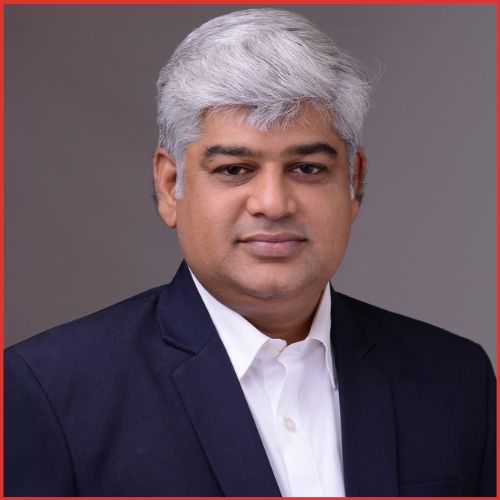
At this intersection of AI innovation, cybersecurity, governance, and enterprise risk sits ThreatReaper, an AI security and governance platform founded by Niraj Mehta and later acquired by LockThreat.
In an exclusive conversation with Business Outreach Magazine, Niraj Mehta, Founder of ThreatReaper and Managing Director for EMEA & APAC at LockThreat, shares his perspective on the urgency of AI security, the future of enterprise governance, and the leadership principles that have shaped his journey.
Before discussing the market and technology in depth, Niraj reflects on the principle that guides him as a founder.
In his words:
“Personally, my leadership is shaped by a simple belief: build with clarity, execute with discipline, and create opportunity for others as you grow.”
He further adds:
“Every success should create value beyond yourself—for teams, customers, partners, young founders, and the wider community. If I had to define myself simply, I would say I am a builder of trust, a student of resilience, and a founder who wants success to create impact beyond himself.”
A founder’s journey is often shaped by a moment of clarity. For Niraj Mehta, that moment came during his time in San Francisco, when the AI revolution was beginning to reshape the technology landscape.
He recalls spending time around the OpenAI ecosystem and nearby cafés, observing the energy of the AI movement and speaking with innovators, developers, entrepreneurs, and AI builders. His conversations often revolved around a few critical questions: What do you think about AI security? How do you manage risk? What happens when models hallucinate? What happens when they are manipulated, injected, or misused?
Those months of observation and conversations gave him a clear conviction: AI was moving fast, but governance and security were not moving at the same speed. Niraj predicts and says, “AI will reduce the advantage of basic product development. The next generation of companies will win through domain expertise, proprietary workflows, trust, distribution, and measurable business outcomes.”
Niraj also recalls that during those early conversations, he became convinced that AI would move beyond chat interfaces and evolve into autonomous agents capable of taking actions, making decisions, and executing workflows across enterprise systems. He also believed that basic product development would fundamentally change because of AI, with repetitive coding, prototyping, documentation, and standard development tasks becoming increasingly automated.
For him, that made the security question even more urgent. If AI was going to move from answering questions to taking actions, then enterprises would need stronger controls around identity, data access, permissions, governance, auditability, and risk. This conviction further shaped the foundation of ThreatReaper: AI security could not be an afterthought; it had to be built as a control layer before enterprises scaled AI across their business.
With his background in infrastructure, cloud, application security, DevOps, cybersecurity, and enterprise architecture, Niraj understood that companies often struggle when technology advances faster than governance.
That insight eventually led to the creation of ThreatReaper, built on a simple belief: enterprises will not be able to scale AI unless they can trust it.
Niraj explains:
“The idea was never just to build another cybersecurity product. The idea was to build a trust layer for enterprise AI—something that could help organizations detect, govern, and protect AI usage before it becomes a security, legal, compliance, or business risk.”
According to Niraj, almost every employee in a modern organization will eventually interact with AI tools in some form. As adoption grows, enterprises will need to address new and evolving risks such as prompt injection, data leakage, shadow AI, hallucination risk, model misuse, regulatory exposure, third-party AI risk, lack of auditability, and weak governance.
This is why he believes AI security and governance will become foundational enterprise infrastructure.
For Niraj, one of the key priorities is bringing together ThreatReaper’s AI security capabilities with LockThreat’s GRC platform. The objective is not only to protect AI systems but also to help organizations govern AI as a business risk.
When asked about the challenges he faced, Niraj describes them as important lessons in resilience. In the early stages, he had to play multiple roles—product leader, salesperson, strategist, recruiter, customer success lead, and, at times, the emotional engine of the company.
What kept him moving was conviction: the belief that he was building in a category the market had not fully named yet.
Looking ahead, Niraj is focused on building a trusted platform across AI governance, cybersecurity, GRC, and enterprise risk, with strong execution across EMEA and APAC.
Beyond business growth, he also wants his journey to create opportunities for others—young founders, cybersecurity professionals, students, partners, and team members.
His message for future leaders is simple:
“Ignore the noise. Build with clarity, lead with gratitude, and create opportunity for others.”
This is strong to send to the editor. It positions you as someone who saw AI agents, AI-driven development, and AI governance risk early—without sounding like you are overclaiming.