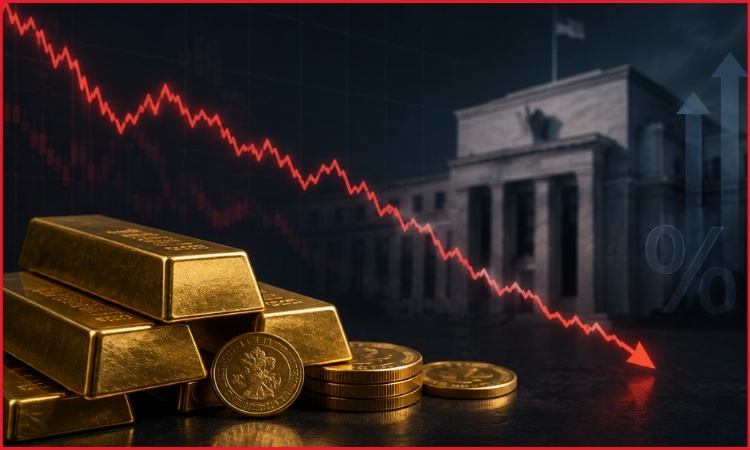
Gold prices slipped to their lowest level in nearly two weeks on Monday as investors assessed the possibility of another interest-rate increase in the United States, following a steep decline in the previous session.
Spot gold fell 0.3% to $4,439.31 an ounce by 6:43 am GMT on August 31 after touching its weakest level since August 19. The metal had already dropped more than 3% on Friday, leaving the market under pressure at the beginning of a data-heavy week.
US gold futures declined 0.9% to $4,489.50 an ounce.
The latest fall followed comments from US Federal Reserve Chair Kevin Warsh at the Jackson Hole Economic Policy Symposium on August 28. Warsh indicated that policymakers could have more work to do if they did not gain sufficient confidence that inflation was moving sustainably towards the central bank’s 2% target.
Markets interpreted the remarks as a signal that the Federal Reserve may consider raising borrowing costs again. The probability of an increase at the September policy meeting rose to approximately 60%, according to CME’s FedWatch tool.
Higher Interest Rates Weigh on Gold
The change in rate expectations placed immediate pressure on gold prices because the metal does not generate interest.
When yields on government bonds and other interest-bearing assets rise, holding gold becomes relatively less attractive. Higher rates can also strengthen the US dollar, making dollar-denominated precious metals more expensive for buyers using other currencies.
Although investors often turn to bullion when consumer prices are rising, expectations of tighter monetary policy increase the opportunity cost of keeping money in a non-yielding asset.
The market is therefore balancing two competing forces. Persistent inflation could support demand for gold as a store of value, but the policy response to that inflation could weaken prices by keeping interest rates elevated.
Warsh’s remarks produced the second effect. They challenged earlier expectations that the Federal Reserve might maintain or eventually reduce borrowing costs, prompting traders to reassess positions built around easier monetary conditions.
The scale of Friday’s decline also suggests that some investors reduced profitable positions after gold’s substantial longer-term advance. The metal remains at historically high levels even after falling below $4,450 an ounce.
Oil Rally Creates a Complicated Market Signal
Energy prices added another layer of uncertainty. Oil climbed more than 2% as renewed tensions in the Middle East raised concerns about potential supply disruption.
Higher crude prices can increase transportation, manufacturing and household costs, making inflation more difficult to control. That creates a complicated signal for the bullion market.
An escalation in international tensions would ordinarily strengthen demand for safe-haven assets such as gold. However, if higher oil prices reinforce expectations of tighter monetary policy, the resulting rise in bond yields and the dollar can offset that demand.
Brent crude moved towards $90 a barrel, intensifying concerns that energy-driven inflation could remain elevated. For India, which imports most of the oil it consumes, a sustained rise in crude can also pressure the rupee and increase the local cost of precious metals.
Domestic bullion prices do not always move in the same percentage terms as international spot gold. Indian prices also reflect the rupee-dollar exchange rate, import-related expenses, taxes and local demand.
A weaker rupee can keep gold expensive in India even when the international price declines. Retail jewellery prices additionally include making charges and other costs that vary between sellers and products.
US Employment Data Becomes the Next Trigger
Attention is now shifting towards a series of American labour-market reports scheduled for this week.
The releases include job openings, private payroll data, weekly unemployment claims and the closely watched nonfarm payrolls report. These figures could influence whether the Federal Reserve proceeds with another rate increase.
Strong employment growth could strengthen the argument that the economy can withstand tighter policy, potentially adding pressure to spot gold. Weaker figures may reduce rate-hike expectations and provide support to bullion by lowering bond yields or weakening the dollar.
The reaction may depend on the combination of jobs and wage data rather than one headline number. Policymakers are attempting to bring inflation down without causing an unnecessary decline in economic activity, making evidence about hiring, unemployment and wage pressure particularly important.
Other precious metals also moved lower on Monday. Spot silver declined 0.5% to $66.68 an ounce, platinum fell 0.7% to $1,807.37 and palladium dropped 1.1% to $1,405.75.
BMI said silver prices could remain close to present levels. Steady investment demand and constrained mine supply may provide support, while easing physical-market tightness and softer consumption could limit further gains.
Silver is influenced by both investment flows and industrial demand, giving it a different market profile from gold. Its use in manufacturing, electronics and energy technologies can provide support, but it can also make the metal more sensitive to changes in economic growth.
Gold’s next major movement will likely depend on whether this week’s employment figures reinforce the possibility of a September rate increase. For now, the renewed focus on tighter monetary policy has outweighed safe-haven demand, pushing bullion to its lowest level in nearly two weeks after Friday’s sharp sell-off.