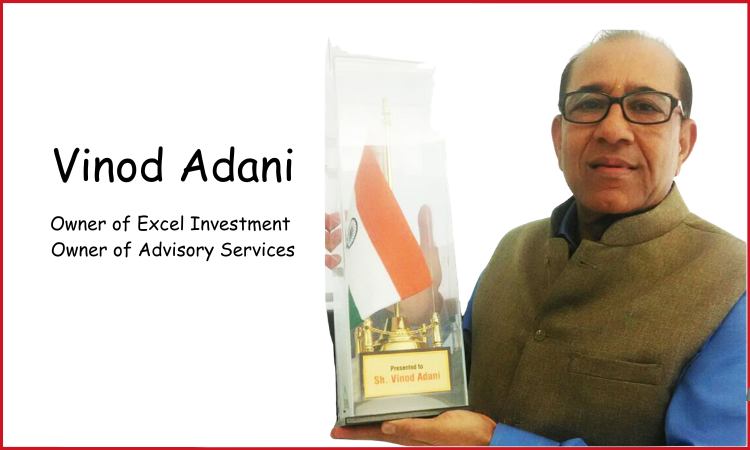
Most billionaires want to be seen. Vinod Adani spent four decades making sure he wasn’t. While his younger brother Gautam became the public face of one of India’s largest conglomerates, Vinod operated from Dubai, structuring deals, trading commodities, and building the overseas machine that quietly powered the group’s global rise. He rarely gives interviews, avoids the stage, and holds no executive title in the listed companies, yet few people have shaped the family fortune more.
This is the story of how a power-loom trader from Mumbai became one of the richest non-resident Indians alive, and one of the country’s most deliberately private billionaires. Understanding Vinod Adani’s net worth means understanding how modern conglomerates really move money, power, and risk across borders.
Who Is Vinod Adani?
Vinod Shantilal Adani was born on January 10, 1949, in Gujarat, into a family of modest textile traders. He is the elder brother of Gautam Adani, though the two took opposite paths to visibility. Vinod built his life abroad: a resident of Dubai since 1994, he holds Cypriot citizenship and runs a family investment office there. He is married to Ranjanben Adani and follows the Jain tradition of vegetarianism and non-violence.
What makes him unusual is not the wealth but the discipline of staying invisible. He keeps no verified public social accounts and almost no media footprint, which is precisely why every credible detail about him becomes newsworthy.
From Bhiwandi Power Looms To Global Commodities
Vinod’s business story starts in 1976, when he set up a power-loom and textile operation, VR Textile, in the Mumbai region. Unglamorous, thin-margin work — but it taught him trade, exports, and how physical goods actually move across borders. By 1989 he’d shifted to Singapore to trade commodities, and in 1994 he relocated to Dubai, then emerging as a tax-friendly hub for global trade. There, he built a trading business around the unglamorous backbone of industrial supply chains:
- Sugar
- Oil
- Aluminium
- Copper
- Iron scrap
This is the part worth studying. Vinod didn’t chase one hot sector; he learned to move whatever the world needed, wherever the margins existed. That trader’s instinct became the template the wider Adani empire later scaled up on:
- Buy access
- Control logistics
- Arbitrage geographies
The Dubai Pivot That Changed Everything
Relocating to Dubai gave Vinod two things India couldn’t offer at the time: frictionless access to global capital, and a base from which to structure international deals. From there he became the group’s overseas dealmaker, the person who could raise money abroad and route large acquisitions through offshore investment firms. It’s a role with enormous leverage and almost no spotlight, which seems to be exactly how he likes it.
Inside The Adani Group’s Business Empire
The Adani Group that Vinod helped globalise is now a sprawling conglomerate spanning ports, airports, power generation, transmission, green energy, cement, and logistics. Its flagship ports arm operates Mundra, India’s largest commercial port, and the group has become one of the country’s biggest players in renewable energy and airport operations. Vinod holds no executive post at the listed companies, but his fingerprints are all over the group’s biggest moves. His most visible contribution came in 2022, when the roughly $10.5 billion acquisition of Holcim’s Indian cement assets, reportedly structured through his investment vehicles, made Adani India’s second-largest cement producer almost overnight.
That deal captures his method: use overseas entities and capital relationships to execute acquisitions at a speed rivals couldn’t match. Where Gautam sells the vision publicly, Vinod has long been the quiet architect of the balance sheet behind it.
Vinod Adani’s Net Worth In 2026
Pinning down Vinod’s fortune is genuinely hard, because much of it sits inside private overseas firms rather than listed stock. On Forbes’ 2026 Billionaires list, he ranked 121st in the world, with estimates of his wealth generally placed around $16 billion (Forbes, 2026). Back in 2022, before the market turmoil, he was named the richest non-resident Indian, with wealth pegged near Rs 1,69,000 crore, or roughly $20 billion at the time.
The swing between those figures is the real lesson. A fortune tied to conglomerate valuations and offshore holdings expands and contracts violently with market sentiment and regulatory news, which is exactly what happened next. When the 2023 crisis hit, billions in paper wealth evaporated within weeks before markets stabilised, a reminder that opaque, equity-linked fortunes are only ever worth what the market believes on any given day.
The Hindenburg Storm And What Followed
In January 2023, US short-seller Hindenburg Research accused the Adani Group of stock manipulation and accounting fraud, alleging that a network of offshore shell entities, several linked to Vinod, was used to move money and influence share prices. The Adani Group rejected every allegation, framing the report as a deliberate assault on the company and the country. Markets did not wait: at the low point, the group’s listed companies lost close to $150 billion in value. Much of that was later clawed back; by mid-2024 the group’s combined market value had climbed back above $200 billion as investors regained confidence.
Vinod, usually invisible, was suddenly central to the story. The case moved through India’s Supreme Court, which in January 2024 declined to hand the probe to any special investigation team and backed the market regulator SEBI. In September 2025, SEBI closed its proceedings and dismissed the core allegations against the group and its promoters, a decision the Adani camp treated as vindication. Critics still question the opacity of the structures involved; supporters point to the regulatory clean chit. Both readings now sit in the public record.
What Vinod Adani’s Career Actually Teaches
Strip away the headlines and a few durable lessons remain for anyone building at scale.
First, diversify before you have to. Vinod’s early jump from textiles into cross-border commodities, and from India to Singapore to Dubai, spread his risk across sectors and geographies long before it was fashionable. A practical tip: build optionality while things are good, not when you are forced to.
Second, understand that structure is strategy. His edge was rarely a single product; it was how capital and ownership were arranged across borders. As a one-line takeaway: in a modern conglomerate, the person who structures the capital can matter as much as the one who cuts the ribbon.
The cautionary side is just as clear. Complex, opaque offshore structures may be legal, but at scale they invite scrutiny you cannot control, so a mistake worth avoiding is treating disclosure as optional once you become systemically important. An over-reliance on interlinked group entities concentrates risk; when confidence cracks, it can crack everywhere at once, as the 2023 sell-off showed.
Career Timeline at a Glance
| Year | Milestone |
| 1949 | Born in Gujarat, India |
| 1976 | Sets up power-loom business VR Textile near Mumbai |
| 1989 | Moves to Singapore to trade commodities |
| 1994 | Relocates to Dubai; trades sugar, oil, aluminium, copper, iron scrap |
| 2022 | Leads $10.5B acquisition of Holcim’s Indian cement assets |
| Jan 2023 | Hindenburg Research report triggers ~$150B market rout |
| January 2024 | Supreme Court backs SEBI probe over special investigation team |
| Sept 2025 | SEBI closes proceedings, dismisses core allegations |
| Mar 2026 | Ranked 121st on Forbes’ Billionaires list (~$20.8B) |
Conclusion
Few business figures have shaped so much while showing so little. Vinod Adani’s story is a reminder that behind every visible tycoon there is often an invisible engineer of capital, and that the Adani Group’s business empire was built as much in Dubai boardrooms as on Indian ports. His career blends genuine entrepreneurial reinvention with the governance questions that trail any opaque, globe-spanning fortune. Whether you read him as a master dealmaker or a cautionary tale about transparency, the takeaways are practical: diversify early, respect the power of structure, and remember that scale magnifies scrutiny. If this kind of deep dive is useful, explore more founder success stories and keep decoding how India’s biggest empires are actually built.
FAQs
Q1. What is Vinod Adani’s net worth in 2026?
Ans. According to Forbes’ 2026 Billionaires list, Vinod Adani’s net worth is roughly $16 billion, and he is ranked 121st on the list of the world’s richest billionaires. The spread exists because most of his wealth sits in private overseas investment firms rather than publicly traded shares.
Q2. How is Vinod Adani related to Gautam Adani?
Ans. Vinod is Gautam Adani’s elder brother and the Chairman of the Adani Group. Gautam heads the group, but Vinod is based mostly in Dubai and handles the international investments and deals of the group.
Q3. Where does Vinod Adani live and what is his citizenship?
Ans. He has been based in Dubai since 1994 and holds Cypriot citizenship. He runs a family investment office there and keeps an unusually low public profile.
Q4. What was Vinod Adani’s role in the Hindenburg controversy?
Ans. The 2023 Hindenburg report alleged that offshore entities connected to Vinod were used in the group’s financial dealings. The Adani Group denied any wrongdoing, and in September 2025 India’s market regulator SEBI closed its proceedings, dismissing the core allegations.
Q5. How did Vinod Adani make his money?
Ans. He started with a power-loom textile business in 1976, then moved into international commodities trading sugar, oil, and metals through Singapore and Dubai. That trading base eventually grew into the investment structure that now backs the Adani Group’s overseas acquisitions and expansion.