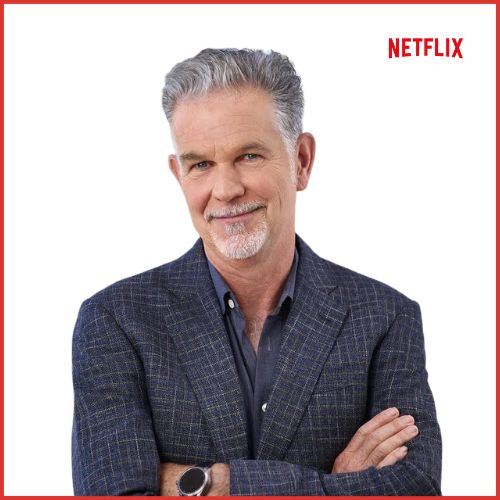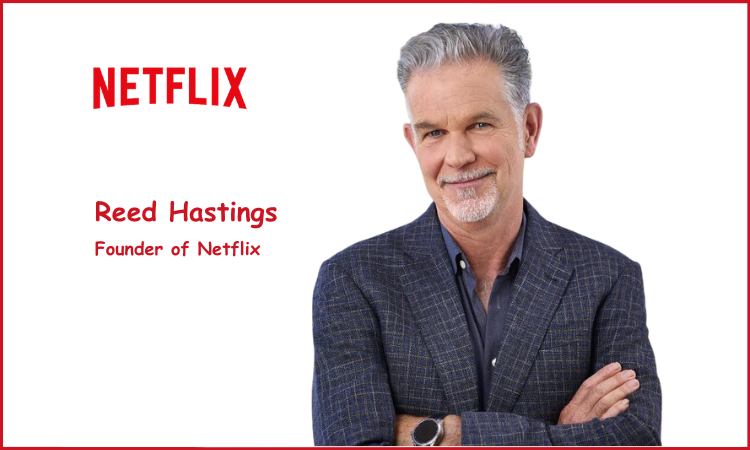
Few entrepreneurial journeys have shaped an aspect of digital culture as drastically as Reed Hastings‘. As one of the founding individuals of Netflix, Hastings’ legacy extends beyond the creation of a hugely successful business. Hastings has been one of a small number of individuals who have changed the global audience’s engagement with visual entertainment.
What is especially interesting about Hastings’ legacy is that it has evolved without Hastings having to initiate any of the most important tactical moves and counter moves that have characterized this evolution. Hastings’ efforts began with fixing an inconvenient problem and with a humble challenge to conventional thinking. Hastings’ theatrical vision has proved instrumental in the path Netflix, and the global audience have taken from VHS, to DVD, to the most revolutionary media format of all, streaming video.
The following reflects on the journey and the master business model of Reed Hastings, on the rapid evolution of streaming media from then to now, on the transformative impact of his endeavors, and on the invaluable lessons for entrepreneurs offered by the work of this enormously important contemporary founding father of streaming media and global entertainment.
Introduction: A Founder Who Saw What Others Missed
It’s difficult to imagine how radical Netflix was to the entertainment consumer. Early DVD rentals and physical stores returned films on a deadline or paid late fees. TV had a schedule. Films required consumer adaptation, not the platform.
Hastings adapted to the frustrations of existing systems. His innovation was unlimited rental from the post for a flat fee. The model frustrated the lazy systems and controls of existing rentals, and would eventually put Netflix at the apex of commerce and entertainment.
Hastings was the poster boy for seeing customer frustrations as an opportunity. His marriage of the three key variables of business allowed a complete upheaval of entertainment.
Reed Hastings’ Early Life and Education
Reed Hastings was born in Boston and raised in an environment that stimulated learning and encouraged him to be independent and to solve problems. This environment continued as he attended Bowdoin College and finished developing the analytical skills he had mastered for tackling business problems. After Bowdoin, he joined the Peace Corps as a Swaziland math teacher. This important experience taught him key character-building skills. He developed the characteristics of resiliency, flexibility, and modesty.
These characteristics were essential as Hastings traversed the insurmountable cliffs of the start-up entrepreneurial business world. Entrepreneurship is not an exact science; it requires trial and error as a business owner and worker, as Hastings did, many times without result or, truly, to the contrary of most expectations. Hastings early upbringing was not only his preparatory schooling for business ventures, it also provided him the reasoning and the proper focus a well-constructed business logic needs.
Returning to the USA, Hastings earned his computer science master’s degree from Stanford University. His education provided him the systemic and software flexibility the entertainment world lacked. Hastings clear-cut, committed, and curious early education fusion leveraged the innovative entertainment business model of Netflix into existence.
Before Netflix: The Experience That Built a Founder
Before Netflix, Hastings founded Pure Software, a company focused on debugging tools for software developers. The company became successful and eventually went public. That experience was important for several reasons. First, it gave him firsthand knowledge of building and scaling a company. Second, it taught him the complexity of managing growth. Third, it showed him how a strong product could solve a real problem in a crowded market.
Pure Software also gave Hastings credibility as a serious entrepreneur. But more importantly, it sharpened his thinking. He learned that great businesses are not built on hype alone. They are built on product quality, execution, and the ability to evolve.
That lesson would prove essential at Netflix, where the company had to reinvent itself more than once in order to survive and lead.
The Origin of Netflix
The Netflix story is often told through the famous late-fee anecdote. According to the widely repeated story, Hastings was frustrated after paying a late fee for a rented movie. Whether or not that exact moment was the sole spark, the larger truth is clear: he saw a broken customer experience and decided to create something better.
In 1997, Reed Hastings and Marc Randolph founded Netflix as a DVD-by-mail company. The idea was simple but powerful. Instead of requiring customers to visit a store, Netflix would let them order movies online and receive them through the mail. At the time, this was a significant improvement over the traditional rental model.
The service was not just about convenience. It was about removing friction. No store visit. No rushed return. No late fees. No pressure. This customer-first mindset became one of Netflix’s defining strengths and a major reason the company stood out from older competitors like Blockbuster.
The early Netflix business model showed that even a small improvement in customer experience could become a major business opportunity when executed well.
Why the Subscription Model Changed Everything
One of the most important parts of the Netflix success story was its subscription model. Instead of charging customers per rental, Netflix eventually introduced a monthly subscription that allowed users to access a wide catalog for a fixed fee.
This was a major shift in entertainment economics. The subscription model made viewing simpler for customers and more predictable for the business. It encouraged repeat use, strengthened customer loyalty, and created recurring revenue.
From a consumer perspective, the model was easy to understand and easy to use. From a business perspective, it created a more stable revenue stream than one-time rentals. This combination of convenience and predictability gave Netflix a powerful advantage.
Over time, the subscription model became much bigger than Netflix itself. It helped normalize the idea that people would pay regularly for digital access to content. Today, this approach is common across industries, from music and software to fitness and online education. Netflix helped make that future possible.
The Move from DVDs to Streaming
If the DVD-by-mail model was the foundation for Netflix’s popularity, then streaming was Netflix’s differentiator.
In 2007, Netflix made a huge change by introducing instant streaming. This offered customers the ability to watch movies and shows via the internet. The company became so much more than a video rental service. This change was also monumental for the media industry as a whole.
Streaming brought a new meaning and expectation to the consumer. No longer did one have to wait for a disc, go to a store, or adhere to a broadcast schedule. The consumer had instant access to entertainment at any time and on any device.
This shift in the industry was important because it complemented the rapid development of the internet and the technology used by consumers. As broadband internet became the standard and more devices became connected, streaming was the obvious next step. Reed Hastings was able to look down the road and see the future, and preferred to lead rather than follow.
This is why the story of Reed Hastings is so important. He had foresight and the ability to not only understand the immediate needs of consumers but also anticipate future needs.
The Strategy Behind Netflix’s Growth
Reaching its current level of success was not by chance for Netflix. Its current strategy consists of making bold moves with constant consideration for customer experience, data, and innovation.
Making customers happy has always been Netflix’s first priority. This occurred by making additions and changes to the platform to cater to requests and educate viewing customers on the platform’s features.
Data usage was huge for Netflix. Data is used all the time to evaluate shows to see which ones are successful and, once again, maximize the happiness of the customer viewing the shows.
The rest of the industry was moving at a quicker pace than Netflix was. For example, confidence was the only thing stopping Netflix from being the first from the rest of the industry to offer the convenience of viewing from home, the first to offer entertainment online, the first to offer international viewing, and the first to offer on-demand.
Netflix was a truly unique place to work and did not let it stay stagnant. This was due to high standards, a lot of responsibility that employees were given, and constant accountability.
Netflix Original Content and the Second Transformation
Streaming was the first major change Netflix introduced. The second change was Original programming. To change the business again, Netflix also became a producer.
This was a game-changer. It offered them a greater deal of power and additional options. They weren’t shackled to other companies’ works; they could create and fund their ideas. This brought a lot of customers back and Netflix gained more leverage with the other companies.
When Netflix first made large season drops, Their Original programming established their use as a creator. So, Netflix collided with the Entertainment Giants as a media company, not just as a distributor.
For Reed Hastings, the principle was always deeper; companies needed to have the ability to change and adapt to the market if the value is changing. This was true for Netflix and its ability to expand and generate, while the competitors had to close down.
How Netflix Changed Entertainment Forever
Netflix had a huge impact on entertainment, and some of those changes remain today.
They introduced the concept of on-demand viewing. People don’t have to wait for their favorite shows to be scheduled to watch them whenever they want. That led to the second major impact: binge-watching. By dropping out whole series at once, they completely flipped how people consume series and how people write and create series.
It made cable TV obsolete. People don’t need to subscribe to TV channels to be entertained anymore. Cable TV is dead. Every single person has a streaming service now, and every single person uses at least one streaming service.
They told everyone there is no reason to wait and no reason to schedule your day around when someone else is going to play their games. You should be able to do what you want and watch what you want whenever you want to.
Most importantly, they made people never reduce their expectations. Now every person in the world has expectations and people don’t want to pay to sacrifice their expectations either.
Reed Hastings’ Leadership Style
Reed Hastings is known for a leadership style that blends bold vision with practical execution. He is often associated with innovation, clarity, and a strong focus on performance. Rather than treating culture as a side issue, Hastings viewed it as a core business advantage.
One of the most discussed aspects of Netflix’s internal culture is the company’s emphasis on talent density, accountability, and freedom. Hastings believed that high-performing teams needed room to act, but also needed clear standards. This philosophy helped Netflix move quickly while maintaining a strong strategic direction.
His approach was not always easy, and it was not always universally admired. But it was effective. In a rapidly changing market, hesitation can be costly. Hastings built an organization that was willing to adapt, test, learn, and move.
That leadership style is a major part of the Netflix success story. It shows that world-changing companies are often built by leaders who are comfortable making hard decisions and evolving with the market.
Lessons from Reed Hastings’ Success Story
There are several valuable lessons in Reed Hastings‘ journey.
A small frustration can reveal a large opportunity. Many great companies begin with a simple problem that no one has solved well enough.
Customer experience can become a competitive advantage. Netflix won because it removed friction and made entertainment easier to enjoy.
The subscription model helped Netflix build a stronger, more scalable company.
Timing matters, but vision matters more. Netflix succeeded because it was willing to move early into streaming and invest before the market was fully ready.
Adaptability is essential. A company that refuses to evolve will eventually be overtaken by change.
For entrepreneurs, founders, and business students, Reed Hastings‘ success story is a reminder that disruption is rarely about one dramatic moment. It is about a series of smart decisions made over time.
Why Reed Hastings Remains Relevant Today
Even as Netflix continues to operate in a highly competitive streaming market, Reed Hastings remains one of the most important figures in modern business. His story still matters because it reflects the larger shift from physical media to digital platforms, from passive viewing to personalized experiences, and from old distribution models to on-demand access.
His influence extends far beyond Netflix. The ideas he helped mainstream now shape how people consume music, software, education, and news. In that sense, his impact is bigger than entertainment alone.
The Reed Hastings success story continues to resonate because it combines ambition, innovation, and execution in a way that feels both entrepreneurial and universal. It shows what happens when a founder sees a broken system and builds a better one.
Conclusion
Co-founding a groundbreaking company isn’t all Reed Hastings did. He changed how the world views entertainment. He changed the world as we know it by changing the way Netflix changed the world by changing its business model and changing the world once again from DVD mail delivery to Internet streaming to original content. And all of this was done by Reed Hastings and by the company he co-founded.
Hastings story is powerful because of the impact it had on not only the co-founding of a successful, groundbreaking company, but on the business world and the entertainment world, all because Hastings had a vision and the patience and the guts to take on an entertainment industry that was untouchable and unchangeable by all.
To all aspiring business founders, the co-founder of Netflix is proof that your vision to build a successful company was possible and probable if you built it for the future and did not lose your flexibility.
This is what makes Reed Hastings so groundbreaking, not because he co-founded a successful company, but because he changed a whole industry all by himself and for that, Hastings can be an inspiration to all business founders.
FAQs
How did Reed Hastings start Netflix?
In 1997, Reed Hastings and his business partner Marc Randolph launched Netflix, originating the first DVD rental service done completely through the mail.
What made Netflix different from Blockbuster?
The absence of late fees, the subscription model, and the ease and convenience of the mail rental service made Netflix more user-oriented than the traditional rental model.
Why was Netflix’s subscription model important?
Having a subscription and thus a steady stream of income was an important part of the business model. It also contributed to the burgeoning shift in the consumer market, and how subscription entertainment services were perceived.
How did Netflix change the entertainment industry?
The mass appeal of subscription services, combined with the shift to instantaneous media consumption, further developed the already rapid collapse of the cable services market, and integrated the entertainment industry onto a digital distribution-based model.
What is Reed Hastings known for?
The transformation of the entertainment industry through the globalizing of streaming media services, begun by Hastings with the launch of Netflix and his original DVD by mail rental service, is one of his major legacies. His leadership and his disruption of the industry and entertainment services is also acknowledged.
What can entrepreneurs learn from Reed Hastings?
Disruption of a market with a solution that addresses a previously unfilled need and the courage to innovate and shift to new paradigms in your business model and in the market are lessons that Hastings teaches.