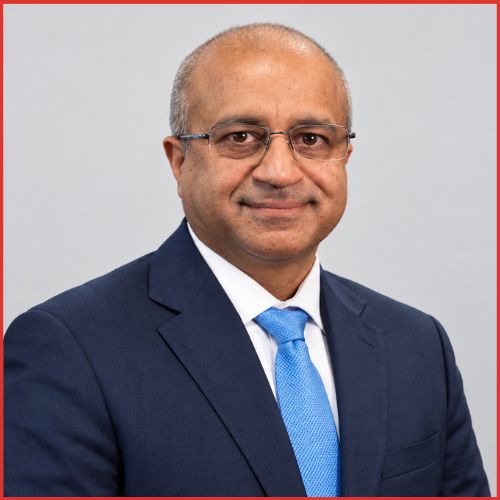
In India’s business world, success is often accompanied by publicity. Founders give speeches, appear on magazine covers, and actively engage with the media. Radhakishan Damani chose a different path.
He is known for keeping a low profile. He rarely gives interviews, has no social media presence, and prefers to stay away from the spotlight. Yet, despite this quiet approach, he built DMart into one of the most successful and profitable retail businesses in India.
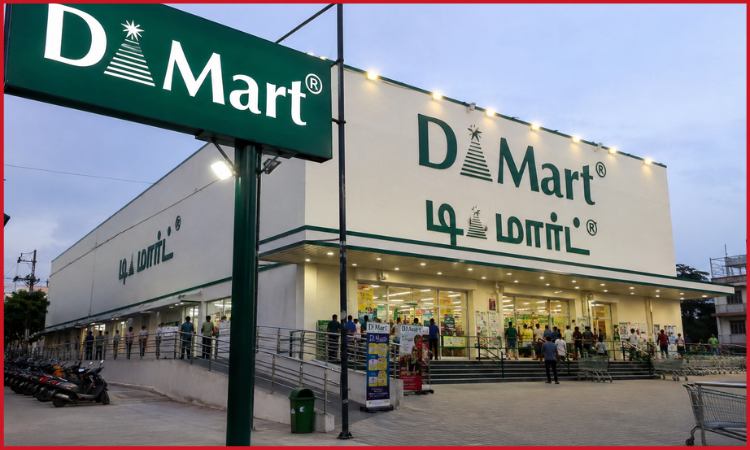
Through Avenue Supermarts Limited, the company that operates DMart, Damani focused on running an efficient and disciplined business rather than seeking public attention.
In FY 2024–25, the company reported revenue of ₹57,790 crore and a profit after tax of ₹2,927 crore, while operating 415 stores across 10 states.
These results did not happen by chance. They are the outcome of a clear business strategy, careful execution, and a long-term focus. This article explores the key decisions and principles that helped DMart achieve its remarkable success.
Part 1: The Philosophy of the Silent Billionaire
It was only after years in equities that Damani shifted toward retail. Not many know his path began long before fame, guiding figures like Rakesh Jhunjhunwala – later known as India’s top individual trader – in early investing decisions.
From his time in equities emerged a clear pattern: long-term strength flows to firms built on lasting edges, minimal borrowing, and steady progress. These insights shaped how he developed DMart – quietly, deliberately, without deviation.
From the beginning, expansion meant little to Damani when he launched the first DMart outlet in Powai, Mumbai, during 2002. Growth followed only once systems proved strong enough to carry it forward. Instead of seeking attention from investors or aiming for dominance, his focus stayed fixed on structure. Each new step came after careful testing of internal readiness.
“Focus on profitability right from the beginning. Never hurry to expand.” (Radhakishan Damani)
His contrarianism shaped by years of watching overvalued companies collapse, became DMart’s greatest structural advantage.
Part 2: The Three Pillars of the DMart Playbook
DMart’s approach is pretty straightforward. Its strength lies in the compounding impact of three interconnected pillars, each one bolstering the others.
Pillar 1: Own the Land, Kill the Rent
Step into any DMart store, and one thing will catch your eye right away: there are no shiny marble floors, no fancy designer fixtures, and the lighting is pretty straightforward. The ceilings? Just functional. The shelves? They have an industrial vibe.
This isn’t just a coincidence; it’s a smart financial move.
While rivals like Future Group’s Big Bazaar opted for long-term leases in upscale malls, Damani took a different route: DMart owns most of its store properties outright.
Sure, this demands a hefty investment upfront, but it completely sidesteps the issue of rising rental costs. As property prices climb and lease agreements get renegotiated, competitors often see their profit margins squeezed tighter and tighter. DMart, on the other hand, doesn’t face that challenge at all.
Pillar 2: Treat Your Suppliers Like Gold — The 11-Day Rule
In India’s FMCG sector, the standard credit cycle is 21 to 30 days. DMart pays its suppliers within 11 days roughly half the industry standard. (Research base: DMart vendor payment model, widely documented in Indian retail analyses)
For its exceptional access to cash flow, DMart receives notable reductions in payment terms from vendors. Because of these arrangements, the company secures lower prices on purchased inventory.
During 2024, independent assessments revealed DMart’s pricing on essential goods remained 20 to 25% below rival stores. Because of this gap, families relying on steady spending limits often choose its outlets. Though other chains adjust rates frequently, stability at DMart draws consistent footfall. Savings emerge not through promotions but structural cost control. Where others struggle with margins, it sustains lower figures by design. Over time, such patterns shape shopper loyalty without fanfare. (MatrixBCG Business Model Canvas Analysis, 2024)
Pillar 3: The Everyday Low Price Engine
Many Indian retailers depend on festive sales and seasonal discounts to attract customers. This habit encourages shoppers to hold off on buying until there’s a sale, which in turn leads to significant operational challenges.
DMart operates on a fundamentally different principle: Everyday Low Price (EDLP). There are no sale events. No limited-time offers. DMart passes its supplier discounts directly to consumers, every day, on essential goods.
DMart’s advertising-to-sales ratio was approximately 0.3% in FY2024, compared to roughly 1.2% for Indian retail peers, focusing instead on physical flyers and geo-targeted digital outreach. (MatrixBCG Business Model Canvas Analysis, 2024)
This sets off a self-sustaining flywheel: low prices draw in steady customer traffic → high sales volume boosts bargaining power with suppliers → leading to even lower prices. Once this cycle gets going, it’s incredibly tough for any competitor to catch up without mirroring DMart’s entire operational setup.
Part 3: The Tortoise vs. The Hare — Expansion Strategy
Perhaps the most striking aspect of DMart’s story is how slowly it grew in its early years.
Damani opened the first DMart in 2002. It took the company eight years to open its first ten stores — in a decade when every other retailer was sprinting to claim market presence across India.
But Damani had a reason. He called it cluster-based expansion: deliberately saturating one region before moving to the next. Maharashtra first, then Gujarat, then other states. This approach built:
- Efficient local supply chains — reducing logistics costs and stockouts
- Strong regional brand recognition — through word-of-mouth, not advertising
- Trained store management teams — before scaling to unfamiliar markets
The contrast with competitors is stark.
Future Group / Big Bazaar expanded fast all over India (on debt). At its height, it had more than 1,500 stores. But expensive leases, a stretched supply chain, and rising debt eventually led to bankruptcy proceedings — a cautionary tale of retail overreach.
DMart on the other hand has been profitable every year since inception. FY26 revenue was up 15.8% YoY at ₹67,096 crore, while net profit was up 10.1% at ₹3,224 crore. Q4 FY26 alone delivered 18.9% revenue growth – best quarter of growth in 2 years. (Avenue Supermarts Audited Results FY26, May 2026)
The steady and consistent approach by DMart became successful.
Part 4: The Numbers That Tell the Story
DMart’s initial public offering (IPO) in March 2017 was one of India’s most dramatic market debuts, with shares rising more than 100% on the first day. Nearly a decade later, the compounding is much more apparent. Avenue Supermarts’ FY 2025-26 audited results, which will be published in May 2026, show that the company has not only survived but thrived in the face of fierce competition.
FY26 Full-Year Performance
For the financial year ending March 31, 2026, DMart reported: revenue of ₹66,968 crore (up 15.8% year-on-year) and a net profit of ₹3,224 crore (up 10.1%). This is against a base of ₹57,790 crore revenue and ₹2,927 crore profit in FY25 — meaning DMart added roughly ₹9,000 crore in revenue in a single year. (Avenue Supermarts Audited Results FY26, May 2026; Business Standard)
Q4 FY26 was particularly strong — revenue surged 18.9% year-on-year to ₹17,235 crore, the fastest quarterly growth in two years. The CEO attributed a portion of the uptick to a brief spike in consumer buying in March 2026 due to geopolitical tensions, though this normalised by month-end. (ICICI Direct Quarterly Results, Q4FY26)
Most significantly, DMart crossed the 500-store milestone in Q4 FY26 — adding 85 new stores during the full year, its highest-ever annual store addition. (Avenue Supermarts Audited Results FY26, May 2026)
Key Metrics at a Glance (FY26)
| Metric | FY26 Data |
| Annual Revenue | ₹66,968 crore (up 15.8% YoY) |
| Net Profit (PAT) | ₹3,224 crore (up 10.1% YoY) |
| Q4 FY26 Revenue Growth | 18.9% YoY — fastest in 2 years |
| Total Stores | 500 stores (milestone crossed Q4 FY26) |
| New Stores Added in FY26 | 85 — highest annual addition ever |
| Same-Store Sales Growth (Q4) | 10.8% for stores 2+ years old |
| DMart Ready (E-Commerce) | Active in 18 cities as of March 2026 |
| Revenue from Groceries / Food | ~55% of total — recession-resistant |
| Profitable Every Year Since Inception | Yes — unbroken since 2002 |
Sources: Avenue Supermarts Audited Results FY26 (May 2026); Business Standard; ICICI Direct; Scanx.trade
What the Numbers Actually Mean
The 500-store milestone is not just a round number. It reflects DMart’s first meaningful national footprint — 85 new stores in a single year signals a deliberate shift in pace without compromising the cluster-based discipline that made the model work in the first place.
The same-store sales growth of 10.8% in Q4 FY26 (up sharply from 8.1% in Q4 FY25) matters because it shows that existing stores are still deepening their market penetration — customers are spending more, not just visiting. (ICICI Direct Quarterly Results, Q4FY26)
There is nuance in the margin picture, however. EBITDA margins have faced mild pressure — Q3 FY26 operating margin was 8.08%, below the 8.68% reported in Q2 FY25 — reflecting rising entry-level wages, competitive pricing in FMCG, and investment in service levels. (MarketsMojo — Avenue Supermarts Q3 FY26 Analysis, January 2026)
This is a genuine challenge for the business as it scales. But it is also the kind of challenge that efficient operators tend to solve through volume — which is exactly what DMart’s expansion trajectory is designed to deliver.
Part 5: What Entrepreneurs Can Learn From DMart
DMart is not just a retail story. It is a masterclass in building a durable business. Here are five core lessons that apply far beyond supermarkets.
1. Profitability is a strategy, not an afterthought
Damani refused to chase growth at the cost of margins. Every store DMart opened had to be profitable on its own terms. This discipline — deeply unfashionable in an era of growth-first startups — is what kept DMart debt-free and crisis-proof.
2. Structural advantages beat promotional tricks
DMart does not run sales. It does not need to. Owned real estate, fast vendor payments, and lean operations create a permanent price gap that no competitor can bridge with a weekend discount.
3. Be boring. Be consistent.
DMart’s stores look the same today as they did in 2005. The pricing logic is predictable. Customers trust it precisely because it never surprises them. In retail, reliability is a brand.
4. Slow is smooth. Smooth is fast.
Eight years to open ten stores sounds like failure. In retrospect, it was the foundation for 500 stores built on solid operational footing — and zero accumulated losses.
5. The operator’s mindset beats the marketer’s mindset
Damani looked at every retail decision through the lens of unit economics. Does this store make money? Does this SKU earn its shelf space? Does this expansion serve the supply chain? These are operator questions. And they are the questions that built a ₹66,968 crore business.
Conclusion: The Power of Disciplined Simplicity
The DMart story is, at its core, a story about the compounding power of doing simple things consistently well.
Radhakishan Damani did not invent a new technology. He did not disrupt a category with a novel product. He took the oldest concept in commerce — buy low, sell slightly higher, repeat — and executed it with a precision and patience that no competitor has matched in over two decades.
In a business world that celebrates disruption, DMart is a reminder that discipline is a strategy. That boring, profitable operations beat flashy, cash-burning expansion. That the customer who saves ₹500 on her monthly grocery bill will return next month, and the month after, without needing to be reminded.
Frequently Asked Questions
How does DMart make money?
DMart makes money through a high-volume, low-margin model. It procures goods at discounted prices by paying suppliers faster than the industry norm, owns most of its store real estate to eliminate rental costs, and passes savings to consumers through permanently low prices. High footfall and rapid inventory turnover generate consistent revenue across its 500 stores.
Why are DMart prices so low?
DMart prices are low for two structural reasons. First, the company pays FMCG suppliers within 11 days — versus the industry standard of 21 to 30 days — earning significant cash discounts on purchases. Second, DMart owns most of its stores rather than leasing them, which eliminates the rental inflation that raises prices at competing retailers.
Who is Radhakishan Damani and what is his philosophy?
Radhakishan Damani is the founder of DMart and one of India’s most respected value investors. Known as the “Silent Billionaire,” he is notoriously media-shy. His philosophy is rooted in value investing principles: buy undervalued assets, hold long-term, avoid debt, and prioritise profitability over expansion speed. He applied the same discipline to building a retail empire.
Why did DMart succeed while Big Bazaar failed?
Big Bazaar expanded rapidly across India using debt to fund leased stores. When economic conditions changed and lease costs rose, its business model came under severe pressure, eventually leading to insolvency. DMart expanded slowly, owned its properties, and remained debt-free — meaning it never faced the same structural vulnerabilities.
Is DMart profitable every year?
Yes. DMart has been profitable every single year since its founding in 2002. In FY26, it reported a net profit of ₹3,224 crore — up 10.1% over FY25 — maintaining this unbroken record even amid margin pressure from competitive FMCG pricing and rising operational costs.
What is Avenue Supermarts’ total revenue?
Avenue Supermarts reported a total revenue of ₹66,968 crore for FY 2025-26, representing a 15.8% increase year-on-year, with a net profit of ₹3,224 crore. Q4 FY26 revenue grew at 18.9%, making it the strongest quarter in two years.
Does DMart have an online presence?
Yes. DMart operates an online grocery platform called DMart Ready through its subsidiary Avenue E-Commerce Ltd. The platform has been growing its home delivery segment, with the company investing ₹174.99 crore into its e-commerce operations in March 2025.