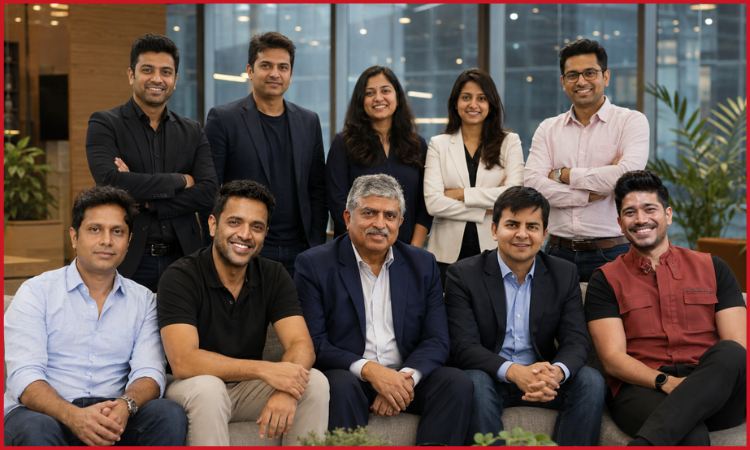
India’s startup ecosystem is gradually moving away from the ‘growth at any cost’ paradigm as we enter 2026. Numerous breakthrough Indian entrepreneurs are garnering attention for their ability to create AI-native companies, deeptech infrastructure, fintech systems, EV ecosystems and globally scalable enterprise platforms.
The narrative of today’s entrepreneur success stories has changed from a funding hype to efforts on quality execution, utilization of AI, operational resilience and long-term sustainability. CXOs operating in domains such as artificial intelligence, fintech, spacetech, mobility, and enterprise software are today transforming how startups are being built. An Indian startup ecosystem is being built by founders focused on fundamental building blocks of marketing mindshare, defensible tech, long-term value and scalable business models.
In this article, we examine the startup founders in India and Indian business leaders shaping India’s startup ecosystem in 2026.
1. Bhavish Aggarwal – Expanding India’s AI and EV Ecosystem
Bhavish Aggarwal is still one of the most aspirational tech entrepreneurs in India in 2026. Having made Ola one of the country’s largest ride-hailing companies, Aggarwal scaled its EV push via Ola Electric, and then its AI efforts via Krutrim.
Krutrim was one of the earliest AI unicorns in India. This reflected India’s growing focus on sovereign AI infrastructure and large language models. Krutrim became India’s first AI unicorn after raising $50 million at a valuation of $1 billion.
The company later expanded into AI cloud services and infrastructure, strengthening its domestic AI development efforts.
What makes Aggarwal’s journey interesting is his approach to ecosystem construction. Rather than just building single products, he ensured he had investments running while investing in mobility, batteries, AI systems, and digital infrastructure.
His achievement reflects the broader shift among Indian entrepreneurs toward developing proprietary technology stacks rather than relying on external infrastructure.
2. Nandan Nilekani – Fueling India’s Deeptech Investment Era
By 2026, his sphere of influence will reach far beyond Infosys. Riding on his frontier-tech business ventures, he is still pumping billions into India’s AI/deeptech ecosystem.
Recent reports pointed to significant investment campaigns that absorbed much of the attention, driven by AI and deeptech startups.
Fundamentum Frontier Advisors (F2A), Nilekani-supported, helped establish a Rs 3,000 crore fund of funds targeting AI and deeptech startups across consumer, enterprise, and physical AI.
The platform will catalyze emerging AI-driven startups and help build India’s deeptech ecosystem in the years to come.
While Nilekani’s background as a software entrepreneur makes his success story unique, it is his transformation into a key feature of India’s digital ecosystem that makes his success even more distinctive.
His long-term vision has been instrumental in shaping India’s technological pathway for the next decade.
3. Deepinder Goyal – Reinventing Consumer Internet Businesses
Deepinder Goyal built Zomato, which evolved from being a restaurant search engine into a super-fast-growing logistics and quick-commerce company.
Amidst this, even as other global giants of food delivery were struggling for profit and execution traction, Zomato continued to adapt to the new customer preferences and delivery economics.
The company’s move into hyperlocal delivery and related services reflects the way in which Indian startups have changed in the post-slowdown years.
Adaptability is perhaps the best thing about Goyal’s entrepreneurial journey. Instead of being stuck to just one category, he kept evolving the business to be in line with the market shifts. The recent growth in quick commerce through Blinkit has strengthened Zomato’s position in India’s digital commerce space.
4. Azhar Iqubal – Transitioning from Consumer Apps to AI
Azhar Iqubal exemplifies the trend of Indian entrepreneurs moving towards AI-native startup creation.
After scaling InShorts to become India’s single largest content publisher, he closely associated himself with India’s shift from consumer internet startup to an AI-first innovation.
By 2026, a handful of consumer-tech entrepreneurs are testing new frontiers in deeptech and agentic AI as investor focus shifts from foundation models to foundation infrastructure and enterprise automation.
His career demonstrates how pioneers are utilizing operational expertise and familiarity with distribution to develop future generations of AI applications.
5. Jitendra Gupta – Building Smarter Fintech Infrastructure
Jitendra Gupta is recognized as one of the prominent entrepreneurs of India.
From the exit of Citrus Pay to the monetization of LazyPay and finally Jupiter, Gupta has always created newer fintech products in the form of a good digital banking experience.
Jupiter is indicative of a new generation of Indian fintech startups that is transitioning from simply offering payment services to becoming intelligent financial ecosystems through automation and personalization, just as this product-led approach has demonstrated.
His experience demonstrates the increasing significance of long-term market understanding and execution in fintech.
6. Mukesh Bansal – Entering the Enterprise AI Race
Mukesh Bansal has repeatedly reinvented himself at each phase of India’s startup ecosystem.
After the inception of Myntra and the later IPO of the health club Cult.fit, he turned his attention to enterprise AI and started a startup working on AI-powered voice agents and automated workflow platforms.
Nurix AI is representative of one of the most significant startup trends of 2026, enterprise AI solutions targeting automation of work done in operations.
The company drew plenty of investor attention as it raised $27.5M from investors, including Accel and General Catalyst, to scale up its enterprise AI platform.
Nurix AI specializes in custom AI agents to enhance interaction with customers, sales and automate workflows for enterprise organizations.
What makes Bansal’s entrepreneurial journey unique is his ability to develop newer fields, creating businesses through different periods of startups.
7. Harshita Arora – Representing India’s Young Founder Wave
Harshita Arora is one of the prominent younger entrepreneurs of Indian descent in the global startup space. She appeared on the scene after developing a fintech startup when she was young and subsequently joining the Y Combinator network.
Her early success received international plaudits and demonstrated that young founders could successfully develop technology products and compete globally without establishing themselves in the industry at an earlier stage. Her journey has gone on to serve as a role model for an entire generation of startup entrepreneurs coming into technology and entrepreneurship at an earlier stage.
Another significant trend is that the younger entrepreneurs of 2026 are joining AI, SaaS, fintech and deeptech much earlier than the generations before.
8. Aadit Palicha and Kaivalya Vohra – Scaling India’s Quick-Commerce Surge
Zepto is founded by Aadit Palicha and Kaivalya Vohra. Zepto is one of the fastest-growing Indian quick-commerce startups.
Despite most startups failing to grow and break even, Zepto kept expanding in different cities in India and enhanced its operational strength.
By their success, they exemplify a new breed of Indian entrepreneurs executing consumer internet businesses with more razor-sharp operational discipline.
Furthermore, the growth of this company is indicative of the rapidly changing digital commerce landscape in India that extends outside the e-commerce paradigm.
The company further expanded to key metro locations aggressively and became a key player in the quick-commerce industry in India, drawing the attention of many investors.
9. Vidit Aatrey – Scaling Digital Commerce for Bharat
Vidit Aatrey played a crucial role in building Meesho into one of India’s most impactful social commerce companies.
Most Indian internet companies of that era served the premium urban markets initially but Meesho showcased the boldest leap into the Bharat-wide consumer markets.
What we see in the company’s success is the way Indian entrepreneurs recognized and responded to the demand of unserved digital consumers outside metro cities.
Meesho significantly contributed to bringing digital commerce to smaller cities and towns, with millions of users and sellers benefiting from India having a large online economy.
The story of Aatrey remains a very good example of a local startup that is well aware of the local market viability.
10. Peyush Bansal – Modernizing Retail Through Technology
Peyush Bansal further expanded Lenskart into one of the top technology-enabled retail businesses in India.
Over the past few years, the company has shown great focus on the areas of AI-supported retail systems, automated digital eye-testing devices, and a vertically integrated manufacturing process.
Lenskart’s entry into both the domestic and international markets made it one of the most successful, familiar technology-focused retail names in India.
Lenskart highlights the potential for Indian startups to bring current business models into traditional industries, primarily through AI, operational technology, and software, rather than consumer-facing apps.
What makes Bansal unique is his capacity to combine retail scale, healthcare technology, manufacturing, and digital infrastructure all into one surrounding ecosystem.
Why These Entrepreneur Stories Matter in 2026
India’s startup scene has entered an era that is much more evolved than the bootstrapping years when unicorns reigned supreme.
The founders gaining the most attention today are increasingly focused on:
- AI infrastructure and automation
- Deeptech and research-led innovation
- Sustainable business expansion
- Enterprise productivity systems
- Fintech intelligence and personalization
- Operational efficiency over vanity metrics
You can see that investor focus is shifting very quickly. Increasingly, venture capitalists are investing in AI, space tech, climate tech and infrastructure-based startups rather than focusing purely on consumer-growth companies.
Final Thoughts
The greatest entrepreneur success stories of 2026 are not just counted in unicorns and billion-dollar investment rounds.
Today, success depends more than ever on capitalizing on the opportunities created by technological disruption, becoming true AI-native businesses, overcoming economic headwinds, and delivering products of durable value.
Indian entrepreneurs who have succeeded are becoming more focused on the long term rather than chasing startup hype. Entrepreneurs in fintech, social commerce, enterprise AI and deep tech infrastructure are paving the way for building and scaling sustainable businesses at a global level.
FAQs
Who are some of the top entrepreneurs in India in 2026?
Some of the top Indian entrepreneurs in 2026 are Bhavish Aggarwal, Nandan Nilekani, Deepinder Goyal, Peyush Bansal, Vidit Aatrey, Mukesh Bansal and other founders creating companies with high-growth opportunities in next-generation technology segments.
How are AI startups capturing center stage in startup discussions in 2026?
AI-focused startups attract investments as more businesses recognize the value of automation, efficiency, enterprise productivity and better customer experiences. This encourages founders to build AI-native services and deeptech products.
What sectors are delivering successful entrepreneurs in 2026?
Entrepreneurial activity is vibrant across AI, fintech, deeptech, EVs, spacetech, enterprise software, healthtech and digital commerce.
How is startup success in 2026 different from previous years?
Previously, startup success was defined by rapid growth and fundraising rounds. In 2026, founders are increasingly measured by sustainable growth, AI adoption, infrastructure ownership, profitability and long-term execution.
Is there an increase in younger founders in the startup ecosystem?
Yes. Many young founders are entering AI, SaaS, fintech, automation and commerce. Technology and AI tools have made startup building more accessible than ever.
Why is India becoming a major global startup hub?
India’s growing digital economy, emerging engineering talent base, rising startup ecosystem, increasing adoption of AI and growing investor interest have all contributed to maintaining the country among the world’s top startup destinations.