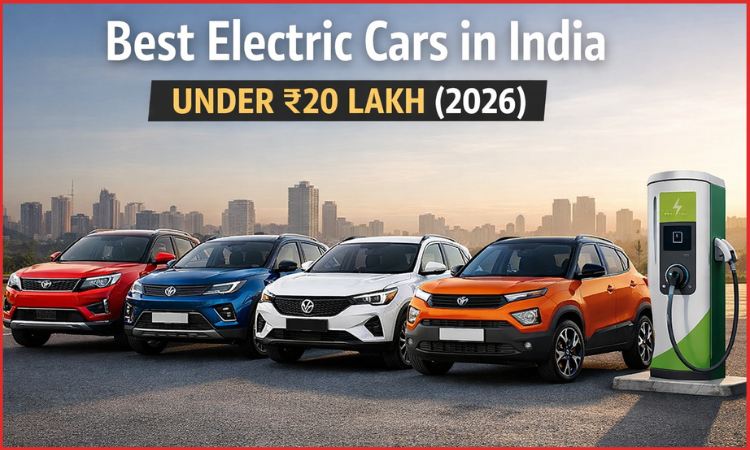
If you’re searching for the best electric cars in India under 20 lakh, you’re not alone. With fuel prices rising and EV technology improving fast, more people are now seriously thinking about switching to electric cars in 2026.
The good news? You don’t need a huge budget anymore. Today, there are multiple affordable electric cars in India that offer great range, modern features, and low running costs — all under ₹20 lakh.
From the popular Tata Nexon EV to budget-friendly options like the Tata Punch EV and feature-packed models like the Mahindra XUV 3XO EV, the choices have never been better.
But here’s the real question:
Which EV actually gives you the best value in real-world conditions?
Because let’s be honest — claimed range, features, and pricing on paper don’t always match daily usage in Indian traffic.
In this guide, we break down the top electric cars under ₹20 lakh in India (2026) based on real-world range, features, comfort, and ownership experience — so you can confidently choose the right EV for your needs.
Five EVs, At a Glance
| Model | Starts At | Battery | Claimed Range | Who It Suits |
|---|---|---|---|---|
| Tata Nexon EV | ₹12.49 L | 30.2 / 40.5 kWh | 325 / 465 km | Most buyers, most uses |
| MG Windsor EV | ₹12.04 L | 38 kWh | ~332 km | Value hunters, families |
| Mahindra XUV 3XO EV | ₹13.89 L | 39.4 kWh | ~285 km (real) | Tech lovers, safety-first |
| Tata Punch EV | ₹9.69 L | 25 / 35 kWh | 315 / 421 km | City only, tight budget |
| Mahindra XUV 400 EV | ₹15.50 L | 39.4 kWh | ~456 km | Bigger car, highway trips |
Ex-showroom prices. ARAI-certified range unless marked otherwise.
Top 5 Best Electric Cars in India Under ₹20 Lakh
1. Tata Nexon EV — The Benchmark, For Obvious Reasons
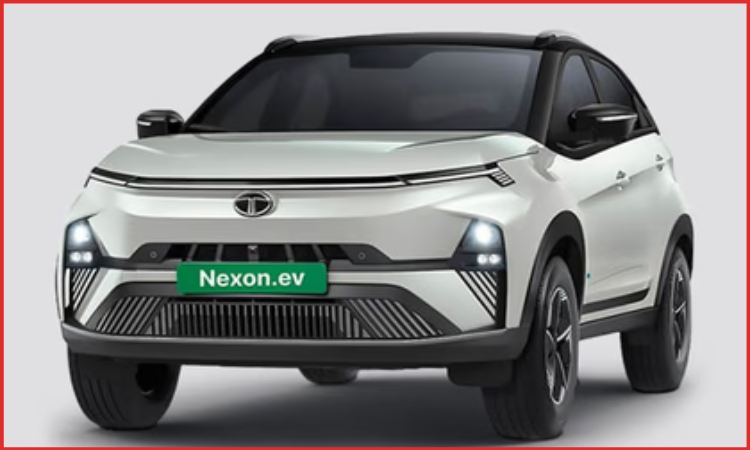
Five years on sale. Over 1 lakh units sold. More service centres than any other EV brand in India.
That track record is the Nexon EV’s biggest selling point — and Tata knows it.
Two battery sizes are on offer right now. The 30.2 kWh Medium Range claims 325 km; the 40.5 kWh Long Range stretches to 465 km. Real owners consistently report 360 to 400 km from the LR in mixed conditions. That is the number to keep in mind, not the ARAI figure.
What else? The 12.3-inch screen is one of the larger ones in this price bracket. JBL audio. A proper digital instrument cluster. And on higher variants, ventilated front seats — which matter more than people admit when Indian summers kick in.
There is also V2L — Vehicle-to-Load — which lets you run appliances from the car battery. Plug in a fan during a power cut. Charge a laptop on a highway stop. It sounds like a small feature until you actually need it.
Tata includes an AC fast charger with every variant and backs the battery with a lifetime warranty. For a first purchase, that warranty alone removes a lot of the hesitation people feel about EVs.
- Price: ₹12.49 – 17.49 Lakh (ex-showroom)
- Real-world range: 360–400 km (LR variant)
- Standout: Lifetime battery warranty + V2L charging
- Good for: First-time EV buyers, families, daily + occasional highway use
The one weak point: the cabin design has not had a full refresh in a while. Compared to something like the XUV 3XO EV launched this year, the interior feels a generation older. Functional, but not exciting.
2. MG Windsor EV — More Space, Less Money
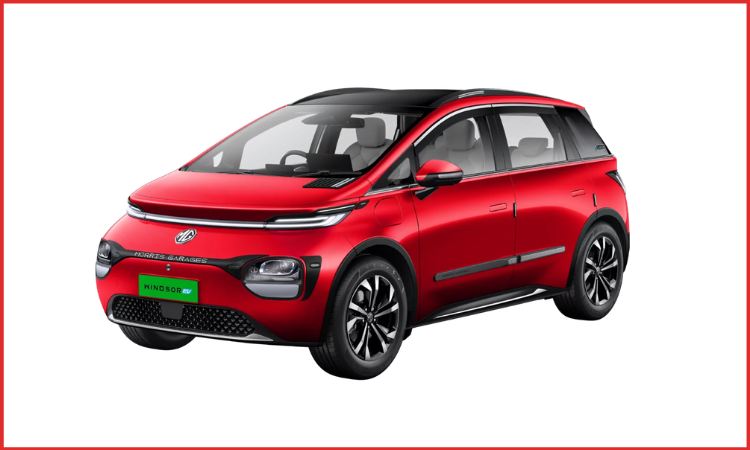
Ask someone what they expected from a ₹12 lakh car and they will probably say: decent range, basic features, maybe a sunroof if lucky. The Windsor ticks all of that and then adds a genuinely spacious rear seat that catches most buyers off guard at the showroom.
The 38 kWh battery claims 332 km. Owners in the city tend to see around 260 to 290 km in daily use. Not the longest in the segment, but enough for most people who charge at home every night.
MG also has an unusual option called Battery-as-a-Service. You buy the car minus the battery, which brings the upfront price down significantly, and then pay a per-kilometre rental for the battery. It is an odd arrangement and not for everyone. But for buyers who cannot afford the full price upfront, it is at least an option worth asking about.
The cabin is the real highlight, honestly. The rear seat reclines. The panoramic glass roof makes the car feel bigger than it is. For ₹12 lakh, you would not expect this level of finish.
- Price: ₹12.04 – 16.10 Lakh (ex-showroom)
- Real-world range: 260–290 km in city conditions
- Standout: Spacious cabin, panoramic sunroof, BaaS pricing option
- Good for: Urban families, buyers prioritising comfort over range
One thing to check before buying: MG’s service network is thinner than Tata’s outside metros. If the nearest MG service centre is two hours away, that matters — especially in the early ownership period.
3. Mahindra XUV 3XO EV — The New One That Arrived Swinging
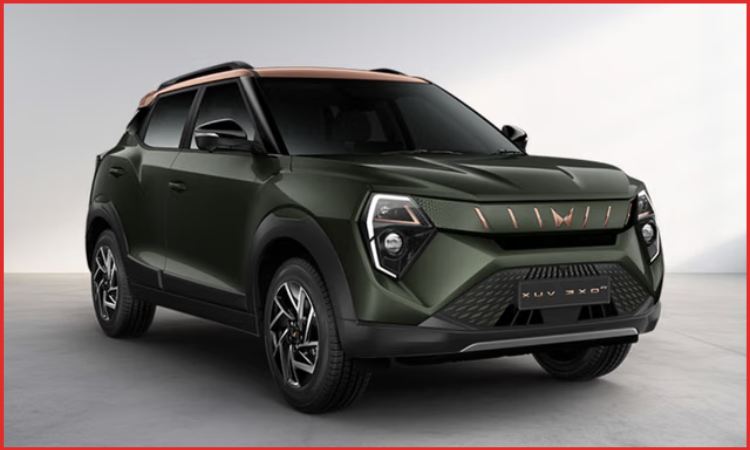
Launch day, January 2026. Mahindra announced ₹13.89 lakh. The auto media did a double-take.
Because the feature list read like a car costing ₹22 lakh. Dual 10.25-inch screens sitting side by side on the dashboard. Harman Kardon audio with seven speakers. Dual-zone climate control. Panoramic sunroof. A 360-degree camera. And — this is the part worth paying attention to — Level 2 ADAS. That means the car steers and adjusts speed on its own, within limits. At this price, that is rare.
The range is where it gives some ground. Mahindra themselves say 285 km in real-world conditions. That is honest of them — most manufacturers would have just quoted the ARAI number and moved on. For city use and weekend drives, 285 km is fine. For long highway trips every week, it may leave you planning around chargers more than you’d like.
The wheelbase is longer than the Nexon EV’s. Back seat passengers will feel the difference. Rear legroom is noticeably better.
- Price: ₹13.89 – 14.96 Lakh (ex-showroom)
- Real-world range: ~285 km (Mahindra’s own figure)
- Standout: Level 2 ADAS, Harman Kardon, dual screens, longer wheelbase
- Good for: Buyers who want maximum tech, safety-conscious families
Worth noting: This car only went on sale in early 2026. Long-term ownership data does not exist yet. If that uncertainty bothers you, the Nexon EV has five years of real-world history behind it.
4. Tata Punch EV — Under ₹10 Lakh. Really.
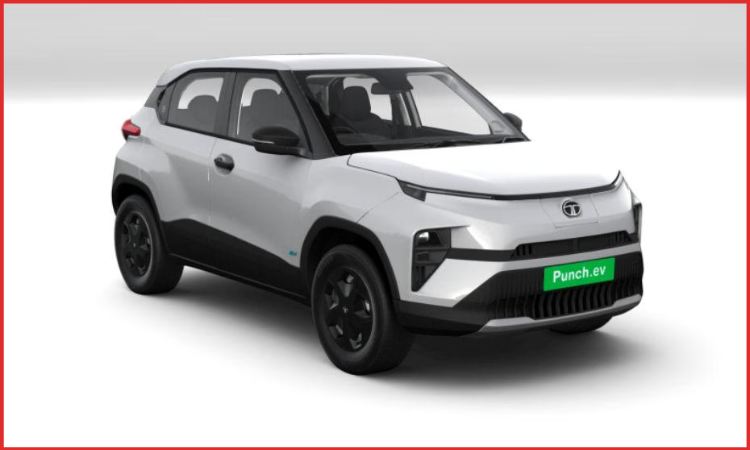
Post-facelift in 2026, the Punch EV starts at ₹9.69 lakh. That is a real electric SUV — not a microcar, not a glorified hatchback — for under ₹10 lakh.
It is compact. Getting in and out of a narrow parking spot between two Innova Crystas is not a problem. City roads, U-turns, parallel parking — the Punch manages all of it without drama.
Two battery options. The 25 kWh version claims 315 km; the 35 kWh version goes to 421 km. For someone commuting 40 km a day, the smaller battery is more than enough. Plug in overnight. Wake up. Full charge. Repeat.
The interior is basic. The infotainment does what it needs to and nothing more. Nobody is going to be wowed by the dashboard. But that is also not the point — the point is a reliable, low-cost daily car with Tata’s service network behind it.
- Price: ₹9.69 – 12.59 Lakh (ex-showroom)
- Range: 315 km (25 kWh) / 421 km (35 kWh), ARAI
- Standout: Cheapest practical EV-SUV in India, Tata reliability
- Good for: First-time EV buyers, city-only commuters, tight budgets
5. Mahindra XUV 400 EV — For When You Want a Bigger Car
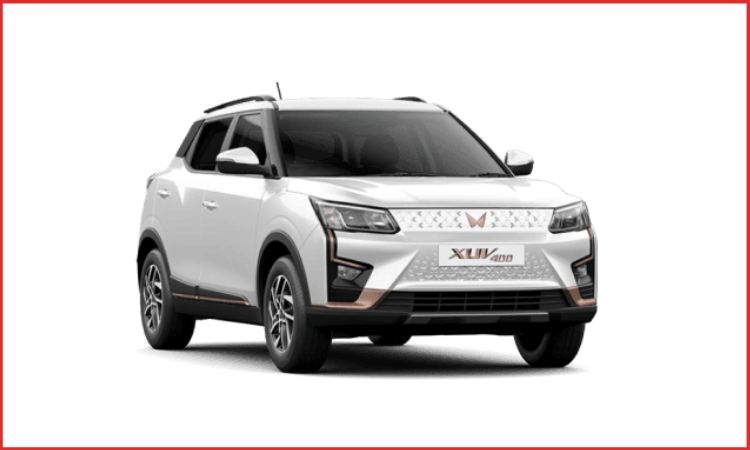
Some buyers look at the Nexon EV and think: nice car, but I need more space. The XUV 400 EV is the answer to that.
It is bigger. The boot is larger. Rear seat passengers have more room. And the motor produces 150 PS with 310 Nm of torque — the torque kicks in immediately, as electric motors always do, which makes it feel properly quick despite its size.
The claimed range is around 456 km. In real highway conditions, expect something closer to 370 to 400 km. Either way, it handles a Jaipur-to-Delhi run with one charging stop. That sort of confidence is what this car offers over the smaller EVs in this list.
Pricing starts at ₹15.5 lakh and stays comfortably under ₹18 lakh across all variants. For buyers who need a genuinely larger vehicle, it is the best option in this budget.
- Price: ₹15.50 – 17.70 Lakh (ex-showroom)
- Claimed range: ~456 km | Motor: 150 PS / 310 Nm
- Standout: Best-in-class size and power at this price
- Good for: Larger families, power seekers, regular highway drivers
Things Nobody Tells You Before Buying an EV
The specs are the easy part. Here is what the brochure leaves out.
Home charging is not optional; it is the whole strategy.
If you cannot plug in at home overnight — whether because you park on the road or in a society that has not wired up charging points yet — EV ownership becomes genuinely inconvenient. Most of the range anxiety people talk about disappears the moment you have a home charger. Identify this first.
ARAI range and real range are different numbers.
Government-certified ranges are tested in lab-like conditions. Expect 15 to 25% less in actual daily use. AC on, highway speeds above 90 kmph, Mumbai-level stop-and-go traffic — each one pulls the number down. Budget accordingly.
State subsidies can shift the final price by ₹50,000 to ₹1 lakh.
Delhi, Maharashtra, Gujarat and several other states offer EV subsidies on top of the central FAME II scheme. Before you finalise the ex-showroom price, check what your state offers. The on-road price after subsidies can look quite different.
Battery warranty terms are not all the same.
Tata gives a lifetime battery warranty on the Nexon EV now. Mahindra offers 8 years or 1.6 lakh km. MG gives 8 years or 1.5 lakh km. Five years from today, when the battery is the thing you are most worried about, which warranty would you rather have?
Check the fast charger map on your regular routes.
For city-only use, this barely matters. But if you drive between cities even twice a year, spend 10 minutes on PlugShare or the Tata Power EV app mapping DC chargers on those routes. Knowing where the 60 kW charger is on NH 48 takes a lot of pressure off the first road trip.
Home charging changes everything. It turns range anxiety into just… a number.
So, Is Now the Right Time?
Two years ago, the answer to that question had a lot of “it depends” in it. The charging infrastructure was patchy. The car options were limited. Resale value was anybody’s guess.
Today, the answer is simpler. If you drive mostly within a city and can charge at home, an EV under ₹20 lakh is probably the most financially sensible car you can buy right now. The running costs are lower, the servicing is cheaper, and the cars themselves have genuinely caught up on features.
The only real remaining question is which one. And for that, the table above and the five breakdowns should give you a clear enough starting point.
Frequently Asked Questions
Q1. Which EV under ₹20 lakh should I actually buy?
If you asked us to pick one without knowing anything about your situation, the Tata Nexon EV. Specifically, the Long Range variant if the budget allows. It has the range, the service network, the warranty, and five years of real-world ownership feedback behind it. MG Windsor EV is the call if value and cabin space matter more than range.
Q2. The ARAI range sounds too good to be true. What should I realistically expect?
You are right to be suspicious. That 465 km figure on the Nexon EV LR? In real-world mixed driving, owners consistently report 360 to 400 km. Plan your charging around the lower number and you will never be caught short.
Q3. Does the financial case actually work out, or is it mostly marketing?
For someone driving 60 km a day and charging at home, the savings are somewhere around ₹60,000 to ₹75,000 per year compared to a petrol car. Over four years, that is ₹2.5 to ₹3 lakh. Add cheaper servicing. Add whatever state subsidy you qualify for. The numbers are real — but only if you drive enough and have home charging.
Q4. Which car in this list has the most range per single charge?
Tata Nexon EV Long Range — 465 km claimed, roughly 380 to 400 km in practice. Mahindra XUV 400 EV is close behind at 456 km claimed. Both are comfortable on intercity routes.